



الصفحة 1
الصفحة 1

Fundamentals of Virtual Colonoscopy
Virtual colonoscopy is a rapidly developing technique that can be performed in an outpatient setting without sedation. It promises to be safer and less intrusive than conventional diagnostic tests for colon cancer and is attractive to patients. Despite the attention that virtual colonoscopy has received among medical professionals, many lack an understanding of the basics of this cutting-edge procedure. Renowned radiologist Abraham Dachman, MD, and a distinguished group of international contributors have prepared a fundamentals book that fills this void. This practical handbook fully explains the essentials of this state-of-the-art technique to radiologists, gastroenterologists, radiology residents, and technologists. Major concepts are reinforced by clear, true-to-life illustrations. Readers will find that the practical design and current content of this guide make it an essential introduction to CT colonography.
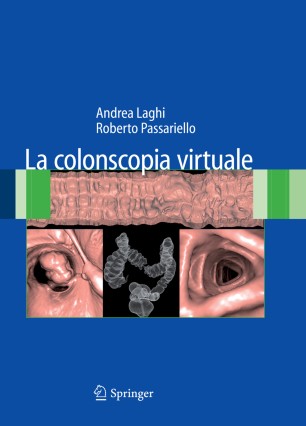
La colonscopia virtuale = The virtual colonoscopy
The text intends to provide the radiologist, specialized in the study of the colon, with a complete update on this innovative technique which, as confirmed by the very recent Guidelines published by the American Cancer Society and the American Gastroenterological Association.
La colografia virtuale con TC multistrato (CTC) = Virtual colonography with multislice CT
With the spread of multidetector row CT (MDCT), virtual colonography (VC) is establishing itself as a new, proven alternative radiological method in the diagnosis of intestinal polyps and colorectal cancer. VC is already considered the first-line examination for identifying synchronous tumor lesions in patients with colorectal cancers that cannot be penetrated by endoscope, simultaneously providing accurate staging of malignant lesions. Its minimally invasive nature makes VC a valid alternative to pancolonoscopy, even in the detection of intestinal polyps, and provides the basis for interesting developments regarding future applications in screening programs. The text, aimed at radiologists who are approaching the method, radiology technicians and doctors involved in the diagnostic and therapeutic process of colorectal pathology, indicates the advantages of the normal method, the normal method with fourteen chondrii, the normal method with fourteen chondrii, the pathological method with fourteen chondrii indications.
