



الصفحة 1
الصفحة 1

Mathematics teacher preparation in Central America and the Caribbean : The cases of Colombia, Costa Rica, the Dominican Republic and Venezuela
This book brings to the international Educational Community an important collection of experiences and ideas in the Mathematics Education of four countries of a region within the heart of the American continent, a region that has been many times forgotten. The dissemination of these results can promote the search for international collaborative actions in a wider scale.

Grassroots Politics and Oil Culture in Venezuela : The Revolutionary Petro-State
This book presents an ethnographic study of how grassroots activism in Venezuela during the Chávez presidency can be understood in relation to the country's history as a petro-state. Taking the contested relationship between the popular sectors and the Venezuelan state as a point of departure, Iselin Åsedotter Strønen explores how notions such as class, race, state, bureaucracy, popular politics, capitalism, neoliberalism, consumption, oil wealth, and corruption gained salience in the Bolivarian process. A central argument is that the Bolivarian process was an attempt to challenge the practices, ideas, and values inherited from Venezuela's historical development as an oil-producing state.
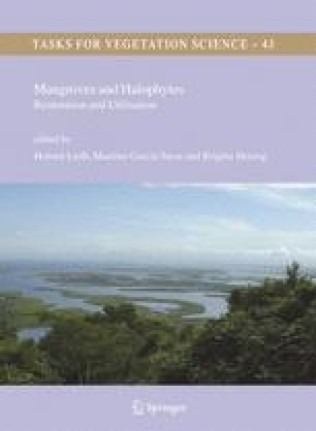
Mangroves and Halophytes : Restoration and Utilisation
Focusing on Venezuela and Mexico, this edited volume from the International Society of Halophyte Utilisation (ISHU) explores the environmental issues facing South and Central America's coastal ecosystems, and discusses the uses of mangrove species and other halophytes in addressing issues of both coastal pollution and upland soil salinisation. The book draws on expertise from Europe and South America to present a series of case studies that detail Venezuela’s saline ecosystems and examine the economic potential of mangrove restoration and halophyte production. It includes cutting-edge research into the establishment of new mangrove stands which could serve as prototypes for the sustainable use of halophytes, including Chenopodium quinoa and Tamarix aphylla. Moreover, the detailed examples from Venezuela and other Caribbean countries provide useful models for comparison with halophyte utilisation in other parts of the world – especially the Mediterranean region, where much of the earlier research of the ISHU had been conducted.
Ad-Hoc, mobile, and wireless networks ; Vol. 4104 ; 5th International Conference, ADHOC-NOW 2006, Ottawa, Canada, August 17-19, 2006 Proceedings
The 5th International Conference on Adhoc, Mobile and Wireless Networks (Adhoc-Now 2006) was held during August 17–19, 2006, in Ottawa, Canada. The ?rst four conferences in this series were held in Toronto (2002), Montreal (2003), Vancouver (2004) and Cancun (2005), respectively. The purpose of this conference is to provide a forum for researchers from academia/industry and practitioners to meet and exchange ideas regarding recent developments in the areas of ad hoc wireless networks. We received more than 170 papers for the conference submitted by authors from the following 25 countries: Australia, Bangladesh, Brazil, Canada, China, France, Germany, Greece, India, Iran, Ireland, Italy, Korea, Malaysia, Mexico, Nepal, Norway,Poland, Spain, Taiwan, The Netherlands, Turkey, UK, USA and Venezuela. Each paper was assignedto three members of the Technical Program Committee (TPC).
