



الصفحة 1
الصفحة 1

New horizons for a data-driven economy : A roadmap for usage and exploitation of big data in Europe
The book is structured in four parts: Part I “The Big Data Opportunity” explores the value potential of big data with a particular focus on the European context. It also describes the legal, business and social dimensions that need to be addressed, and briefly introduces the European Commission’s BIG project. Part II “The Big Data Value Chain” details the complete big data lifecycle from a technical point of view, ranging from data acquisition, analysis, curation and storage, to data usage and exploitation. Next, Part III “Usage and Exploitation of Big Data” illustrates the value creation possibilities of big data applications in various sectors, including industry, healthcare, finance, energy, media and public services. Finally, Part IV “A Roadmap for Big Data Research” identifies and prioritizes the cross-sectorial requirements for big data research, and outlines the most urgent and challenging technological, economic, political and societal issues for big data in Europe.

Model-Driven Development and Operation of Multi-Cloud Applications : The MODAClouds Approach
In this book readers will find technological discussions on the existing and emerging technologies across the different stages of the big data value chain. They will learn about legal aspects of big data, the social impact, and about education needs and requirements. And they will discover the business perspective and how big data technology can be exploited to deliver value within different sectors of the economy. The book is structured in four parts: Part I "The Big Data Opportunity" explores the value potential of big data with a particular focus on the European context. It also describes the legal, business and social dimensions that need to be addressed, and briefly introduces the European Commission's BIG project.

International business
Provides thorough coverage, delving into fundamental concepts and theory; the cultural, political, and economic environment; international business strategies; and even functional management areas. More comprehensive than competing books, this new edition of International Business includes: New chapter on the digitalization of the global economy and its implications for firm strategy and organizations New examinations of the forces of de-globalization, implications of rising trade protectionism, challenges of geopolitical conflicts, and a friction framework for understanding the effects of cultural differences Enriched and expanded discussions about potential reconfigurations of global value chains following the Covid-19 pandemic, changing perspectives on the role of the government with renewed attention to industrial policy, shifts in regional integration with the emergence of such new trade blocks as CPTPP and RCEP, and fresh insights on factors influencing a country's balance of payments Strengthened, expanded global cases, examples, and "industry" and "country" mini-cases that give students practical insight into the ways companies actually behave within a competitive, global environment.

Handbook Utility Management
As the deregulation of European utility markets has progressed, the dynamics of and the competitive pressure in the utility industries have steadily intensified over recent years. These changes in the regulatory framework have caused a shift in the direction of an integrated market environment, resulting in new challenges for the management of power and gas companies and a substantial need for strategic reorientation. The Handbook Utility Management is concerned with these changes and challenges in the utility industries and emerging managerial issues of high practical relevance. Inclusion of the latest insights into the economic, technological, and legal drivers of the diverse value chain activities makes the Handbook a valuable asset for both professionals and researchers.

Grid economics and business models ; 5th International workshop, GECON 2008, Las Palmas de Gran Canaria, Spain, August 26, 2008. Proceedings
This volume constitutes the refereed proceedings of the 5th International Workshop on Grid Economics and Business Models, GECON 2008, held in Las Palmas de Gran Canaria, Spain, August 2008.The 10 full papers included in this volume were carefully selected from 27 submission. They aim at presenting current results and innovative research in the area of grid economics. The papers are organized in topical sections on grid business modeling, market mechanisms for the grid, grid markets, and grid architectures.The proceedings are rounded off by 9 project reports that give an overview of the current and ongoing research in grid economics.

Green Consensus and High Quality Development : CCICED Annual Policy Report 2020
This book is based on the research outputs of China Council for International Cooperation on Environment and Development (CCICED) in 2020. It covers major topics of Chinese and international attention regarding green development, such as climate, biodiversity, ocean, BRI, urbanization, sustainable production and consumption, technology, finance, value chain, and so on. It also looks at the progress of China’s environmental and development policies,and the impacts from CCICED.
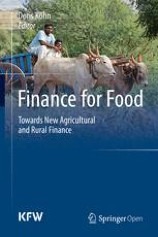
Finance for Food : Towards New Agricultural and Rural Finance
Reflects the current state of discussion about agricultural and rural finance in developing and transition countries. It provides insight into specific themes, such as commodity value chains, farm banking, risk management in agricultural banking, structured finance, crop insurance, mobile banking, and how to increase effectiveness in rural finance. Case studies illustrate various aspects of agricultural and rural finance in developing economies. The book is based on one of the yearly financial Sector Development Symposia held by the KfW Development Bank.

E-Services : Opportunities and Threats
This volume presents the best papers of the special issue ‘E-Services’ of the Journal of Value Chain Management. It provides a thorough introduction and systematic overview of the new and emerging field ‘E-Services’.

Enhancing Smallholder Farmers' Access to Seed of Improved Legume Varieties Through Multi-stakeholder Platforms : Learning from the TLIII project Experiences in sub-Saharan Africa and South Asia
This book shares the experiences of Tropical Legumes III (TLIII) project in facilitating access to seed of improved legume varieties to smallholder farmers through innovation platforms. It highlights practices and guiding principles implemented in eight developing countries of sub-Saharan Africa and South Asia. This book details key processes that respective teams employed to create an innovation space that delivers seed, other inputs, knowledge and financial services to agricultural communities and most importantly, the underserved farmers in remote areas of the drylands

Emerging States at Crossroads
This volume analyzes the economic, social, and political challenges that emerging states confront today. Notwithstanding the growing importance of the ‘emerging states’ in global affairs and governance, many problems requiring immediate solutions have emerged at home largely as a consequence of the rapid economic development and associated sociopolitical changes. The middle-income trap is a major economic challenge faced by emerging states. This volume regards interest coordination for technological upgrading as crucial to avoid the trap and examines how various emerging states are grappling with this challenge by fostering public-private cooperation, voluntary associations of market players, and/or social networks. Social disparity is another serious problem. This volume argues that the economic, social, and political problems are interwoven in the sense that the emerging states need to build political consensus in order to tackle the economic and social difficulties. Democratic institutions have not always been successful in this respect.

Emerging Economic Models for Sustainable Businesses : A Practical Approach
Analyses economic models that look at value propositions, creation and capture with ‘People, Planet and Profit’ deeply embedded in each stage of the value chain. The contributions bring out the interplay between new standards, evaluation frameworks, technology innovation and other emerging tools to show how they create a sustainable business. For this, they lean on learnings from successful sustainable businesses. Business leaders will find that this book provides deep insights on improving their existing sustainable practices, and speeding up the transition from linear to circular, narrow stakeholder driven to community driven.

Designing Sustainable Technologies, Products and Policies : From Science to Innovation
This open access book provides insight into the implementation of Life Cycle approaches along the entire business value chain, supporting environmental, social and economic sustainability related to the development of industrial technologies, products, services and policies; and the development and management of smart agricultural systems, smart mobility systems, urban infrastructures and energy for the built environment. The book is based on papers presented at the 8th International Life Cycle Management Conference that took place from September 3-6, 2017 in Luxembourg, and which was organized by the Luxembourg Institute of Science and Technology (LIST) and the University of Luxembourg in the framework of the LCM Conference Series.

Corporate Social Responsibility (CSR), Sustainability and Environmental Social Governance (ESG) : Approaches to Ethical Management
Provides a comprehensive overview of corporate social responsibility (CSR) and its practical applications. In addition to the structured procedure with definitions and CSR approaches, functions within the value chain are described in comprehensive manner with reference to business practice. Business trends in special sectors such as innovation management and hospitality management are also covered. Numerous practical examples and country-specific recommendations for decisions in practical situations are also offered.

Consumer driven electronic transformation : Applying new technologies to enthuse consumers and transform the supply chain
The Symposia have become important, unique - casions in the international calendar of business research. The papers c- lected here, first presented in Athens, represent an important contribution to the research literature of modern business. The wide-scale institutional development of collaborative practices in the European consumer goods business began in 1994 with the creation of ECR (“Efficient Consumer Response”) Europe, a joint initiative of ma- facturers and retailers working together to improve the quality and p- formance of the value chain. At the heart of ECR was a business envir- ment characterised by dramatic advances in information technology, shifts in consumer demand, and the increasing movements of goods across int- national borders. This new reality required a fundamental reconsideration of the most effective way of delivering the right products to consumers at the right price.

Marketing and the Customer Value Chain : Integrating Marketing and Supply Chain Management
Offers a systemic approach to the integration of marketing and supply chain management. It examines the strategic connections and disconnections between supply chain and operations management and marketing by focusing on the factors that constitute the extended marketing mix, including product, price, promotion, people, and processes.

Mapping Sustainability : Knowledge e-Networking and the Value Chain
Our underlying objectives are to contribute to the provision, mana- ment, and sharing of knowledge, and to enhance the value of knowledge and its uses by different constituencies in diverse contexts and at different stages of development. The central theme of this book, connecting its different parts, is about ways of transcending critical barriers to the effective uses of knowledge and e-networking. Of special relevance is the development of new approaches to the provision and transmission – from local sources to global networks and from global sources to local networks. In many ways, this is a book of theory and methods, as well as policy and performance.

Life Cycle Management
This book provides insight into the Life Cycle Management (LCM) concept and the progress in its implementation. LCM is a management concept applied in industrial and service sectors to improve products and services, while enhancing the overall sustainability performance of business and its value chains. In this regard, LCM is an opportunity to differentiate through sustainability performance on the market place, working with all departments of a company such as research and development, procurement and marketing, and to enhance the collaboration with stakeholders along a company’s value chain. LCM is used beyond short-term business success and aims at long-term achievements by minimizing environmental and socio-economic burden, while maximizing economic and social value.

Channel strategies and marketing mix in a connected world
Aims to revisit the “traditional” interaction between channel strategies and the marketing mix in a connected world. In particular, it focuses on the following four dimensions in this context: Consumers, Products, Value Proposition and Sustainability. Keeping in mind the growing digitalization of business processes in the retail world and the move towards omni-channel retailing.

Building a Resilient and Sustainable Agriculture in Sub-Saharan Africa
What are the challenges and action points for agricultural sustainability in Sub-Saharan Africa? This collection of papers offers technical analyses, policy recommendations and an overview of success stories to date. Each carefully selected paper provides valuable insights for improved policy making and defines relevant strategic priorities on Africa’s sustainable transformation process, which is in line with the international development agenda. Although agriculture remains the main source of income for Africa’s population, the sector is rain-fed subjecting it to the vagaries of weather and climate change. This volume demonstrates the rationale of developing a competitive, inclusive and sustainable agribusiness sector for Africa’s food security and structural transformation.
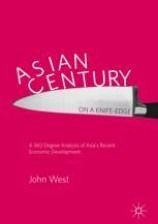
Asian century … on a knife-edge : A 360 degree analysis of Asia's recent economic development
This book delves into the widely held belief that the 21st century will be the "Asian Century" by examining the Asia's rapid economic development in the post-war era and the challenges it faces in forging ahead of world leaders in the West. The impact of the current turbulent global political climate on Asia is critically analyzed, employing a holistic and multidisciplinary approach, combining economic, social, political and geopolitical perspectives. Written in an accessible style, the book offers students, business, government, and civil society players powerful insights on Asia.
