



الصفحة 1
الصفحة 1

Novel Drug Delivery Systems for Chinese Medicines
Describes the essential and cutting-edge concepts based on the frontier of pharmaceutical research in TCM, underlying scientific principles, and current advancements of drug delivery systems for Chinese medicines, including sustained-release drug delivery systems, trans-nasal drug delivery systems, dermal and transdermal drug delivery systems, etc. Novel carriers and emerging technologies (such as 3D printing) are also covered. The book provides readers with an overall picture of drug delivery systems for Chinese medicines and also yields benefits for the pharmaceutical industry with regard to TCM-based drug development.

Nez, gorge, oreille en médecine traditionelle chinoise = Nose, throat, ear in traditional Chinese medicine
ENT doctor for forty years, acupuncturist for thirty years, Bernard Cygler occupies a privileged position between "West" and "East". Chinese vision provides incomparable help in understanding and attempting to cure ailments that are particularly hopeless in Western medicine such as nasal polyposis, anosmia, and tinnitus. It is valuable in that it offers the possibility of avoiding surgical procedures or allopathic treatments with sometimes unpleasant side effects. This approach aims to treat the patient rather than the symptom, the whole rather than the disease itself. With his medico-surgical experience and his practice of Chinese medicine, the author tried to "marry" the two facets of his exercise while remaining faithful to traditional texts in the spirit of the French Acupuncture Association. , to which it belongs. The humanist approach delivered by the author, combining "tradition and modernity", is characterized by a desire for transmission so that a certain idea of the art of healing may live on for longer. Doctor Bernard Cygler, former intern and former head of clinic-assistant of hospitals, head of hospital ENT department from 1972 to 2003 is a member of the French Acupuncture Association and of the French Acupuncture College. He has written numerous publications in traditional Chinese medicine.

Molecular Pharmacognosy
This book discusses the application of molecular biology in resource science and authentication of traditional Chinese medicine (TCM). It also reviews the latest developments in pharmacognosy, introduces new perspectives and insights, discusses the hotspots and focuses in the field of molecular pharmacognosy, and predicts new directions of study. In the last five years, the technologies and scope of molecular pharmacognosy have constantly expanded and evolved. As such, this new edition includes extra content, such as the molecular phylogeography of medicinal plants, functional genome of medicinal plants, and synthetic biology of active compounds. Elucidating the concept, theory, and methodology of molecular pharmacognosy, it promotes the full use of the newly developed technologies and methodologies within the framework of molecular pharmacognosy to solve problems in the field.
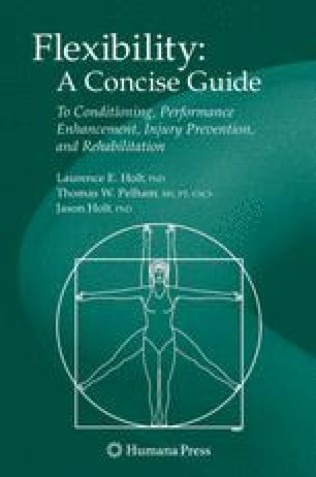
Flexibility : A concise guide to conditioning, performance enhancement, injury prevention, and rehabilitation
This groundbreaking book is a definitive guide to flexibility and revises the conceptual framework of the field. In Flexibility: A Concise Guide, the authors provide a fresh perspective on flexibility, one that challenges current thinking and professional practice, from the conceptual foundations of research to the practical applications of stretching techniques in a number of domains.

Essentials of Chinese Materia medica and medical formulas : New century traditional Chinese medicine
Essentials of Chinese Materia Medica and Medical Formulas: New Century Traditional Chinese Medicine presents specific knowledge about the source, medicinal nature, action and application of more than 800 commonly-used Chinese materia medica, as well as the efficacy and application of more than 740 kinds of commonly-used Chinese medical formulas. Notably, all of the content is presented in table form, making the information easier to access, understand and apply. Each primary herbal medicine is introduced with color pictures, and each primary formula is presented with efficacy analysis pictures. The book provides readers with essential information on Chinese materia medica and formulas and how to use them accurately, including the most common Chinese materia medica used in clinics and in commonly used clinical formulas.
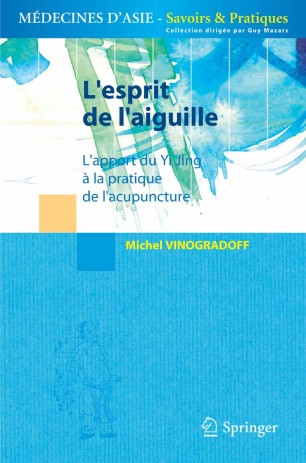
L’esprit de l’aiguille : L’apport du Yi Jing à la pratique de l’acupuncture = The Spirit of the Needle: The contribution of the Yi Jing to the practice of acupuncture
Acupuncture deciphers and heals human beings in all their mutations. The symbolism of Yi Jing joins the humanism of this Traditional Medicine for a dynamic reading of the changes and transformations at work in human beings. The double reflection generates a global vision of the human being and the approach to patients is changed. After an approach to the state of mind, encountered in these two fields, the author sets out to find the oldest roots of the notions of Yin and Yang. This allows him to identify the main strengths of the constitution of a human being and to deepen its symbolic construction. Three fields of application of this approach are then studied. The Extraordinary Meridians are viewed from a descriptive and behavioral perspective, which makes them extremely lively and familiar. Luo points, human being's relationship points with Reality, are also considered on a practical level using a symbolic reading of the links of Heaven, Earth and Man. Many examples shed light on these aspects. The last application is a detailed and comprehensive presentation of the fundamental and symbolic functions of the twelve main meridians through the hexagrams which correspond to their ancient Shu points. This original book is intended for any practitioner of traditional Chinese medicine curious to broaden their field of investigation. Dr M. Vinogradoff has been practicing acupuncture for 25 years. He is a member of the French Acupuncture Association, the French Acupuncture College and the Ricci Institute. After having published the complete translation of Yi Jing, in 2006 he published a novel, the action of which is set in Ancient China.
Common Chinese Materia Medica ; Vol.4
Describes 256 species of medicinal plants from 5 families, which are commonly used in Chinese medicine. The most important species are Agrimonia pilosa, Amygdalus persica, Armeniaca mume, Armeniaca vulgaris, Armeniaca sibirica, Chaenomeles sinensis, Eriobotrya japonica of Rosaceae; Chimonanthus praecox of Calycanthaceae;Albizia julibrissin, Archidendron clypearia, Entada phaseoloides, Bauhinia championii of Mimosoideae; Caesalpinia sappan, Cassia tora, Gleditsia sinensis of Caesalpiniaceae; Abrus cantoniensis, Astragalus membranaceus, Astragalus membranaceus, Dalbergia odorifera, Desmodium caudatum, Desmodium styracifolium, Erythrina variegata, Euchresta japonica, Flemingia prostrata, Glycyrrhiza uralensis, Glycyrrhiza inflata, Glycyrrhiza glabra, Lablab purpureus, Sophora japonica and Spatholobus suberectus of Butterflyaceae. In each specie, it introduces the scientific names, medicinal names, morphologies, habitats, distributions, acquisition and processing methods of these medicinal plants, the content of medicinal properties, therapeutic effects, usage and dosage of these medicinal plants, and attaches unedited color pictures and pictures of part herbal medicines of each species. This book series has 10 volumes in total, which covers over 2000 kinds of Chinese medicines that are commonly used. These volumes not only introduce the efficacy function and some prescriptions of the medicines, but also introduce the biological characteristics of them in detail with clear photos of the habitats, so that readers can identify them in the field. Apart from the growing environment, the books expound the distribution areas and other information to facilitate researches and other applications. The volumes are targeted at readers of general interests and it is also of high referential value for scientific researcher and teachers. It can be used as a guide to researchers, clinical doctors, and students in the department of pharmaceutics and traditional Chinese medicine.
Common Chinese materia medica ; Vol.2
Contains 231 species of 40 families of medicinal plants. The most important family of which are Magnoliaceae, such as Magnolia officinalis and Magnolia officinalis subsp. biloba; Schisandra chinensis of Schisandraceae; Cinnamomum aromaticum of Lauraceae, Coptis chinensis Franch., Coptis omeiensis and Coptis teeta of Berberidaceae; Isatis indigotica, Lepidium apetalum and Raphanus sativus of Cruciferae; Rheum palmatum, Rheum officinale and Rheum taguticum of Polygonaceae, etc. In each specie, it introduces the scientific names, herbal medicine names, characteristics, habitats, distributions, Acquisition and processing methods, medicinal traits, tastes, functions, use and dosages, and other information of medicinal plants, and attaches unedited color pictures and pictures of part herbal medicines for each species. This book series has totally 10 volumes, which covers 2000 kinds of Chinese medicines that are commonly seen or used. These volumes not only introduce the efficacy, function and some prescriptions of the medicines, but also introduce the biological characteristics of them in detail with clear photos of the habitats, so that readers can identify them in the field. Apart from the growing environment, the books expound the distribution areas and other information to facilitate researches and other applications. The volumes are targeted at readers of general interests and it is also of high referential value for scientific researcher and teachers. It can be used as a guide to researchers, clinical doctors, and students in the department of pharmaceutics and traditional Chinese medicine.
