



الصفحة 1
الصفحة 1

Nitrogen-fixing Leguminous Symbioses
This book is the self-contained final volume of a comprehensive seven-volume series covering the basic and applied science relating to nitrogen fixation. It addresses the most important nitrogen-fixing symbiosis of all – that between legumes and their root-nodule bacteria – and therefore deals with the properties and behaviour of both macro- and micro-symbiont.
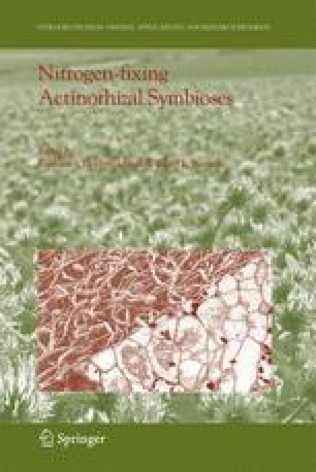
Nitrogen-fixing Actinorhizal Symbioses
This book is the self-contained sixth volume of a comprehensive series on nitrogen fixation. It presents the state-of-the-art in regards to actinorhizal symbioses. Like legumes, actinorhizal plants form root nodules that host nitrogen-fixing soil bacteria. However, because the macrosymbionts are, with one exception, woody plants rather than crop plants, actinorhizal symbioses are less well-known than legume symbioses to which they are phylogenetically related. Actinorhizal plants come from eight different families. This volume includes chapters that deal with all these aspects of the symbiosis and both symbionts plus their ecological role and use. Other chapters tackle the global distribution of different actinorhizal plants and their microsymbionts and how this impacts the question of co-evolution of the micro- and macrosymbionts as well as comparing the actinorhizal and leguminous symbioses.

New Vision 2050 : A Platinum Society
Presents the "New Vision 2050," which adds the concept of the “platinum society” to the “Vision 2050”.The 20th century was a century in which energy led the development of material civilization, resulting in deletion of resources, global warming and climate change. What form should sustainable material and energy take to protect the Earth? The "Vision 2050" was established 20 years ago as a model that we should pursue for the next half century. Fortunately, the world is on course for the Vision 2050.Since the author presented the concept of "Vision 2050" in 1999, the idea has been introduced in two books entitled Vision 2050: Roadmap for a Sustainable Earth (2008) and Beyond the Limits to Growth: New Ideas for Sustainability from Japan(2014). The latter includes a chapter that sheds light on the concept of a “platinum society”. In this publication, the author presents the "New Vision 2050" in more detail.

Molecular Basis of Symbiosis
Symbiotic associations involving prokaryotes occur ubiquitously and are ecologically highly significant. In symbiotic associations, co-evolution of the partner organisms has led to specific mechanisms of signal exchange and reciprocal regulation, and resulted in novel physiological capabilities of the association as compared to those of the individual partners. Symbiosis research has recently entered an exciting era because molecular biology techniques are available for studying partner organisms in association and in a culture-independent manner. It is the goal of this book to contribute towards a broader perspective and an understanding of the function of symbiotic systems. 14 different model systems have been chosen, comprising well known symbioses as well as novel experimental systems which have only recently become amenable to experimental manipulation.

Microbes in agri-forestry biotechnology
Explores recent advances on the use of microbes for agri-forestry biotechnological applications. It provides technical concepts and discussions on the use of microorganisms for processes such as bioprocessing, bioremediation, soil enhancement, aquaponics advances, and plant-host symbiosis. The book provides an overview of the microbial approach to the tools and processes used in agriculture and forestry that make or modify products, improve plants for specific uses, and make use of livestock in agricultural systems. The authors discuss the main process conditions that enhance agri-forestry applications with the use of microbes and introduce the use of genetically modified (GM) microbes in agrobiotechnology. Finally, the authors explore the main technological advances in the production of secondary metabolites with potential applications in agri-forestry.
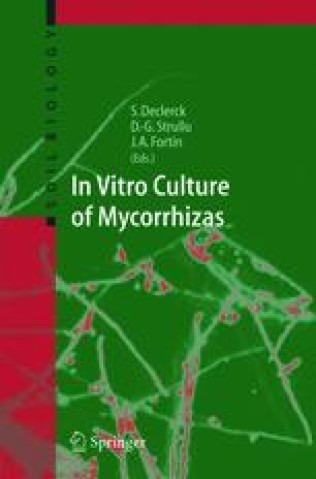
In Vitro Culture of Mycorrhizas
biologists have made important progress in understanding better the functioning of AM fungi. An in vitro technique has been developed using mycorrhizal root organ cultures, which made it possible to investigate the genetics, cell biology and physiology of AM fungi. We can now be objective enough to critically evaluate the impacts the in vitro technique has had to improve our knowledge on mycorrhizal symbiosis.

Hydrogenosomes and Mitosomes : Mitochondria of Anaerobic Eukaryotes
"Hydrogenosomes and Mitosomes: Mitochondria of Anaerobic Eukaryotes" provides a summary of the current knowledge of these organelles, which occur in unicellular, often parasitic organisms, including human pathogens. The distribution of these organelles is broad, but they were detected primarily in an anoxic habitat or nutrient rich intracellular niche that permits life without the efficient energy generating system of typical mitochondria. Their common characteristic is that they lack the aerobic energy conservation system of typical mitochondria and that they are usually the site of the synthesis of iron-sulfur clusters, regarded as the only indispensable function of eukaryotic mitochondria.These mitochondria-related organelles exhibit a variety of structures and functions. This work describes properties such as protein import, structure, metabolism, adaptation, proteome and their role in drug activation and resistance. Further topics include the evolution and biogenesis of these organelles.
Frontline and Factory : Comparative Perspectives on the Chemical Industry at War, 1914-1924
This book represents a first considered attempt to study the factors that conditioned industrial chemistry for war in1914-18. Taking a comparative perspective, it reflects on the experience of France, Germany, Austria, Russia, Britain, Italy and Russia, and points to significant similarities and differences. It looks at changing patterns in the organisation of industry, and at the emerging symbiosis between science, industry and the military, which contributed to the first ‘academic-military-industrial’ complex of the 20th century. At the same time, it reflects on the world’s first, and ultimately unsuccessful attempt to monitor ‘dual-use’ chemical technologies, and so restrict the proliferation of an important category of weapons of mass destruction.

Engineering for Sustainable Development : Theory and Practice
Offers a wide range of civil, mechanical, electrical, and chemical engineering industry applications. Readers will also benefit from: A thorough introduction to contemporary sustainability challenges in the engineering discipline Comprehensive discussions of sustainability assessment tools, including triple bottom line assessment (TBL) and the environmental life cycle assessment (LCA) In-depth examinations of sustainable engineering strategies, including cleaner production and eco-efficiency methods and environmental management systems Detailed review of green engineering principles and industrial symbiosis in engineering application. A link between product stewardship and the design for the environment
Machine Ethics : From Machine Morals to the Machinery of Morality
Offers the first systematic guide to machine ethics, bridging between computer science, social sciences and philosophy. Based on a dialogue between an AI scientist and a novelist philosopher, the book discusses important findings on which moral values machines can be taught and how. In turn, it investigates what kind of artificial intelligence (AI) people do actually want.
Complexity Theory and Cryptology : An Introduction to Cryptocomplexity
Modern cryptology employs mathematically rigorous concepts and methods from complexity theory. Conversely, current research in complexity theory often is motivated by questions and problems arising in cryptology. This book takes account of this trend, and therefore its subject is what may be dubbed "cryptocomplexity,'' some sort of symbiosis of these two areas. This textbook is suitable for undergraduate and graduate students of computer science, mathematics, and engineering, and can be used for courses on complexity theory and cryptology, preferably by stressing their interrelation. Starting from scratch, it is an accessible introduction to cryptocomplexity and works its way to the frontiers of current research. It provides the necessary mathematical background, has numerous figures, exercises, and examples, and presents some central, up-to-date research topics and challenges. Due to its comprehensive bibliography and subject index, it is also a valuable source for researchers, teachers, and practitioners working in these fields.
