



الصفحة 1
الصفحة 1
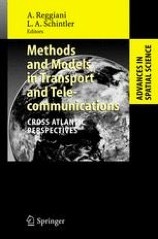
Methods and Models in Transport and Telecommunications : Cross Atlantic Perspectives
One aspect of the new economy is a transition to a networked society, and the emergence of a highly interconnected, interdependent and complex system of networks to move people, goods and information. An example of this is the in creasing reliance of networked systems (e. g. , air transportation networks, electric power grid, maritime transport, etc. ) on telecommunications and information in frastructure. Many of the networks that evolved today have an added complexity in that they have both a spatial structure , they are located in physical space but also an a spatial dimension brought on largely by their dependence on infor mation technology. They are also often just one component of a larger system of geographically integrated and overlapping networks operating at different spatial levels. An understanding of these complexities is imperative for the design of plans and policies that can be used to optimize the efficiency, performance and safety of transportation, telecommunications and other networked systems. In one sense, technological advances along with economic forces that encourage the clustering of activities in space to reduce transaction costs have led to more efficient network structures.

Globalization and Urban Development
Most research on globalization has focused on macroeconomic and economy-wide consequences. This book explores an under-researched area, the impacts of globalization on cities and national urban hierarchies, especially but not solely in developing countries. Most of the globalization-urban research has concentrated on the "global cities" (e.g. New York, London, Paris, Tokyo) that influence what happens in the rest of the world. In contrast, this research looks at the cities at the receiving end of the forces of globalization. The general finding is that large cities, on balance, benefit from globalization, although in some cases at the expense of widening spatial inequities.

Elements of spatial structures : Analysis and design
Highlights all aspects of the analysis and design of elements related to spatial structures, which have been carefully selected from existing structures. Analysing the design of elements of any full scale structure that contains facilities that have already been constructed makes good economic sense and avoids duplication in respect of research and development, the decision-making process and accurate design criteria for new constructed facilities.
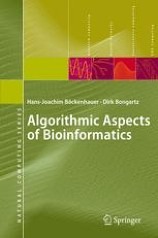
Algorithmic Aspects of Bioinformatics
Advances in bioinformatics and systems biology require improved computational methods for analyzing data, while progress in molecular biology is in turn influencing the development of computer science methods. This book introduces some key problems in bioinformatics, discusses the models used to formally describe these problems, and analyzes the algorithmic approaches used to solve them. After introducing the basics of molecular biology and algorithmics, Part I explains string algorithms and alignments; Part II details the field of physical mapping and DNA sequencing; and Part III examines the application of algorithmics to the analysis of biological data. Exciting application examples include predicting the spatial structure of proteins, and computing haplotypes from genotype data. This book describes topics in detail and presents formal models in a mathematically precise, yet intuitive manner, with many figures and chapter summaries, detailed derivations, and examples. It is well suited as an introduction into the field of bioinformatics, and will benefit students and lecturers in bioinformatics and algorithmics, while also offering practitioners an update on current research topics.
