



الصفحة 1
الصفحة 1
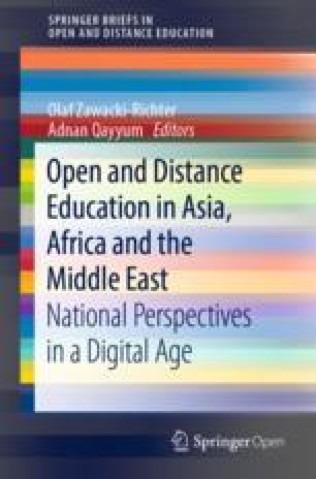
Open and distance education in Asia, Africa and the Middle East : National perspectives in a digital age
This book describes the history, structure and institutions of open and distance education in six countries: China, India, Russia, Turkey, South Africa and South Korea. It describes how open and distance education is evolving in a digital age to reflect the needs and circumstances of the national higher education systems in these countries. It also explores the similarities and differences between how their open and distance higher education systems are managed and structured. The book compare and draw conclusions about the nature of open and distance education in the context of various national higher education systems. In a digital era characterized by the growing use of online, open and distance education, this book will prove particularly valuable for policy-makers and senior administrators who want to learn about establishing or expanding open and distance education services. In addition, it offers a valuable reference guide for researchers, academics and students interested in understanding the different approaches to open and distance education.

One hundred years of social protection : The changing social question in Brazil, India, China, and South Africa
As the first in-depth study of the ideational foundations of social protection policies and programmes in these four countries, the contributions demonstrate that the social question was articulated in an increasingly inclusive way.

New approaches for security, privacy and trust in complex environments ; Proceedings of the IFIP TC 11 22nd International Information Security Conference (SEC 2007), 14-16 May 2007, Sandton, South Africa
The IFIP series publishes state-of-the-art results in the sciences and technologies of information and communication. The principal aim of the IFIP series is to encourage education and the dissemination and exchange of information about all aspects of computing.

Multinational Enterprises, Foreign Direct Investment and Growth in Africa : South African Perspectives
How can Africa, the world’s most lagging region, benefit from globalisation and achieve sustained economic growth? Africa needs greater investment by Multinational Enterprises (MNEs) to improve competitiveness and generate more growth through positive spill-over effects. Despite the fact that Africa’s returns on investment averaged 29% since 1990, Africa has gained merely 1% of global Foreign Direct Investment (FDI) flows. The challenge for African countries is how to be a more desirable destination for FDI. The study integrates three currents of economic research, namely from the literature on (endogenous) economic growth, convergence and regional integration, the explanations for Africa’s poor growth and the growing understanding of the role of MNEs in a global economy. The empirical side of the book is based on an econometric study of the determinants of FDI in Africa as well as a detailed firm-level survey conducted in 2000.

Medicinal Plants for Holistic Health and Well-Being
Medicinal Plants for Holistic Health and Well-Being discusses, in depth, the use of South African plants to treat a variety of ailments, including tuberculosis, cancer, periodontal diseases, acne, postmacular hypomelanosis, and more. Plants were selected on the basis of their traditional use, and the book details the scientific evidence that supports their pharmacological and therapeutic potential to safely and effectively treat each disease. Thus, this book is a valuable resource for all researchers, students and professors involved in advancing global medicinal plant research

Medicinal plants for cosmetics : Health and diseases
Describes diseases and ailments occurring in individuals worldwide including acne, ageing, various cancers, eczema and other conditions. This book explains each disease and ailment, allowing the reader to gain a better perspective on misunderstood and underestimated assumptions accompanying the ailment or condition. Not only does this book present information on different diseases and ailments, it presents a variety of plants and plant-based compounds demonstrating potential health benefits.

Insurance distribution directive : A legal analysis
This book of the AIDA Europe Research Series on Insurance Law and Regulation offers the first comprehensive legal and regulatory analysis of the Insurance Distribution Directive (IDD).

How Data Quality Affects our Understanding of the Earnings Distribution
This book demonstrates how data quality issues affect all surveys and proposes methods that can be utilised to deal with the observable components of survey error in a statistically sound manner. This book begins by profiling the post-Apartheid period in South Africa's history when the sampling frame and survey methodology for household surveys was undergoing periodic changes due to the changing geopolitical landscape in the country. This book profiles how different components of error had disproportionate magnitudes in different survey years, including coverage error, sampling error, nonresponse error, measurement error, processing error and adjustment error.
Green economy in the transport sector : A case study of Limpopo Province, South Africa
This book provides policy framework on “towards a Green Economy in the Transport Sector” draws inspiration from the UNEP report on Green Economy Modeling (2014), which focused on South Africa with respect to Transport, Natural Resource Management, Agriculture, and Energy sectors. This is because in the last 10 years natural resources, environmental risks and ecological issues have come to the attention of the international community because the subject is fundamentally important for overarching sustainable growth. It is important to note that environmental problems such as greenhouse gas emissions and climate change in different regions of the world including South Africa result in significant problems.

Globalization and Summit Reform : An Experiment in International Governance
This account of the 'L-20 project' describes and analyses a 3-year mobilization designed as an alternative to the political deadlocks preventing progress on critical global issues. The L-20 would include leaders from the existing G-countries, augmented by key regional powers such as China, Brazil, India, South Africa and Egypt. The book traces the origins and findings of the project, which generated a broad array of cutting-edge research and over twenty substantive, action-oriented workshops involving hundreds of experts and practitioners around the world. The workshop series examined in detail the operational possibilities for a Leaders Group addressing a range of issues, including infectious disease control, climate change/global warming, energy security, nuclear proliferation, management of international financial crises, and the provision of safe drinking water and sanitation, to name just a few.

Emerging States at Crossroads
This volume analyzes the economic, social, and political challenges that emerging states confront today. Notwithstanding the growing importance of the ‘emerging states’ in global affairs and governance, many problems requiring immediate solutions have emerged at home largely as a consequence of the rapid economic development and associated sociopolitical changes. The middle-income trap is a major economic challenge faced by emerging states. This volume regards interest coordination for technological upgrading as crucial to avoid the trap and examines how various emerging states are grappling with this challenge by fostering public-private cooperation, voluntary associations of market players, and/or social networks. Social disparity is another serious problem. This volume argues that the economic, social, and political problems are interwoven in the sense that the emerging states need to build political consensus in order to tackle the economic and social difficulties. Democratic institutions have not always been successful in this respect.

Early Public Libraries and Colonial Citizenship in the British Southern Hemisphere
This Pivot book is a comparative study of six early colonial public libraries in nineteenth-century Australia, South Africa, and Southeast Asia. Drawing on networked conceptualisations of empire, transnational frameworks, and ‘new imperial history’ paradigms that privilege imbricated colonial and metropolitan ‘intercultures’, it looks at the neglected role of public libraries in shaping a programme of Anglophone civic education, scientific knowledge creation, and modernisation in the British southern hemisphere. The book’s six chapters analyse institutional models and precedents, reading publics and types, book holdings and catalogues, and regional scientific networks in order to demonstrate the significance of these libraries for the construction of colonial identity, citizenship, and national self-government as well as charting their influence in shaping perceptions of social class, gender, and race. Using primary source material from the recently completed ‘Book Catalogues of the Colonial Southern Hemisphere’ digital archive, the book argues that public libraries played a formative role in colonial public discourse, contributing to broader debates on imperial citizenship and nation-statehood across different geographic, cultural, and linguistic borders.

Development, Sexual Cultural Practices and HIV/AIDS in Africa
This book introduces the theoretical frameworks and academic debates concerning sexual cultural practices and HIV/AIDS in Africa. It shows how these frameworks have been applied in a practical sense in Africa to investigate sexual cultural practices and their link with HIV/AIDS. The author provides an overview of both the field of study and the methods used during fieldwork. Finally, it assesses the implications of the findings for the conceptualization and provision of current and future HIV/AIDS policies and programs in Africa. This monograph will appeal to policy makers and practitioners working in the field of HIV/AIDS in the Global South as well as academics and students.

Design build with the scarcity and creativity studio
Scarcity and Creativity Studio has developed a teaching method which reaffirms a commitment to architecture as a service to society, questions the idea of the individual creator in favour of collaborative design, and challenges the traditional master-student relationship. This book documents the projects and, in so doing, explains the practices and pedagogic methods which the studio has developed in relation to architecture education in general and design build education in particular. Aimed at students, teachers, and professionals who are exploring the possibilities of design build, the 16 built projects are fully documented in text, drawings, and photos and can be used as both inspiration and references. Projects are based in Norway, Finland, Chile, Ecuador (Galápagos), Kenya, South Africa, China, Argentina, and Lebanon.

Counter-Terrorism Policing : Community, Cohesion and Security
This book charts these opportunities and challenges through unprecedented access to the police and diverse communities in Australian regional and metropolitan contexts. It locates these developments in an international comparison with like jurisdictions in the US, UK, and Canada and in light of former conflicts in Northern Ireland and South Africa. It examines the nature and impact of counter-terrorism on policing, diverse communities, legislation and policy and on the media. The book concludes by posing questions for the future of counter-terrorism policing in liberal democracies.

Conviviality at the Crossroads : The Poetics and Politics of Everyday Encounters
Conviviality has lately become a catchword not only in academia but also among political activists. This open access book discusses conviviality in relation to the adjoining concepts cosmopolitanism and creolisation. The urgency of today’s global predicament is not only an argument for the revival of all three concepts, but also a reason to bring them into dialogue. Ivan Illich envisioned a post-industrial convivial society of ‘autonomous individuals and primary groups’ (Illich 1973), which resembles present-day manifestations of ‘convivialism’. Paul Gilroy refashioned conviviality as a substitute for cosmopolitanism, denoting an ability to be ‘at ease’ in contexts of diversity (Gilroy 2004)

Comets and the Origin and Evolution of Life
Nine years after the publication of Comets and the Origin and Evolution of Life, one of the pioneering books in Astrobiology, this second edition revisits the role comets may have played in the origins and evolution of life. Recent analyses of Antarctic micrometeorites and ancient rocks in Australia and South Africa, the continuing progress in discovering complex organic macromolecules in comets, protostars and interstellar clouds, new insights into organic synthesis in comets, and numerical simulations of comet impacts on the Earth and other members of the solar system yield a spectacular wealth of new results.
Management of Research Infrastructures : A South African Funding Perspective
This book provides an overview of the building blocks necessary for managing, steering and guiding the establishment of a research infrastructure (RI). It offers valuable insights into RI investment, access and management at the academic, grants management, agency and policy level, and serves as a useful guide for the research community, students, and those in the private sector wishing to understand the approaches and opportunities involved in the establishment, maintenance and management of research infrastructure platforms.
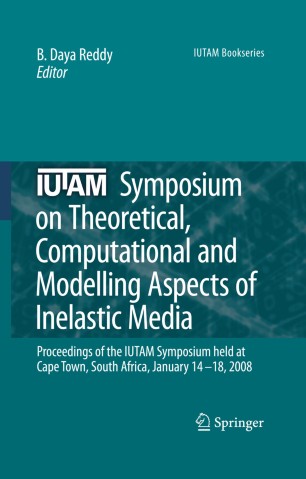
IUTAM symposium on theoretical, computational and modelling aspects of inelastic media ; Proceedings of the IUTAM Symposium held at Cape Town, South Africa, January 14–18, 2008
Comprises papers based on some of the talks presented at the IUTAM Symposium of the same name, held in Cape Town, January 14-18, 2008. This volume treats cutting-edge issues in modelling, the behaviour of various classes of inelastic media, and associated algorithms for carrying out computational simulations. A key feature of the contributions are works directed at modelling behaviour at the meso and micro-scales, and at bridging the micro-macro scales.
Biological Invasions in South Africa
This book presents a comprehensive account of all aspects of biological invasions in South Africa, where research has been conducted over more than three decades, and where bold initiatives have been implemented in attempts to control invasions and to reduce their ecological, economic and social effects.
