



الصفحة 1
الصفحة 1

Well-being, Sustainability and Social Development : The Netherlands 1850–2050
Examines more than two centuries of societal development using novel historical and statistical approaches. It applies the well-being monitor developed by Statistics Netherlands that has been endorsed by a significant part of the international, statistical community. The study also reveals the importance of natural capital: soil, air, water and subsoil resources, showing their relation with the social structure of the ‘here and now´. Treatment and trade of natural resources also impacted on the quality of life ‘later’ and ‘elsewhere.’ Further, the book illustrates the role of natural capital by dividing the capital into three types of raw materials and concomitant material flows: bio-raw materials, mineral and fossil subsoil resources.

The Libyan Economy : Economic Diversification and International Repositioning
Delivers a thorough and essential analysis of current economic policy, transformation and legislative changes in Libya. The authors have comprehensively surveyed and analysed the country’s social development and trends, its current infrastructural deficit, and its often controversial foreign relations. Thereby, they answer many questions about Libya’s distinctive society and economic system and explain the necessity for the major restructuring of the Libyan economy which is currently in process.

The Future of Digital Work : The Challenge of Inequality ; IFIP WG 8.2, 9.1, 9.4 Joint Working Conference, IFIPJWC 2020, Hyderabad, India, December 10–11, 2020, Proceedings
This book constitutes the refereed proceedings of the IFIP WG 8.2, 9.1, 9.4 Joint Working Conference on the Future of Digital Work: The Challenge of Inequality, IFIPJWC 2020, which was supposed to be held in Hyderabad, India, in December 2020, but was held virtually due to the COVID-19 pandemic. This conference was organized for IFIP’s 60th anniversary and to commemorate its mission to “achieve worldwide professional and socially responsible development and application of ICTs.” The 22 full papers presented together with an introduction and two keynotes were carefully reviewed and selected from 29 submissions. They are organized in topics on: innovation and entrepreneurship; the social significance of digital platforms; transforming healthcare; and the dark side of digitalization.

The Environment in Asia Pacific Harbours
Urbanization has already reached unprecedented levels in the estuarine and coastal zone of the Asia Pacific region where mega-cities and mega-harbours have developed and are still growing. Environmental degradation is significant and growing. The social, economic and environmental problems are pressing and call for science-based solutions. This book details how science can provide solutions so that economic and social developments can be ecologically sustainable. Twelve sites are discussed in detail, integrating physics and biology, and between science and engineering. In turn these are linked to economic and social issues. These sites are Tokyo Bay, the Pearl Estuary, Hong Kong, Shanghai and the Yangtze delta, Klang, Manila Bay, Jakarta Bay, Pearl Harbor, Ho Chi Minh City, Bangkok and the upper Gulf of Thailand, Singapore, and Darwin.

The Dynamics of Complex Urban Systems : An Interdisciplinary Approach
The present book outlines a conceptual framework for modelling and forecasting the dynamics of both growth-limited cities and megacities bringing together experts from several disciplines. The interdisciplinary point of view is particularly stressed. The contributions presented reflect the various interdependencies between structural (physics and mathematics models) and social development (spatial decision making and urban planning models). The volume emphasizes not only the contributions from different disciplines but also pays attention to specific problems like model calibration, data availability and management, case studies and interactions with urban planners. It is the collection of all the contributions of the speakers at the international workshop "The Dynamics of Complex Urban Systems: an interdisciplinary approach" held at Monte Verità (Ascona/Switzerland) from 4th to 6th of November 2004.

Social Development in the World Bank : Essays in Honor of Michael M. Cernea
This book honors the work of Michael Cernea, who was the World Bank’s first professional sociologist, by taking on and extending his arguments for "putting people first.” Cernea led a community of social scientists in formulating and promoting a comprehensive set of innovative and original social policies on development issues, which the World Bank adopted and implemented

Social Competence in Children
Social competence is essential to the mental and physical well-being of all humans, no matter their age. Yet as many as one in ten children has trouble keeping friends or even making friends. In Social Competence in Children, readers will discover a developmental view of social functioning in children at different stages, with an emphasis on clinical conditions that may confound this development. At the outset, the author provides detailed information on theories of social competence and the contexts in which core skills (e.g., appropriate comments, reading verbal cues) are learned. Later chapters address specific challenges to competence and feature case examples illustrating typical patterns of deficits and presenting the latest data on the topic.

Powering a Learning Society During an Age of Disruption
Presents contemporary perspectives on the role of a learning society from the lens of leading practitioners, experts from universities, governments, and industry leaders. The think pieces argue for a learning society as a major driver of change with far-reaching influence on learning to serve the needs of economies and societies. The book is a testimonial to the importance of ‘learning communities.’ It highlights the pivotal role that can be played by non-traditional actors such as city and urban planners, citizens, transport professionals, and technology companies. This collection seeks to contribute to the discourse on strengthening the fabric of a learning society crucial for future economic and social development, particularly in the aftermath of the coronavirus disease.

Pediatric ocular surface disease
Dedicated to pediatric ocular surface diseases. It provides an up-to-date and highly illustrated discussion of the pathophysiology, symptomatology and diagnostic and therapeutic strategies of these less commonly understood diseases, in a format that is readily absorbed by trainees and seasoned physicians alike. The aim of this book is to provide a practical and detailed understanding of ocular surface disease in the pediatric population,as many of these corneal conditions in children require unique therapeutic approaches and may have subtle presentations. Chapters will address key issues, such as dry eye disease, Steven Johnson Syndrome and neurotrophic keratitis, that can have a profound impact on children’s visual and social development.

Orthodontic-surgical partnership in cleft lip and palate treatment: achieving good occlusion, facial aesthetics, speech and psychosocial development
Reviews different treatment options for Cleft Lip and Palate problems emphasizing the cooperation between the areas of Orthodontics and Surgery. After an introduction to variations in cleft types, different CLP treatment plans are introduced and reviewed. The book represents some of the oldest and most thorough longitudinal documentation of cleft lip palate treatment.

Iberian World Empires and the Globalization of Europe 1415–1668
This book analyses Iberian expansion by using knowledge accumulated in recent years to test some of the most important theories regarding Europe’s economic development. Adopting a comparative perspective, it considers the impact of early globalization on Iberian and Western European institutions, social development and political economies. This book finds its impact decisive for institutional development, political economies, and processes of state-building in Iberia and Europe. The book engages current historiographies and revindicates the need to take the concept of composite monarchies as a point of departure in order to understand the period’s economic and social developments, analysing the institutions and societies resulting from contact with Iberian peoples in America and Asia. The outcome is a study that nuances and contests an excessively-negative yet prevalent image of the Iberian societies, explores the difficult relationship between empires and globalization and opens paths for comparisons to other imperial formations.

Educational Theory in the 21st Century : Science, Technology, Society and Education
This book reviews the effects of the twenty-first century scientific-technological and social developments on the educational theory. The first part handles the subject, focusing on technology and educational philosophy. In the second part, the implications of new human and social conceptions towards the education paradigms are examined. In the chapters of the last part of the book, more practical dimensions of education are discussed. Transforming school designs, school management, learning-teaching approaches and teacher competencies are discussed in the context of broader social, cultural and technological changes.

Concrete floors and slabs ; Proceedings of the International Seminar held at the University of Dundee, Scotland, UK on 5–6 September 2002
Concrete is a global material that underwrites commercial wellbeing and social development. There is no substitute that can be used on the same engineering scale and its sustainability, expolitation and further development are imperatives to creating and maintaing a healthy economy and environment worldwide. The pressure for change and improvement of performance is relentless and necessary. Concrete must keep evolving to satisfy the increasing demands of all its users.

A History of Interior Design ; 5th Ed
Interior design describes the process by which an interior space is made into an effective setting for whatever range of human activities are to take place there. Much like the history of art, the history of interior design encompasses numerous styles, movements, and the influence of international, political, and social developments. A basic understanding of this history is important to students taking survey courses, professional designers looking to the past for inspiration, and for those interested in antiques, furniture design, and the general evolution of the spaces where we work and live
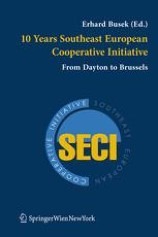
10 Years Southeast European Cooperative Initiative : From Dayton to Brussels
The Southeast European Cooperative Initiative (SECI) was the first international instrument for "peace keeping and peace making". Conceived by the United States with full partnership and participation of the European Union, SECI was a response to the Dayton Agreement. SECI was convinced that sending troops and diplomats did not suffice. It called for a new strategy and approach that would promote economic and social development through regional cooperation. SECI understood that despite their differences, the countries of South East Europe shared many mutual concerns. For the international community, SECI was a prelude to a broader instrument - the Stability Pact for South Eastern Europe, launched in 1999. The approach was a success! This compendium of documents, agreements, analyses and essays gives a glimpse into decision-making processes and results achieved.
