



الصفحة 1
الصفحة 1

Modelling Land-Use Change : Progress and Applications
land-use change simulation modelling is a relatively new and dynamic field of study and this book provides a full overview of the topic, a wide range of applications (both geographically and thematically), a mix of theory and practice, a synthesis of recent research progress, and educational material for students and teachers.
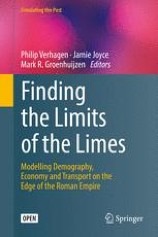
Finding the limits of the limes : Modelling demography, economy and transport on the edge of the Roman Empire
This book demonstrates the application of simulation modelling and network analysis techniques. The book shows the added value of state-of-the-art computer modelling techniques and bridges computational and conventional approaches. Topics that will be of particular interest to archaeologists are the question of (forced) surplus production, the demographic and economic effects of the Roman occupation on the local population, and the structuring of transport networks and settlement patterns. For modellers, issues of sensitivity analysis and validation of modelling results are specifically addressed. This book will appeal to students and researchers working in the computational humanities and social sciences, in particular, archaeology and ancient history.

Enabling a Simulation Capability in the Organisation
Enabling a Simulation Capability in the Organisation addresses the application of simulation modelling techniques in order to enable better informed decisions in business and industrial organisations.
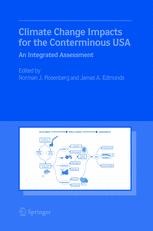
Climate Change Impacts for the Conterminous USA : An Integrated Assessment
In this volume, an improved Integrated Assessment methodology is used to analyse climate change impacts on agriculture, water resources, unmanaged ecosystems, irrigation, and land use in the United States and the economic implications of these impacts. This book contains a series of papers documenting the methods, models, analysis and results of this integrated assessment for a wide ranging set of scenarios describing future climate change. Innovations described include the integration of water resource and agricultural modeling and the refinement of an agriculture and land-use economics model to incorporate results from process-level ecosystem models of agriculture, water and natural ecosystem resources. Scenarios selected for this study address a range of uncertainties associated with choice of climate model, presence or absence of a ‘CO2-fertilization effect’, impacts on international trade in agricultural commodities and their consequences for producers and consumers.
A life cycle for clusters? : The dynamics of agglomeration, change, and adaption
The phenomenon of non-random spatial concentrations of firms in one or few related sectors (clusters) is intensively debated in economic theory and policy. The euphoria about successful clusters however neglects that historically, many thriving clusters did deteriorate into old industrial areas. This book studies the determinants of cluster survival by analyzing their adaptability to change in the economic environment. Linking theoretic knowledge with empirical observations, a simulation model (based in the N/K method) is developed, which explains when and why the cluster's architecture assists or hampers adaptability. It is found that architectures with intermediate degrees of division of labour and more collective governance forms foster adaptability. Cluster development is thus path dependent as architectures having evolved over time impact on the likelihood of future survival.
