



الصفحة 1
الصفحة 1

Old Buildings New Designs
Increasingly, architects are hired to design new work for existing structures. Whether for reasons of preservation, sustainability, or cost-effectiveness, the movement to reuse buildings presents a variety of design challenges and opportunities. Old Buildings, New Designs is an Architecture Brief devoted to working within a given architectural fabric from the technical issues that arise from aging construction to the controversy generated by the various project stakeholders to the unique aesthetic possibilities created through the juxtaposition of old and new.

New Business Models for the Reuse of Secondary Resources from WEEEs : The FENIX Project
This book summarizes research being pursued within the FENIX project, funded by the EU community under the H2020 programme, the goal of which is to design a new product service paradigm able to promote innovative business models, to open added value to the vessels and to create new market segments. It experiments and validates its approach on three new concepts of added-value specialized vessels able to run requested services for several maritime sectors in the most effective, efficient, economic valuable and eco-friendly way. The three vessels share the same lean design methodology, IoT tools and HPC simulation strategy: a lean fact-based design model approach, which combines real operative data at sea with lean methodology, to support the development and implementation of the vessel concepts; IT customized tools to enable the acquisition, processing and usage of on board and local weather data, through an IoT platform, to provide business services to different stakeholders; HPC simulation, providing a virtual towing tank environment, for early vessel design improvement and testing. The book demonstrates that an integrated LCC analysis and LCC strategy to guarantee sustainability to vessels concepts and the proper environmental attention inside the maritime industry.

Modern front-end architecture : Optimize your front-end development with components, storybook, and mise en place philosophy
Learn how to build front-end applications that can help you ship applications faster with fewer defects. Many software projects fail because they are not planned well, or lack organization. Applying strategies from other industries can help you create better software. Explores the “mise en place” technique from cooking and reveals how you can apply it to the art of creating software. Describes to how to structure your code base for reuse, and how to communicate the code’s intent to other developers. You’ll develop your components in isolation and test these building blocks for quality at a granular level. Then compose these components as building blocks in increasingly complicated features. Finally, you’ll apply some strategies not directly related to code to ensure maximum quality and efficiency. You will : Structure an application as a series of components / Build a component library that others in an organization can leverage / Ensure quality and accessibility at a component level rather than a page or app level / Test code in a way that gives the maximum amount of confidence while providing an excellent developer experience / Automate repeatable tasks

Mathématiques, informatique, physique. Au fil des TIPE = Mathematics, computer science, physics : Throughout the TIPE projects
Presents nine cases in mathematics, physics, or computer science used in the competition. Each case study is accompanied by general remarks, commentary, a suggested outline, questions a jury might ask, and an explanation placing the case study's theme within its scientific context. The authors hope not only to assist CPGE students in their preparation but also to provide valuable support to teachers who have embraced this new pedagogical approach. Laurent Decreusefond and Alain Maruani, the pedagogical coordinators for the mathematics, computer science, and physics component of the TIPE, have made significant contributions to its design and implementation.
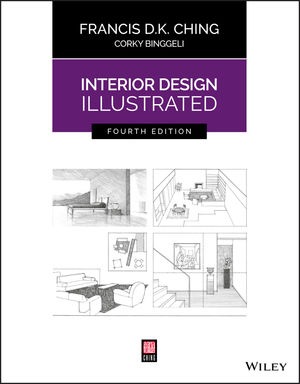
Interior Design Illustrated
Introduces complex design concepts in a visually stunning format; from defining the space and using the elements of design, to planning building systems and incorporating sustainable materials, this volume embodies the idea that beauty and function are not separate entities, but two parts of a whole. This new fourth edition has been updated to reflect the latest building codes and design practices, with discussion of new materials related to acoustics, lighting, and sustainable furnishings. Renewed attention to sustainability includes new information on energy conservation, design for longevity and adaptive reuse of existing buildings, as well as an updated discussion on LED lighting, workplace design, use of color, and computer modeling software to provide a well-rounded view of how interior design firms are working today. This classic text brings the elements and principles of design to life, giving students the practical skills they need to transition from idea to concept. Understand the latest building codes and how to integrate them into your design Explore new advances in materials, lighting, and wireless technology Design from a perspective of sustainability, longevity, and energy efficiency Delve into BIM, including software for modeling lighting, acoustics, and more

Integrated Urban Water Resources Management
Growing populations and rising standards of living exert stress on water supply and the quality of drinking water. In wastewater management, new challenges are caused by new chemicals of concern, including endocrine disrupters, pharmaceuticals, hormones, and personal care products, which often pass through wastewater treatment plants unabated, but may cause serious impacts on receiving aquatic ecosystems. Advanced wastewater treatment leads to production of biosolids, which are processed in various ways, including on-land applications in agriculture. Municipal effluents, combined with increasing withdrawals of water, lead to the worsening of receiving water quality. Expert opinions indicate that the only way to deal with the current urban water management dilemmas is by integrated management and innovative delivery of water services. This book presents important aspects of Challenges in Management of Urban Water Resources, Challenges in Urban Water Supply, Urban Drainage and Water Bodies, Wastewater Treatment and Security, and Wastewater Treatment and Reuse.
High Confidence Software Reuse in Large Systems ; 10th International Conference on Software Reuse, ICSR 2008, Beijing, China, May 25-29, 2008 Proceedings
This book constitutes the refereed proceedings of the 10th International Conference on Software Reuse, ICSR 2008, held in Beijing, China, in May 2008.The 40 revised full papers presented together with 5 workshop summaries and 5 tutorials were carefully reviewed and selected from numerous submissions. The papers are organized in topical sections on architecture and reuse approaches, high confidence and reuse, component selection and reuse repository, product line, domain models and analysis, service oriented environment, components and services, reuse approaches and frameworks, as well as reuse approaches and methods.

Heritage building conservation : Sustainable and digital modelling
Covers: The technology used to digitally document heritage buildings, including LIDAR, photogrammetry, Heritage Building Information Modelling (HBIM), and Virtual Reality (VR) technologies Introducing a Maintainability Index of Heritage Buildings (MIHB) to support the decision-making and prioritization process for the maintenance of heritage buildings The adaptive reuse of heritage buildings Modelling embodied and operational energy performance Using Chatbot and Blockchain technology to support the management and preservation of heritage buildings Ultimately, this book presents a useful tool for use in heritage management and highlights how the reusability of heritage buildings is critical to the creation and survival of sustainable communities.

Haptic and Audio Interaction Design ; 1st International Workshop, HAID 2006, Glasgow, UK, August 31 - September 1, 2006, Proceedings
Overview The International Workshop on Haptic and Audio Interaction Design was - ganized as part of the EPSRC-funded MultiVis project. The main focus of the workshop was to investigate how the modalities of sound and haptics (touch) could be used together in interaction, and what novel interfaces could be p- vided when they are used in conjunction. What are the relative advantages of each of the modalities when used alone and together? Are there reasons why haptic-based information is moreuseful in certain situations than equivalent - dio information? How can di?erent modalities be used together to create c- pelling and useful interaction with computer-based systems?

Hands-On Design Patterns with Java : Learn Design Patterns That Enable the Building of Large-Scale Software Architectures
Java design patterns are reusable and proven solutions to software design problems. This book covers over 60 battle-tested design patterns used by developers to create functional, reusable, and flexible software. Hands-On Design Patterns with Java starts with an introduction to the Unified Modeling Language (UML), and delves into class and object diagrams with the help of detailed examples. You'll study concepts and approaches to object-oriented programming (OOP) and OOP design patterns to build robust applications. As you advance, you'll explore the categories of GOF design patterns, such as behavioral, creational, and structural, that help you improve code readability and enable large-scale reuse of software. You’ll also discover how to work effectively with microservices and serverless architectures by using cloud design patterns, each of which is thoroughly explained and accompanied by real-world programming solutions. By the end of the book, you’ll be able to speed up your software development process using the right design patterns, and you’ll be comfortable working on scalable and maintainable projects of any size.

Graeme Mann & Patricia Capua Mann
The Lausanne architects Mann & Capua Mann have been active since 1991. Their structures are compelling thanks to the variety of their views, the diversity of their light effects, and the expressive simplicity of their spatial effects.

Generative and transformational techniques in software engineering II : International Summer School, GTTSE 2007, Braga, Portugal, July 2-7, 2007. Revised Papers
This tutorial book presents an augmented selection of the material presented at the International Summer School on Generative and Transformational Techniques in Software Engineering, GTTSE 2007, held in Braga, Portugal, in July 2007.The 7 tutorial lectures presented together with 5 short tutorials and 4 contributions to the participants workshop were carefully selected during multiple rounds of reviewing and improvement. The tutorials given by renowned representatives of complementary approaches and problem domains combine foundations, methods, examples, and tool support.
Form-oriented analysis : A new methodology to model form-based applications
Form-based applications range from simple web shops to complex enterprise resource planning systems. Draheim and Weber adapt well-established basic modeling techniques in a novel way to achieve a modeling framework optimized for this broad application domain. They introduce new modeling artifacts, such as page diagrams and form storyboards, and separate dialogue patterns to allow for reuse. In their implementation they have developed new constructs such as typed server pages, and tools for forward and reverse engineering of presentation layers. The methodology is explained using an online bookshop as a running example in which the user can experience the modeling concepts in action. The combination of theoretical achievements and hands-on practical advice and tools makes this book a reference work for both researchers in the areas of software architectures and submit-response style user interfaces, and professionals designing and developing such applications. More information and additional material is also available online.
Facelets Essentials : Guide to JavaServer™ Faces View Definition Framework
Facelets is a templating language developed from the ground up with JavaServer Faces in mind. Created in response to the many concerns involving JavaServer Pages (JSP) when building JavaServer Faces (JSF) views, Facelets steps outside of the JSP specification and provides a highly performant, JSF–centric view technology. Facelets' top properties, templating, reuse, and ease of development, allow it to help making JSF a technology suitable for large–scale projects. One of the first things a developer using Facelets finds is that it immediately leads to a reduction in user interface code.
Facebook API Developers Guide
The Facebook API allows web developers to create Facebook applications and access Facebook data from other applications. Facebook API Developers Guide covers the use and implementation of the Facebook API—what the key features are and how you can access them. You will learn, through practical examples, the main features of the Facebook API including an introduction to the API–specific languages FQL and FBML. These examples are further supported by the introduction of other technologies like language libraries, relational database management systems, and XML. Covers all key features of the Facebook API Explains the API languages FQL and FBML Teaches by example, with useful code and tips you can use in your own applications

Environmental Challenges in Civil Engineering II
Rports on findings concerning structural material behavior, and new methods and technologies in constructions. A special emphasis is given to sustainable constructions practices, including material recycling and reuse, renovation and restoration of historical building and to those fostering sustainable development of cities and rural areas, and a better integration of buildings with the environment. Offering a good balance of theory and practice, and covering both technical and organizational aspects in civil engineering and architectural projects, this book offers extensive information on solutions and current challenges in construction projects and structural interventions in the context of environmental protection and earthquake prevention.

Energy Manual : Sustainable Architecture
Presents a comprehensive look at the constructional parameters of energy efficiency and sustainability. It offers an advance look at the legal regulations being planned by the EU, and – as a tool ready for immediate use by architects, engineers, and designers in their daily work – it points the way toward the efficient and sustainable construction and operation of buildings. With its focus on the entire lifecycle of a building, it provides an integrated perspective – a necessary prerequisite for sustainable economic management.

Efficient Management of Wastewater : Its Treatment and Reuse in Water-Scarce Countries
The book highlights non-conventional solutions within the field of wastewater treatment and reuse predominantly for professionals and decision makers. It focuses on technologies like anaerobic and extensive treatment of municipal, domestic wastewater and grey water which are reliable, sustainable, low cost and suitable for rural and sub urban areas. Additionally, particular innovative on site concepts are presented.

Dynamical Systems : Examples of Complex Behaviour
Our aim is to introduce, explain, and discuss the fundamental problems, ideas, concepts, results, and methods of the theory of dynamical systems and to show how they can be used in specific examples. Itis also important to find out when a certain dynamic behavior is stable under small perturbations, as well as to understand the various scenarios of instability. Finally, an essential aspect of a dynamic evolution is the transformation of some given initial state into some final or asymptotic state as time proceeds. The temporal evolution of a dynamical system maybe continuous or discrete, but it turns out that many of the concepts to be introduced a reuseful in either case.

Design Drawing
Covers the basics of drawing, including line, shape, tone, and space. Guiding the reader step-by-step through the entire drawing process, this Third Edition also examines different types of drawing techniques such as multiview, paraline, and perspective drawings—and reveals how the application of these techniques creates remarkable results. • Features over 1,500 hand drawings—stunning illustrations in the author's signature style that reinforce the concepts and lessons of each chapter • Offers new exercises and illustrative examples that range in complexity • Presents all-new digital drawing topics, such as hybrid floor plans, digital models and fabrication, and hand-to-digital fluency • Includes access to a new website featuring videos of the author demonstrating freehand techniques in a step-by-step manner in the studio and on location
