



الصفحة 1
الصفحة 1

Tumors of the Spinal Canal
Presents a focused, case-oriented approach to a specific disease entity: tumors located within the spinal canal. Each tumor type constitutes its own chapter and additional chapters focus on more novel trends in the field, such as radiosurgery and minimally invasive surgical techniques. In each chapter, the authors provide expert opinions on preoperative goals, intraoperative techniques and decision-making, and postoperative paradigms, including surveillance guidelines and thresholds for initiating adjuvant therapy. The management of intradural tumors has become increasingly interdisciplinary, and one of the major goals of this text is to familiarize the treating neurosurgeon with the latest advances in both operative and non-operative strategies.

The SAGES Manual of Perioperative Care in Minimally Invasive Surgery
The perfect execution of a minimally invasive operative technique is only part of the equation for ensuring a favorable surgical outcome. It is also essential to have a complete understanding of the entire spectrum of perioperative care, including preoperative evaluation, technique selection, and postoperative management. Further, it is important to understand the physiologic impact of the C02 pneumoperitoneum. The SAGES Manual of Perioperative Care in Minimally Invasive Surgery provides strategies for successful patient management before, during and after laparoscopic surgery. This easy-to-read manual includes comprehensive and authoritative coverage of perioperative concepts and strategies that not only optimize outcomes but also ensures quality patient care beyond the operating room.

The SAGES Manual : A Practical Guide to Bariatric Surgery
Obesity is an epidemic in most developed countries. Bariatric surgery is growing at an exponential rate, with more than 140,000 bariatric operations performed in the U.S. yearly. In keeping with the other manuals in the series, The SAGES Manual of Bariatric Surgery presents a practical "how to" approach to minimally invasive bariatric surgery. The patient care needs are addressed in introductory chapters dealing with the rationale for surgery; overview of operations; preoperative assessment; psychological evaluation; and postoperative follow up, including behavioral issues and dietary guidelines. The editors then address the practicalities of setting up a bariatric program and both case and practice management.

Surgical Treatment of Hilar and Intrahepatic Cholangiocarcinoma
Cholangiocarcinoma is the second most frequent primary neoplasm of the liver and its incidence is increasing in Western countries. These neoplasms arise from the biliary tract and can be categorized according to their anatomical location as intrahepatic and extrahepatic cholangiocarcinomas. Their prognosis is poor and most patients are unfortunately not suitable for curative resection at the time of diagnosis, due to advanced stage of tumor. However, in recent years, improvement in non invasive diagnostic imaging modalities, preoperative optimisation of liver function, a better understanding of liver anatomy and increased safety of liver surgery had gradually improved outcome

Surgery of the Thyroid and Parathyroid Glands
The aim of this text is to create a unique in-depth comprehensive reference covering all surgically relevant thyroid and parathyroid diseases. It is a definite reference presenting the latest information on the management of common and rare disorders of the thyroid and parathyroid glands. International authorities provide detailed discussions on operative techniques and treatments that are accompanied by rationales for particular approaches advocated by the authors. The topics include the description of all surgically relevant pathologies, the preoperative surgical evaluation, decision making, and operative strategies for the different thyroid and parathyroid diseases. In addition, experts present the molecular basis for thyroid neoplasia and the current understanding of the genetics of inherited thyroid and parathyroid diseases. Evolving modern operative techniques like the minimally invasive videoscopic approach to the thyroid and parathyroids are also covered.

Strabismus Surgery and its Complications
Strabismus Surgery and its Complications is divided into two is provided based on evidence-based medicine where available. distinct sections. Part I outlines the surgical management of Consensus and/or common sense advice is provided where - strabismus in 17 chapters. A full range of topics is covered idence-based medicine is not available. A chapter on managing including basic anatomy and physiology, surgical planning, patients with atypical and unexpected anatomical features and preoperative and postoperative management, and surgical a chapter on the medicolegal aspects of strabismus surgery are techniques. Surgical techniques are described in dedicated included.

Shoulder Arthroplasty
Louis Bigliani, MD, and Evan L. Flatow, MD, two pioneers in the field, have edited this practical book that presents the orthopedic surgeon and resident with a logical, step-by-step guide to successfully performing shoulder arthroplasty. Select contributors share their extensive knowledge and experience with readers. An introductory chapter on surgical approaches and preoperative evaluation serves as a springboard for in-depth examinations of cutting-edge techniques. Topics include total shoulder replacement, glenoid component preparation and soft tissue releases, and revision shoulder arthroplasty. Additionally, one chapter is devoted to arthroplasty for proximal humerus fractures, nonunions, and malunions. The comprehensive text also addresses conditions such as arthroplasty and rotator cuff deficiency and glenohumeral inflammatory arthritis. Rehabilitation of shoulder arthroplasty is covered as well. The book is complete with a wealth of illustrations that clarifies key concepts. Specific examples of complications and how to avoid and correct them are found throughout, underscoring the importance of this essential resource.

Revision Sinus Surgery
In this extraordinary guide, the world’s most prominent rhinologists illustrate their experiences in the diagnosis and management of recurrent sinus disease and skull base lesions. Chapters are lavishly illustrated and cover: preoperative planning / medical management / relevant surgical techniques/ how to avoid complications / management of complications. This invaluable resource is designed to prevent complications and improve the outcomes of revision sinus surgeries. Both practicing and in-training otolaryngologists can use this comprehensive volume as an all-in-one source for the evaluation and management of recurrent sinus disease and skull base pathology.

Reoperative Pediatric Surgery
Reoperative surgery is a prevailing challenge faced by pediatric surgeons. Reoperative Pediatric Surgery constitutes in one volume the most up to date information and techniques for critical cases in all of the pediatric surgical specialties including oncology, gastroenterology, gynecology, urology, radiology, and cardiology. Recognized experts impart their knowledge of indications for reoperative surgeries, radiologic evaluation, surgical procedures which may require seldom used and extremely complex techniques, and the risks and outcomes of these specialized approaches. These practicing surgeons provide insight into intricate corrective procedures involving the placement of grafts, stents, and supports with necessary forecasting for complications arising from anatomic growth and disease recurrence.

Positioning techniques in surgical applications: thorax and heart surgery - vascular surgery - visceral and transplantation surgery - urology - surgery to thespinal Cord andextremities - arthroscopy - pediatric surgery - navigation/ISO-C 3D
The success of an operation depends not only on careful dures with direct visualisation techniques. Special inst- clarification of the indications, selection of the right time ments are only used for one specific purpose; a surgical for operating and technically neat operating techniques, needle today has its own anatomy. In addition, these but also on correct preoperative preparation and positio- aspects are joined by stricter safety conditions, increased ning of the patient.

Perioperative Critical Care Cardiology
In this book, discussed are topics of particular importance to critical care cardiovascular diagnosis and management in the perioperative period. Chapter topics are the causes for heart failure; the pathophysiology of heart failure; coronary heart disease and ischemic preconditioning; hypertensive urgencies and emergencies; diagnosis of heart failure; preoperative cardiac risk assessment; hemodynamic monitoring in patients with heart failure; electrocardiography of heart failure - features and arrhythmias; pharmacologic management for patients with heart failure; devices for management of heart failure; pacemaker and internal cardioverter-defibrillator therapies; management of cardiopulmonary arrest; circulatory shock - anaphylactic, cardiogenic, haemorrhagic, septic; prevention and management of cardiac dysfunction during and after cardiac surgery; vasodilator therapy - systemic and pulmonary; and, thromboembolism and anticoagulation.
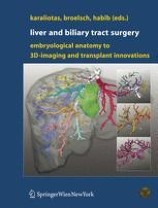
Liver and Biliary Tract Surgery : Embryological Anatomy to 3D-Imaging and Transplant Innovations
The book also covers cutting-edge research and technological advances that will shape the surgery of tomorrow. There is little doubt that technological advances in preoperative imaging, such as 3-D reconstruction, preoperative preparation with portal vein embolisation and operative techniques using bloodless RF resection methods, are already changing the nature of liver surgery.
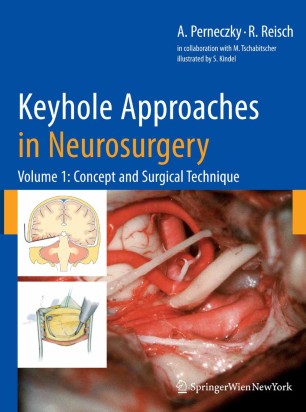
Keyhole Approaches in Neurosurgery : Vol. I Concept and surgical technique
Offers a detailed systematic overview of the different approaches for minimally invasive craniotomies. After a description of the historical development of the particular craniotomy, each chapter illustrates the anatomical construction of the target region and the surgical approach itself with artistic illustrations and photographs of human cadaver dissections.

ITI treatment guide ; Vol.6 : Extended edentulous spaces in the esthetic zone
Provides clinical recommendations for implant-supported prosthodontic treatments in patients with multiple missing adjacent teeth in the esthetic zone. The authors review the current literature before detailing the treatment alternatives and procedures based on the scientific and clinical evidence. Special emphasis is given to preoperative evaluation, treatment planning, and assessment of risk factors for the complex indications of the esthetic zone. Descriptions of the surgical and prosthodontic procedures include step-by-step clinical case presentations. Complications of various etiologies are also highlighted with preventive measures as well as clinical cases that document their management.
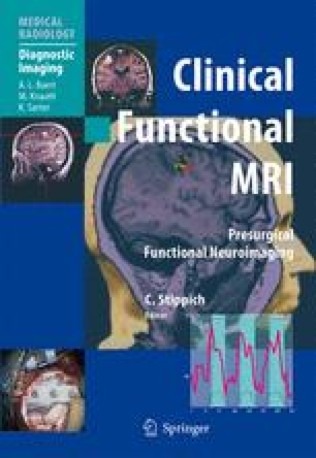
Clinical Functional MRI : Presurgical Functional Neuroimaging
Functional magnetic resonance imaging (fMRI) has contributed significantly to progress in neuroscience by permitting noninvasive imaging of the "human brain at work" under physiological conditions. Within clinical neuroimaging, fMRI is opening up a new diagnostic field by measuring and visualizing brain function. However, fMRI is not yet a standard diagnostic imaging procedure. This textbook is devoted to preoperative fMRI in patients with brain tumors and epilepsies, which are the most well-established clinical applications. By localizing and lateralizing specific brain functions in individual patients, as well as epileptogenic zones, fMRI facilitates the selection of a safe treatment and the planning and performance of function-preserving neurosurgery.

Cleft Maxillary Reconstruction
Aims to teach the reader about all aspects of maxillary cleft reconstruction, with emphasis on management of the patient born with a congenital anomaly, cleft lip and palate, which will usually have been managed by several different providers during earlier childhood.
Anesthesia Considerations for the Oral and Maxillofacial Surgeon
Strengthens the margin of safety of office-based anesthesia administration by helping practitioners determine whether the patients they treat are good candidates for office-based anesthesia. This book is organized into three sections. The first section provides a review of the principles of anesthesia, including the pharmacology of anesthetic agents, local anesthesia, patient monitoring, preoperative evaluation, the airway, and management of emergencies and complications. The major organ systems of the body are reviewed in section two, and the most common comorbid conditions that affect these systems are described in terms of their pathophysiology, diagnosis, management, and anesthesia-related considerations. Section three reviews patient groups that warrant special consideration in the administration of office-based anesthesia, such as geriatric, pediatric, pregnant, and obese patients. Spiral-bound and featuring tabs for quick and easy reference, this important book belongs on the shelf of every clinician who provides anesthesia in the office setting.
