



الصفحة 1
الصفحة 1

Medical terminology systems : A body systems approach
Create an immersive, multimedia experience that tracks each student’s progress until they’ve mastered the language of medicine. Established record of presenting medical word building principles based on competency based curricula. Because of the pedagogical success of previous editions, this edition continues its structural design as a textbook-workbook that complements all teaching formats, including traditional lecture, distance learning, and independent or self-paced study

Medical terminology : Learning through practice
Designed to direct your study of medical terminology by guiding you through an organizedapproach to step-by-step learning. Author Paula Bostwick has invested her time,research, and talents to help you succeed in learning medical terminology.

Grammar : 1001 practice questions For dummies
Learn to dot your I’s and cross your T’s with this hands-on grammar practice The rules of grammar can seem abstract and confusing. But putting them into practice will help you understand and retain grammatical conventions. In Grammar: 1001 Practice Questions For Dummies, you’ll get the step-by-step and hands-on experience you need to improve your conjugations, gerund use, punctuation, and more.
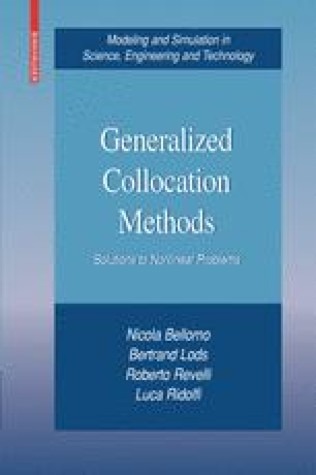
Generalized collocations methods : Solutions to nonlinear problems
This book examines various mathematical tools—based on generalized collocation methods—to solve nonlinear problems related to partial differential and integro-differential equations. Covered are specific problems and models related to vehicular traffic flow, population dynamics, wave phenomena, heat convection and diffusion, transport phenomena, and pollution. Based on a unified approach combining modeling, mathematical methods, and scientific computation, each chapter begins with several examples and problems solved by computational methods; full details of the solution techniques used are given. The last section of each chapter provides problems and exercises giving readers the opportunity to practice using the mathematical tools already presented.
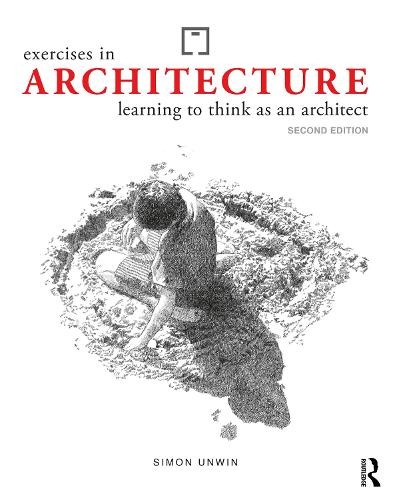
Exercises in Architecture : Learning to Think as an Architect
It involves awakening abilities that remain dormant in most people. It is like learning language for the first time; a task made more mystifying by the fact that architecture deals not in words but in places: places to stand, to walk, to sit, to hide, to sleep, to cook, to eat, to work, to play, to worship… Written for those who want to be architects. It suggests a basis for early experiences in a school of architecture; but it could also be used in secondary schools and colleges, or as self-directed preparation for students in the months before entering professional education.

English Grammar in Use Supplementary Exercises Book with Answers : To Accompany English Grammar in Use
The first choice for intermediate (B1-B2) learners. This book contains 200 varied exercises to provide learners with extra practice of the grammar they have studied.
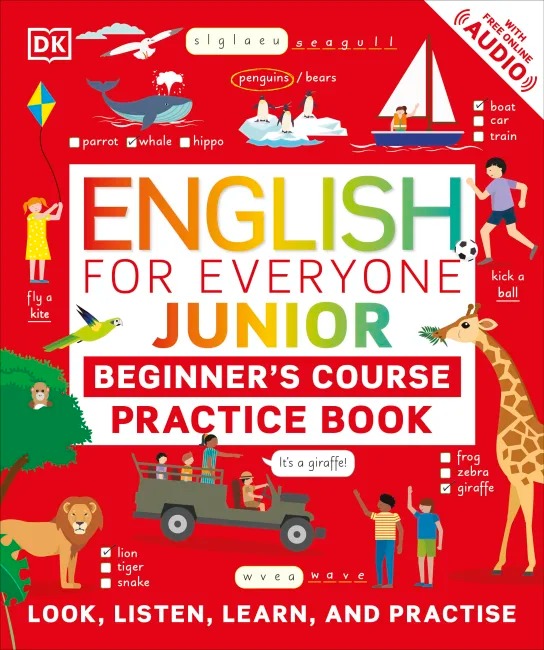
English for Everyone Junior Beginner's Practice Book : Look, Listen, Learn, and Practise
Featuring hundreds of exercises, this practice book tests all the vocabulary and grammar structures taught in the English for Everyone Junior: Beginner's Course, making use of a range of both familiar and new exercise mechanisms.
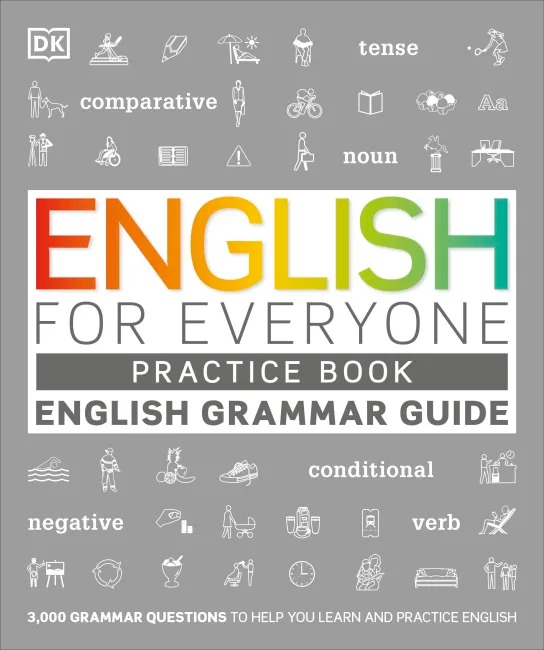
English for everyone : English grammar guide practice book
A comprehensive reference book that makes even the trickiest grammar rules clear and simple. The Practice Book mirrors the unit-by-unit structure of the Grammar Guide. Each Practice Book unit is full of carefully graded grammar exercises to drill and reinforce the grammar you have learned in the corresponding Grammar Guide unit. These exercises will help you build up your confidence and become more fluent, giving you the chance to practice using the most important English grammar constructions again and again.

Elementary linear algebra applications version
Gives an elementary treatment of linear algebra that is suitable for a first course for undergraduate students. The aim is to present the fundamentals of linear algebra in the clearest possible way; pedagogy is the main consideration. Calculus is not a prerequisite, but there are clearly labeled exercises and examples (which can be omitted without loss of continuity) for students who have studied calculus.

Elementary linear algebra
Gives an elementary treatment of linear algebra that is suitable for a first course for undergraduate students. The aim is to present the fundamentals of linear algebra in the clearest possible way; pedagogy is the main consideration. Calculus is not a prerequisite, but there are clearly labeled exercises and examples (which can be omitted without loss of continuity) for students who have studied calculus.
Computer vision : Algorithms and applications
Explores the variety of techniques commonly used to analyze and interpret images. It also describes challenging real-world applications where vision is being successfully used, both for specialized applications such as medical imaging, and for fun, consumer-level tasks such as image editing and stitching, which students can apply to their own personal photos and videos.

Computer vision : A modern approach
Provides the most complete treatment of modern computer vision methods by two of the leading authorities in the field. This accessible presentation gives both a general view of the entire computer vision enterprise and also offers sufficient detail for students to be able to build useful applications. Students will learn techniques that have proven to be useful by first-hand experience and a wide range of mathematical methods.
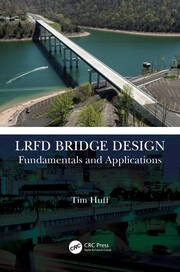
LRFD Bridge Design : Fundamentals and Applications
Examines and explains material from the 9th edition of the AASHTO LRFD Bridge Design Specifications, including deck and parapet design, load calculations, limit states and load combinations, concrete and steel I-girder design, bearing design, and more. With increased focus on earthquake resiliency, two separate chapters– one on conventional seismic design and the other on seismic isolation applied to bridges– will fully address this vital topic. The primary focus is on steel and concrete I-girder bridges, with regard to both superstructure and substructure design. / Includes several worked examples for a project bridge as well as actual bridges designed by the author / Examines seismic design concepts and design details for bridges / Presents the latest material based on the 9th edition of the LRFD Bridge Design Specifications / Covers fatigue, strength, service, and extreme event limit states / Includes numerous solved problems and exercises at the end of each chapter to illustrate the concepts presented
Advanced English Grammar : A Linguistic Approach
The second edition of this book pulls from linguistic theory all the relevant notions that will enable the language student to fully grasp English grammar. After introducing form and function, the authors cover verbs, nouns, aspect and tense, modality and discourse. Readers are led through the underlying principles of language use, with the book presupposing only a basic grasp of linguistic terminology and focusing on the critical issues.
501 Math Word Problems
Contains only word problems - the kinds you encounter at school and on high stakes tests. Gaining familiarity with this specific question type is a proven technique for increasing test scores. The Skill Builder in Focus method provides the targeted practice on these questions necessary to attain higher scores. Questions are divided into six chapters: algebra, geometry, fractions, percents, decimals, and miscellaneous math. Within each chapter, questions move from easy to advanced, giving test-takers the opportunity to gain confidence in each math area. Each chapter contains questions, answers, and detailed explanations to reinforce learning and understanding. Diagrams and useful terminology help clarify math rules for effective studying and retention.
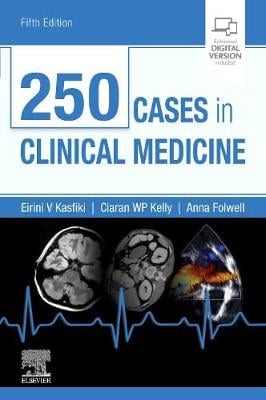
250 cases in clinical medicine - MRCP study guides
Thoroughly updated to reflect the changing form of the Royal College of Physicians' curriculum. Some chapters from the previous edition have been dropped to allow new, more clinically relevant topics to be included. Chapters of symptom-based cases have also been added, as well as a section on acute medical problems and their management.
100 cases in clinical pathology and laboratory medicine
Presents 100 clinical scenarios commonly seen by medical students and junior doctors in the emergency department, outpatient clinic, operating theatre or in general practice. A succinct summary of the patient's history, examination and initial investigations is followed by questions on each case, with particular emphasis on the interpretation of the results and in which an understanding of the underlying clinical pathology is central to arriving at the correct diagnosis. The answer includes a detailed discussion on each topic, providing an essential revision aid as well as a practical guide for students and junior doctors, especially those preparing for undergraduate and postgraduate examinations.
