



الصفحة 1
الصفحة 1

Indigenous Life Projects and Extractivism : Ethnographies from South America
Exploring indigenous life projects in encounters with extractivism, the present volume discusses how current turbulences actualise questions of indigeneity, difference and ontological dynamics in the Andes and Amazonia. While studies of extractivism in South America often focus on wider national and international politics, this contribution instead provides ethnographic explorations of indigenous politics, perspectives and worlds, revealing loss and suffering as well as creative strategies to mediate the extralocal. Seeking to avoid conceptual imperialism or the imposition of exogenous categories

Corporate Control and Enterprise Reform in China : An Econometric Analysis of Block Share Trades
This study sheds light on the efficiency of corporate control allocation in Chinese listed firms. Using a panel data set for the period 1996 to 2006, it examines the frequency, causes and consequences of changes in corporate control. The results indicate that poorly performing firms are the predominant targets of control changes; shareholder and creditor control generally act as a complement for changes in control. Following the change in ownership there is a substantial amount of corporate restructuring and an improvement in operating performance. Significant differences in these dimensions emerge, however, between State and private transfers of control. The findings not only provide insights into the motives and constraints of the key players involved in governance practices in China; but they also contain useful implications for other emerging markets around the world that have weak legal systems and weak property rights protection.
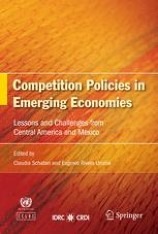
Competition Policies in Emerging Economies : Lessons and Challenges from Central America and Mexico
Do small developing economies, or SDEs, need a specific competition policy to create competitive markets? Against the backdrop of globalization, protectionist policies that promote state ownership and heavy regulation of key industries are proving increasingly ineffective for driving growth. Countries around the world are instituting reforms to promote competition and business creation, yet the economic and political concentration of power, feeble judicial systems, and the scarcity of human and financial resources pose special challenges to SDEs. Competition Policies in Emerging Economies features an in-depth analysis of two strategic industries — telecommunications and banking — in several Central American nations which sheds light on the dynamics of the transition to deregulation and trade liberalization. Examining the lessons learned from these experiences and presenting discussion of political, legal, economic, financial, cultural, and organizational issues, the book provides unique perspectives on competition policy and economic development.

Cities After Crisis : Reinventing Neighborhood Design from the Ground-Up
The book details how these crises have led to a new urban vision—from avantgarde modern design to an artisan aesthetic that calls for simplicity and the everyday, from the sustainable development paradigm to a resilient vision that defends de-growth and the re-wilding of cities, from a homogenizing globalism to a new localism that values what is distinctive and nearby, from the privatization of the public realm to the commoning and self-governance of urban resources, and from top-down to bottom-up processes based on the engagement and empowerment of communities.

After Bourdieu : Influence, Critique, Elaboration
Intellectual origins & orientations We begin by providing an overview of Bourdieu’s life as a scholar and a public intellectual. The numerous obituaries and memorial tributes that have appeared following Bourdieu’s untimely death have revealed something of his life and career, but few have stressed the intersection of his social origins, career trajectory, and public intellectual life with the changing political and social context of France. This is precisely what David Swartz’s “In memoriam” attempts to accomplish. In it he emphasizes the coincidence of Bourdieu’s young and later adulthood with the period of decolonization, the May 1968 French university crisis, the opening up of France to privatization of many domains previously entrusted to the state (l’état providence), and, most threatening to post-World War II reforms, the emergence of globalization as the hegemonic structure of the 21st century.

A Successful Transformation? : Restructuring of the Czech Automobile Industry
This book investigates the complex processes of the post-1990 transformation in the Czech automotive industry and its selective integration in the West European automobile manufacturing system. The post-1990 restructuring of the Czech automotive industry is analyzed in the context of its pre-1990 development and in the context of the Central and East European automobile industry as a whole. Specifically, the book examines the development and post-1990 restructuring of the Czech passenger car industry, the components industry and truck manufacturing. Major topics covered include the development of the Czech automotive industry before 1990, the detailed case study of Škoda Auto, the effects of the post-1990 privatization in the Czech automotive industry, the role and effects of foreign direct investment during the post-1990 restructuring, the restructuring of the Czech truck industry, and the rapid development of the automotive components manufacturing.
