



الصفحة 1
الصفحة 1
Flowering Plants. Eudicots: Asterales
This volume contains a complete systematic treatment of the flowering plant order Asterales, comprising 12 families with approx. 1,720 genera and about 26,300 species. The order includes Compositae as the largest family of flowering plants. Based on traditional studies, several of the constituent families have long been recognized as being closely interrelated. The inclusion in the order of Alseuosmiaceae, Argophyllaceae, Carpodetaceae, Phellinaceae and Rousseaceae is the result mainly of new advances in molecular systematics. Identification keys are provided for all genera, and likely phylogenetic relationships are discussed extensively. The wealth of information contained in this volume makes it an indispensable source for all working in the fields of pure and applied plant sciences.
Flowering Plants. Eudicots : Berberidopsidales, Buxales, Crossosomatales, Fabales p.p., Geraniales, Gunnerales, Myrtales p.p., Proteales, Saxifragales, Vitales, Zygophyllales, Clusiaceae Alliance, Passifloraceae Alliance, Dilleniaceae, Huaceae, Picramniaceae, Sabiaceae
In this volume, the ninth of the series, treatments are offered for 52 families containing 432 genera belonging to 13 eudicot orders, many of which have recently been newly designed; four families remain unassigned to order. Emphasis is on the early-diverging eudicots and basal core eudicots the phylogenetic relationships and diversification of which have recently been in focus and are critically discussed. Systematically relevant information includes descriptions of families and genera, keys to the genera, and references to recent revisions. Introductions to the families provide convenient, in-depth overviews of key aspects of systematics. The wealth and precision of information contained in this volume will make it an important source of reference for both the scholar and the practitioner in the fields of pure and applied plant sciences.

Ethnobotany : A phytochemical perspective
Explores the chemistry behind hundreds of plant medicines, dyes, fibers, flavors, poisons, insect repellants, and many other uses of botanicals. Bridging the gap between ethnobotany and chemistry, this book presents an introduction to botany, ethnobotany, and phytochemistry to clearly join these fields of study and highlight their importance in the discovery of botanical uses in modern industry and research. Part I. Ethnobotany, explores the history of plant exploration, current issues such as conservation and intellectual property rights, and a review of plant anatomy. An extensive section on plant taxonomy highlights particularly influential and economically important plants from across the plant kingdom. Part II. Phytochemistry, provides fundamentals of secondary metabolism, includes line drawings of biosynthetic pathways and chemical structures, and describes traditional and modern methods of plant extraction and analysis. The last section is devoted to the history of native plants and people and case studies on plants that changed the course of human history from five geographical regions: Africa, the Americas, Asia, Europe, and Ocean. Throughout the entire book, vivid color photographs bring science to life, capturing the essence of human botanical knowledge and the beauty of the plant kingdom.
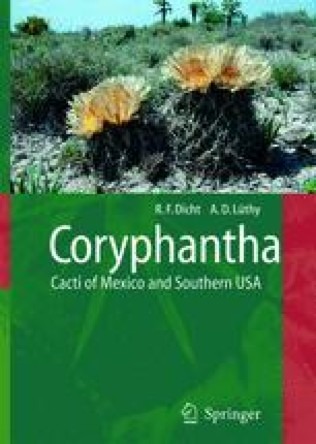
Coryphantha : Cacti of Mexico and Southern USA
This unique reference work presents the first comprehensive taxonomy of Coryphantha, with a complete key to the genus. During this process, the authors even discovered some new plants. More than 300 high-quality colour photos showing the various cacti and their habitats as well as distribution cards and illustrations explaining the morphological details complement the text.
Atlas of seeds and fruits of Central and East-European Flora : The carpathian mountains region
The Carpathian flora occurs not only in the Carpathian Mountains, but also in large lowlands extending towards the south, north and east and involves introduced and invading flora of more than 7,500 species. Since the morphological characteristics of the seeds are usually constant they are very important for determination of systematic units. The present atlas of seeds with nearly 4,800 seed illustrations is supplemented with detailed seed descriptions, brief plant descriptions, locality and the native source of plants. This publication is unique, both in its extent – with so many plant seeds from such a wide-ranging region - and in the form of its presentation – with such detailed descriptions.
