



الصفحة 1
الصفحة 1

High-Performance Modelling and Simulation for Big Data Applications: Selected Results of the COST Action IC1406 cHiPSet
This book is the final compendium of case studies emanated from “High-Performance Modelling and Simulation for Big Data Applications” (cHiPSet).cHiPSet has created a sustainable reference network linking applied research in High Performance Computing (HPC) and Modelling & Simulation to tangibly address Big Data challenges.cHiPSet has also endeavoured to use and exploit results through Open Science practices, i.e., open access publication, open access to data repositories, and open-source software development. A testament to this philosophy, this compendium is set to become a required reference for the fast-changing fields of HPC, Big Data, and Modelling & Simulation.

Formal Methods for Performance Evaluation ; 7th International School on Formal Methods for the Design of Computer, Communication, and Software Systems, SFM 2007, Bertinoro, Italy, May 8-June 2, 2007, Advanced Lectures
This book presents a set of 11 papers accompanying the lectures of leading researchers given at the 7th edition of the International School on Formal Methods for the Design of Computer, Communication and Software Systems, SFM 2007.

Formal Methods for Computational Systems Biology ; 8th International School on Formal Methods for the Design of Computer, Communication, and Software Systems, SFM 2008 Bertinoro, Italy, June 2-7, 2008 Advanced Lectures
This volume presents the set of papers accompanying the lectures of the eighth International School on Formal Methods for the Design of Computer, Com- nication, and Software Systems (SFM). This series of schools addresses the use of formal methods in computer science asaprominent approach to theri gorousdesign of computer, communication, and software systems. The main aim of the SFM series is to ofer a good spectrum of current research in foundations as well as applications of formal methods, which can be of help for graduate students and young researchers who intend to approach the feld.

Digital Control Systems : Design, Identification and Implementation
Digital Control Systems demonstrates in detail how to design and implement high-performance model-based controllers combining system identification and control design techniques extensively tested in industrial milieux. The effective use of these techniques is illustrated in the context of various systems including: d.c. motors, flexible transmissions, air heaters, distillation columns and hot-dip galvanizing. Topics covered include: • essentials of computer-based control systems; • controller design methods (robust pole placement, long-range-predictive control, state space, digital PID, etc.); • system identification techniques; • practical aspects of system identification and digital control.

Computational Cognitive Modeling and Linguistic Theory
This book introduces a general framework that allows natural language researchers to enhance existing competence theories with fully specified performance and processing components. Gradually developing increasingly complex and cognitively realistic competence-performance models, it provides running code for these models and shows how to fit them to real-time experimental data. This computational cognitive modeling approach opens up exciting new directions for research in formal semantics, and linguistics more generally, and offers new ways of (re)connecting semantics and the broader field of cognitive science.
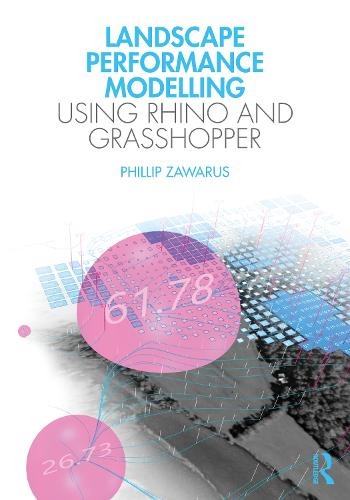
Landscape Performance Modeling Using Rhino and Grasshopper
A guidebook for landscape architects to learn the fundamental practices and use of the computational software Rhino 3D and the plugin Grasshopper for parametric modeling, landscape inventory, and performative analysis. This process visually connects intangible and abstract information with physical and spatial relationships to signify the impact ecological, climate, and cultural factors have on landscape performance and decision making.
Applications of Specification and Design Languages for SoCs : Selected papers from FDL 2005
This book provides detailed insights into recent works dealing with a large spectrum of issues in system-on-chip design, namely: assertion-based design, mapping on network-on-chip architectures, use of C/C++/SystemC design methodologies, hardware/software integration, mixing heterogeneous models of computation, analog/mixed-signal/mixed-technology system design and verification, UML/XML-based synthesis of analog and mixed-signal systems, UML to VHDL mapping, UML-based performance modeling, model transformation and formal verification, real-time system models, and Model Driven Architecture.
Algorithms for Sensor and Ad Hoc Networks : Advanced Lectures
Thousands of mini computers (comparable to a stick of chewing gum in size), equipped with sensors, are deployed in some terrain or other. After activation the sensors form a self-organized network and provide data, for example about a forthcoming earthquake. The trend towards wireless communication increasingly affects electronic devices in almost every sphere of life. Conventional wireless networks rely on infrastructure such as base stations; mobile devices interact with these base stations in a client/server fashion. In contrast, current research is focusing on networks that are completely unstructured, but are nevertheless able to communicate (via several hops) with each other, despite the low coverage of their antennas. Such systems are called sensor or ad hoc networks, depending on the point of view and the application. Wireless ad hoc and sensor networks have gained an incredible research momentum. Computer scientists and engineers of all flavors are embracing the area. Sensor networks have been adopted by researchers in many fields: from hardware technology to operating systems, from antenna design to databases, from information theory to networking, from graph theory to computational geometry.
