



الصفحة 1
الصفحة 1

Nutrition and Oral Health
Explores in depth the relationships between nutrition and oral health across all age groups. Discusses the latest knowledge on the consequences of poor diet for tooth loss and progression of oral diseases . Explains the importance of a disease-free and functional dentition for nutritional well-being

Nitrous Oxide in Pediatric Dentistry : A Clinical Handbook
Nitrous oxide offers the easiest and safest form of pharmacological behavior management in this age group and can help greatly in reducing fear and anxiety toward dentists and dental treatment. Importantly, its use in children differs from that in adults, owing in part to the need for appropriate behavior management skills. In considering a range of clinical scenarios in which nitrous oxide is of value, this book will support clinicians in their daily practice.

Midazolam in pediatric dentistry
Discusses predictable ways to achieve minimal/moderate sedation with midazolam. This book covers various aspects of midazolam sedation including pre-operative assessment, case selection, different routes of administration, intraoperative protocol, emergency management and meticulous documentation. It explains the importance of its conjunction with sound fundamentals of non-pharmacological behavior guidance and good local anesthetic techniques.
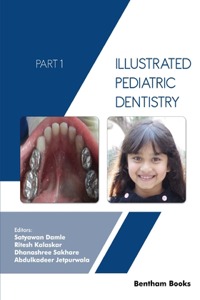
Illustrated Pediatric Dentistry ; Part 1
This textbook is modernized with the latest information and techniques in pediatric dentistry. The chapters cover primary pediatric dentistry, its clinical aspects, preventive dentistry, and information about the latest trends in the specialty. The text will equip readers with the knowledge suited to the changing

Handbook of clinical techniques in pediatric dentistry
Features updated and expanded information on pediatric clinical dentistry, including eight new chapters written by educators with special interest in each topic. Since publication of the first edition, non-invasive treatment is at the forefront of pediatric dental care, and the new edition reflects this, with multiple options and techniques for non-invasive treatment. The book is filled with photographs for improved understanding and guidance through the procedures described.

General Medicine and Surgery for Dental Practitioners
Aimed at the practising clinician provides a welcome detailed overview of the medical and surgical conditions that affect patients seen in everyday dental practice.

Digital dentistry : An overview and future prospects
Focuses on recent technological advances in digital dentistry. It provides information on digital aspects in all dental fields including digital caries detection systems, digital color matching, and digital applications in periodontology, surgical implant placement, oral histopathology and pediatric dentistry.

Dental Care for Children with Special Needs : A Clinical Guide
This concise manual offers best practice guidance on dental treatment of pediatric patients with special health care needs (CSHCN). Readers will find up-to-date information on case-based treatment planning, alternative caries management strategies, the use of behavioral and pharmacological interventions to facilitate delivery of quality treatment, and a team approach to care.

Contemporary Treatment Techniques in Pediatric Dentistry
This clinical guide acquire a clear understanding of contemporary treatment protocols for primary and young permanent teeth while serving as a guide to integrate these procedures into their private or institutional practice. The background to the book is the emergence in recent years of important paradigm shifts in treatment concepts.

Contemporary endodontics for children and adolescents
Describes pulp therapy from a holistic approach that highlights new developments in the field. Readers will find updates on the formation, structure and function of the dental pulp revealed by the latest single-cell technologies, and discussions on carious lesions and their impact on the pulp. The book examines clinical considerations in the decision to perform pulp treatment and emphasizes the need to integrate pupal diagnostics with patient-dependent factors such as behavior management and pulpal pain mechanisms. The second part of the book includes comprehensive descriptions of current treatments for each type of caries-inflicted tooth damage, from selective caries removal through direct pulp capping, pulpotomy, pulpectomy and root canal therapy for primary dentition to direct pulp capping and endodontic treatment of young permanent teeth.

Master dentistry ; Vol.2 : Restorative dentistry, paediatric dentistry and orthodontics
Provides a comprehensive overview of core elements of restorative adult and paediatric dentistry that students will need in order to pass their final exams. Edited by Professor Giles McCracken, the book provides key details and an overall broad summary of the multiple facets of restorative dentistry, pediatric dentistry and orthodontics. It includes conscious sedation, anxiety management and how law, ethics and professionalism interface with the delivery of dentistry. The book has been fully updated to include developments in restorative dentistry, the latest materials and new technology, and is ideal for undergraduate students, vocational trainees and those preparing for post-graduate examinations.

Management of deep carious lesions
Describes the challenges that deep carious lesions pose for dental practitioners, including the risk of endodontic complications and the difficulty of restorative treatment, and identifies options for overcoming these challenges on the basis of the best available evidence. The opening chapter sets the scene by discussing pathophysiology, histopathology, clinical symptomatology, and treatment thresholds. The various treatment options are then systematically presented and reviewed, covering non-selective, stepwise, and selective carious tissue removal and restoration, sealing of lesions using resin sealants or crowns, and non-restorative management approaches. In each case the current evidence with respect to the treatment is carefully evaluated. Advantages and disadvantages are explained and recommendations made on when to use the treatment in question. Illustrative clinical cases and treatment pathways for clinicians are included. This book will be of value for all practitioners who treat dental caries and carious lesions, whether in the permanent or the primary dentition. It will also be of interest to under- and postgraduate students in cariology and restorative, operative, preventive, and pediatric dentistry.
Lasers in dentistry—current concepts ; 2nd ed.
Provides information on the basic science and tissue interactions of dental lasers and documents the principal current clinical uses of lasers in every dental discipline. The applications of lasers in restorative dentistry, endodontics, dental implantology, pediatric dentistry, periodontal therapy, and soft tissue surgery are clearly described and illustrated. Information is also provided on laser-assisted multi-tissue management, covering procedures such as crown lengthening, gingival troughing, gingival recontouring, and depigmentation.

Lasers in dentistry -- current concepts ; 1st ed.
Provides information on the basic science and tissue interactions of dental lasers and documents the principal current clinical uses of lasers in every dental discipline. The applications of lasers in restorative dentistry, endodontics, dental implantology, pediatric dentistry, periodontal therapy, and soft tissue surgery are clearly described and illustrated.

Comparison of traditional and computerized alveolar block in children using articaine 4% (randomized controlled trial)
Pediatric dental anxiety frequently centers around needle procedures, particularly for mandibular anesthesia. This study compares pain perception, efficacy, and physiological responses between computerized (CCLAD) and traditional syringe administration of articaine 4% for inferior alveolar nerve blocks (IANB) during pulpotomies.

Comparison of digital anesthesia using articaine vs. lidocaine for mandibular infiltration in pediatric patients : Aged 4-5 vs. 6-8 years
Articaine and lidocaine exhibit equivalent efficacy for mandibular infiltration via computerized systems in children aged 4–8 years. While articaine may marginally improve injection comfort, both agents provide reliable anesthesia with minimal complications. Computerized delivery enhances patient experience, supporting its adoption to reduce dental anxiety.This investigation aims to : determine whether articaine's theoretical advantages translate to clinically significant improvements in young children, identify optimal anesthetic protocols for different pediatric age groups, validate the effectiveness of digital delivery systems in pediatric mandibular anesthesia and provide robust data to replace current adult-derived guidelines with pediatric-specific evidence.
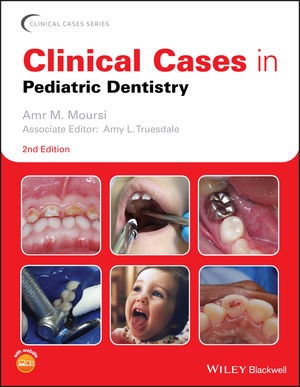
Clinical cases in pediatric dentistry ; 2nd ed.
Features comprehensive updates to all 66 cases to include the latest diagnostic and treatment techniques. Each chapter also includes brand-new cases, for a total of 13 entirely new cases. The most current references to the literature, best practices, and evidence based clinical guidelines, plus new and updated self‐assessment questions with detailed answers and explanations, have been added to all the cases. Presents updated content, clinical guidelines, and references in existing cases, with thirteen brand new case scenarios Takes an easy-to-follow format, with patient history and diagnostics, questions, and answers, and explanations for each case Part of the "Clinical Cases" series applying both theory and practice to actual clinical cases Includes access to a companion website featuring additional case studies, charts, tables, web links, and the figures from the book in PowerPoint
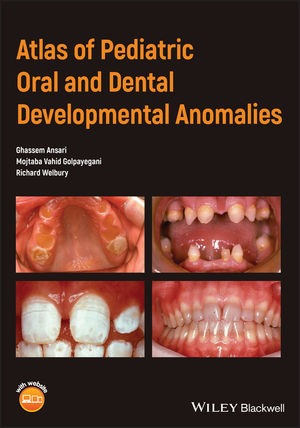
Atlas of Pediatric Oral and Dental Developmental Anomalies
A quick reference diagnostic guide for students and clinicians, covering a wide range of oral and dental developmental anomalies in children and adolescents. A useful, quick reference atlas helping students and clinicians diagnose a wide range of oral and dental developmental anomalies in children and adolescents Highly illustrated with clinical photographs Describes both common and rare conditions, and explores treatment options

Anomalies of the Developing Dentition : A Clinical Guide to Diagnosis and Management
This book is an up-to-date, succinct, and easily accessible reference on the diverse anomalies that may arise in the developing dentition, including those relating to crown size and shape, tooth formation, tooth eruption, tooth number, and enamel and dentin.
