



الصفحة 1
الصفحة 1

Multiwavelength Mapping of Galaxy Formation and Evolution ; Proceedings of the ESO Workshop Held at Venice, Italy, 13-16 October 2003
The possibilities of astronomical observation have dramatically increased over the last decade. Major satellites, like the Hubble Space Telescope, Chandra and XMM Newton, are complemented by numerous large ground-based observatories, from 8m-10m optical telescopes to sub-mm and radio facilities. As a result, observational astronomy has access to virtually the whole electromagnetic spectrum of galaxies, even at high redshifts. Theoretical models of galaxy formation and cosmological evolution now face a serious challenge to match the plethora of observational data. In October 2003, over 170 astronomers from 15 countries met for a 4-day workshop to extensively illustrate and discuss all major observational projects and ongoing theoretical efforts to model galaxy formation and evolution. This volume contains the complete proceedings of this meeting and is therefore a unique and timely overview of the current state of research in this rapidly evolving field.
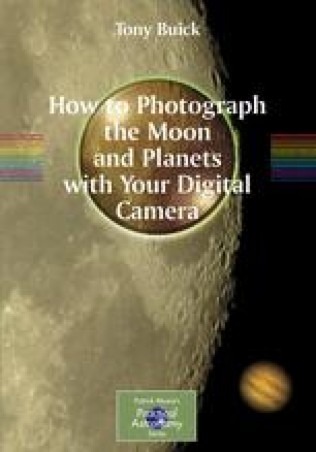
How to photograph the moon and planets with your Digital camera
Using just a regular digital camera along with an amateur astronomical telescope, anyone can produce spectacular photographs of the Moon, as well as surprisingly good images of major planets.Purpose-made astronomical CCD cameras are still very expensive, but technology has now progressed so that digital cameras – the kind you use for everyday photos – are more than capable of being used for astronomy. Tony Buick has written this illustrated step-by-step manual for anyone who has a telescope (of any size) and a digital camera. Look inside at the beautiful color images he has produced – you could do the same.

High-Velocity Clouds
On the occasion of the retirement of Ulrich Schwarz, a symposium was held in Groningen in May of 1996, celebrating his contributions to the study of the int- stellar medium, including his work on the high-velocity clouds. The coming together of many specialists in the latter ?eld prompted the idea of compiling a book c- taining their contributions, and summarizing the status of our understanding of the high-velocity cloud phenomenon. This seemed especially worthwhile at the time, since many exciting developments were taking place. After the discovery of some H i clouds with high velocities, about 40 years ago, the subject had been dominated by 21-cm observations of H i emission. Starting in the mid-1980s much progress was being made because of the availability of new instruments, such as large ground-based optical telescopes and UV observatories in space. The connections between the work on high-velocity clouds and other studies of the properties of the (hot) interstellar medium also became clearer.

Growing Black Holes: Accretion in a Cosmological Context ; Proceedings of the MPA/ESO/MPE/USM Joint Astronomy Conference Held at Garching, Germany, 21-25 June 2004
Supermassive black holes are now believed to play an important role in the evolution of the Universe. Every respectable galaxy hosts in its center a black hole that appears to regulate the growth of the galaxy itself. In this book, leading experts in the field review the most recent theoretical and observational results on the following topics: * formation and growth of the first black holes in the Universe and their role in the formation and evolution of galaxies * the physics of black-hole accretion and the production of relativistic jets * binary black-hole mergers and gravitational radiation. Theoretical work is supplemented by the most recent exciting results from space and ground based observatories. This volume is useful research and reference tool for the entire astrophysical community.

Geodetic and geophysical observations in Antarctica : An overview in the IPY perspective
This book is a collection of papers on various aspects of the scientific investigation and observation techniques of the polar regions at both temporary and permanent observatories. Most papers focus on regional models based on data acquired in polar regions. Geodetic satellite positions systems (GNSS: GPS, GLONASS, GALILEO) will also be discussed as well as other space techniques (DORIS, VLBI). Gravimetry, absolute gravimetry, and tidal gravimetry are also discussed, as well as seismology and meteorology.
Fundamental Questions in Astrophysics : Guidelines for Future UV Observatories
This book describes the fundamental problems in modern astrophysics that cannot progress without easy and wide-spread access to modern UV instrumentation.

Continental Scientific Drilling : A Decade of Progress, and Challenges for the Future
Scientific drilling is an indispensable tool of modern Earth science - search, as it provides the only means of obtaining direct information on processes operating at depth. Drilling allows for the determination of - situ properties of solid materials and fluids and permits testing of hypot- ses and models derived from surface observations. In addition, drill holes may be used as a natural laboratory for experiments and as observatories for long-term monitoring of on-going active processes. Earth drilling, therefore, plays a critical role in scientific research directed towards - proved understanding of the workings of our planet and has a key role in solving urgent socio-economic problems. As a rule, drilling projects are an integral component of major geosci- tific research programs, comprising comprehensive pre-site investigations, accompanying laboratory studies, the drilling phase itself, and consecutive measurements and tests in the drill hole. Such drilling programs are costly and thus only realizable to a limited extent. International cost sharing, the optimal utilization of all available resources, the incorporation of inter- tional leading experts, and the application of the existing know-how, as well as the selection of an optimal drilling location (“World Geological Site”), are thus essential elements of an international scientific drilling p- gram.
