



الصفحة 1
الصفحة 1

International Humanitarian Law Facing New Challenges ; Symposium in Honour of KNUT IPSEN
Recent armed conflicts, whether international or non-international in character, are in many respects characterized by a variety of asymmetries. These asymmetries may be overstressed, sometime even abused, and ultimately virtually meaningless. In order to discuss these and other questions a most distinguished group of experts in the field of the law of armed conflicts gathered in Berlin in June 2005. The goal of that colloquium, which marked the 70th birthday of Knut Ipsen, was to find operable solutions for problems and challenges the contemporary law of armed conflict is confronted with.

International humanitarian law and non-state actors : Debates, law and practice
challenges the traditional approach to international law by concentrating on international humanitarian law and placing the focus beyond States: it reflects on current legal, policy and practical issues that concern non-State actors in and around situations of armed conflict.The contributions that comprise this volume are oriented towards a broad readership audience in the academic and professional fields related to international humanitarian law, international criminal law, international human rights law and general public international law.
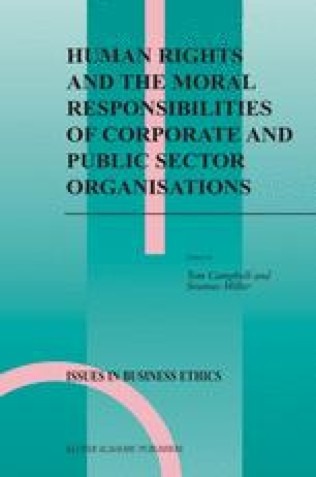
Human Rights and the Moral Responsibilities of Corporate and Public Sector Organisations
All students and advocates of human rights will be interested in this concerted exploration of the human rights moral obligations that fall, not directly on states, but on private and public organisations. Such an approach to human rights opens up the possibility of holding corporations and bureaucracies to account for human rights violations even when they have acted in accordance with the law. This interdisciplinary and international project brings together eminent philosophers, lawyers, social scientists and practitioners to articulate theoretically and develop in practical contexts the moral implications of human rights for non-state actors. What emerges from the book as a whole is a distinctive contemporary vision of the emerging moral impact of human rights and its significance for organisational behaviour and performance.
