



الصفحة 1
الصفحة 1

Non-destructive testing and evaluation of civil engineering structures
The non-destructive evaluation of civil engineering structures in reinforced concrete is becoming an increasingly important issue in this field of engineering. This book proposes innovative ways to deal with this problem, through the characterization of concrete durability indicators by the use of non-destructive techniques. It presents the description of the various non-destructive techniques and their combination for the evaluation of indicators. The processing of data issued from the combination of NDE methods is also illustrated through examples of data fusion methods.

Functionalized Nanoscale Materials, Devices and Systems
The primary objective of the NATO Advanced Study Institute (ASI) titled “Functionalized Nanoscale Materials, Devices, and Systems for Chem. -Bio Sensors, Photonics, and Energy Generation and Storage” was to present a contemporary and comprehensive overview of the field of nanostructured materials and devices and its applications in chem. -bio sensors, nanophotonics, and energy generation and storage devices. The study has become one of the most promising disciplines in science and technology, as it aims at the fundamental understanding of new physical, che- cal, and biological properties of systems and the technological advances arising from their exploration. Such systems are intermediate in size, between the isolated atoms and molecules and bulk material, where the unique transitional characteristics between the two can be understood, controlled, and manipulated.
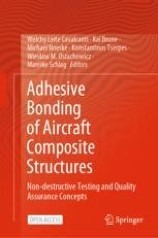
Adhesive Bonding of Aircraft Composite Structures: Non-destructive Testing and Quality Assurance Concepts
This book is under a CC BY 4.0 license. It presents the results of the ComBoNDT European project, which aimed at the development of more secure, time- and cost-saving extended non-destructive inspection tools for carbon fiber reinforced plastics, adhered surfaces and bonded joints. The book reports the optimal use of composite materials to allow weight savings, reduction in fuel consumptions, savings during production and higher cost efficiency for ground operations.
