



الصفحة 1
الصفحة 1

Network-Aware Security for Group Communications
Network-Aware Security for Group Communications fills a growing need in the research community for a reference that describes the state-of-the-art in securing group communications in emerging networks and for future applications. The growth of multi-user services makes it essential that a complementary suite of security solutions are deployed in order to protect these services from a broad spectrum of security threats that are unique to group communications. This book is focused on tailoring security solutions to the underlying network architecture (such as the wireless cellular network, or ad hoc and sensor networks), or to targeted applications using methods tailored for that application (such as multimedia multicasts).
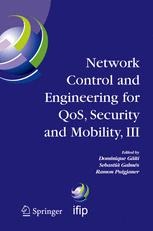
Network Control and Engineering for QOS, Security and Mobility, III ; IFIP TC6 / WG6.2, 6.6, 6.7 and 6.8. Third International Conference on Network Control and Engineering for QoS, Security and Mobility, NetCon 2004 on November 2-5, 2004, Palma de Mallorca, Spain
This volume contains the proceedings of the Third International Conference on Network Control and Engineering for Quality of Service, Security and Mobility (Net-Con'2004), celebrated in Palma de Mallorca (Illes Balears, Spain) during November 2-5, 2004. This IFIP TC6 Conference was organized by the Universitat de les Illes Balears and sponsored by the following Working Groups: WG6.2 (Network and Internetwork Architectures), WG6.6 (Management of Networks and Distributed Systems), WG6.7 (Smart Networks) and WG6.8 (Mobile and Wireless Communications). The rapid evolution of the networking industry introduces new exciting challenges that need to be explored by the research community. The adoption of Internet as the global network infrastructure places the issue of quality of service among one of the hot topics nowadays: a huge diversity of applications with quite different service requirements must be supported over a basic core of protocols. Also, the open and uncontrolled nature of Internet enforces the need to guarantee secure transactions among users, thus placing security as another hot topic. Finally, the explosion of mobility and its integration as part of the global infrastructure are probably now the most challenging issues in the networking field.
Mobile Wireless Middleware, Operating Systems and Applications ; 9th EAI International Conference, MOBILWARE 2020, Hohhot, China, July 11, 2020, Proceedings
This book constitutes the refereed conference proceedings of the 9th International Conference on Mobile Wireless Middleware, Operating Systems and Applications, MOBILWARE 2020, held in Hohhot, China, in July 2020. Due to COVID-19 pandemic the conference was held virtually. The 21 revised full papers were reviewed and selected from 69 submissions and are organized in tracks on MobilWare; Big data, data mining and artificial intelligence workshop; Blockchain and internet of things workshop.

Mobile Edge Computing
It offers comprehensive, self-contained knowledge on Mobile Edge Computing (MEC), which is a very promising technology for achieving intelligence in the next-generation wireless communications and computing networks. The book starts with the basic concepts, key techniques and network architectures of MEC. Then, we present the wide applications of MEC, including edge caching, 6G networks, Internet of Vehicles, and UAVs. In the last part, we present new opportunities when MEC meets blockchain, Artificial Intelligence, and distributed machine learning (e.g., federated learning). We also identify the emerging applications of MEC in pandemic, industrial Internet of Things and disaster management.
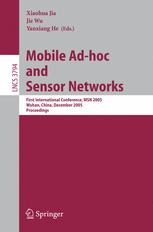
Mobile Ad-hoc and Sensor Networks ; Vol. 3794 : 1st International Conference, MSN 2005, Wuhan, China, December 13-15, 2005, Proceedings
Constitutes the refereed proceedings of the First International Conference on Mobile Ad-hoc and Sensor Networks held in 2005. The papers address topical areas in mobile ad hoc and sensor networks, such as network architecture and protocols, software platforms and development tools, self-organization and synchronization, and more

IP operations and management ; 7th IEEE International workshop, IPOM 2007 San José, USA, October 31 - November 2, 2007 Proceedings
This book constitutes the refereed proceedings of the 7th IEEE International Workshop on IP Operations and Management, IPOM 2007, held in the course of the 3rd International Week on Management of Networks and Services, Manweek 2007.

Intelligent Computing Theories and Application ; 16th International Conference, ICIC 2020, Bari, Italy, October 2–5, 2020, Proceedings, Part II
This two-volume set of LNCS 12463 and LNCS 12464 constitutes - in conjunction with the volume LNAI 12465 - the refereed proceedings of the 16th International Conference on Intelligent Computing, ICIC 2020, held in Bari, Italy, in October 2020. The 162 full papers of the three proceedings volumes were carefully reviewed and selected from 457 submissions. The ICIC theme unifies the picture of contemporary intelligent computing techniques as an integral concept that highlights the trends in advanced computational intelligence and bridges theoretical research with applications. The theme for this conference is “Advanced Intelligent Computing Methodologies and Applications.” Papers related to this theme are especially solicited, addressing theories, methodologies, and applications in science and technology.

Integrated circuit and system design : Power and timing modeling, optimization and simulation ; 17th International Workshop, PATMOS 2007, Gothenburg, Sweden, September 3-5, 2007, Proceedings
Papers cover high level design, low power design techniques, low power analog circuits, statistical static timing analysis, power modeling and optimization, low power routing optimization, security and asynchronous design, low power applications, modeling and optimization, and more.
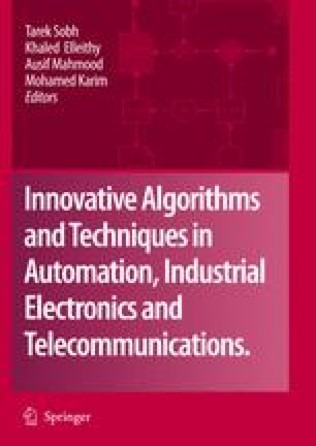
Innovative Algorithms and Techniques in Automation, Industrial Electronics and Telecommunications.
Innovative Algorithms and Techniques in Automation, Industrial Electronics and Telecommunications is a collection of world class paper articles addressing the following topics: Computer Networks: Access Technologies, Medium Access Control, Network architectures and Equipment, Optical Networks and Switching, Telecommunication Technology, and Ultra Wideband Communications. Coding and Modulation: Modeling and Simulation, OFDM technology , Space-time Coding, Spread Spectrum and CDMA Systems. Wireless technologies: Bluetooth , Cellular Wireless Networks, Cordless Systems and Wireless Local Loop, HIPERLAN, IEEE 802.11, Mobile Network Layer, Mobile Transport Layer, and Spread Spectrum.

Heterogeneous Wireless Access Networks : Architectures and Protocols
Heterogeneous Wireless Access Networks provides a unified view of the state-of-the-art protocols and architectures for heterogeneous wireless networking. The chapters cover both the theoretical concepts and system-level implementation issues related to design, analysis, and optimization of architectures and protocols for heterogeneous wireless access networks.
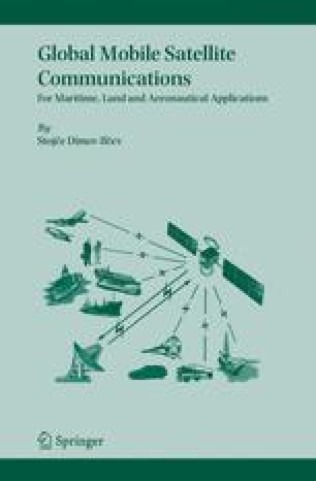
Global mobile satellite communications : For maritime, Land and aeronautical applications
This book is important for modern shipping, truck, train and aeronautical societies because GMSC in the present millennium provides more effective business and trade, with emphasis on safety and commercial communications. Global Mobile Satellite Communications is written to make bridges between potential readers and current GMSC trends, mobile system concepts and network architecture using a simple mode of style with understandable technical information, characteristics, graphicons, illustrations and mathematics equations

Enterprise Architecture for Strategic : Management of Modern IT Solutions
Enterprise Architecture for strategic Management of Modern IT Solutions provides guidance on how to employ EA in deploying and managing IT solutions from pragmatic and implementable perspectives. Until now, implementation and practice of EA have been slow, despite its growing popularity and interest from all sectors. This book employs sociotechnical theories such as actor-network theory (ANT) and structuration theory (ST) as lenses to examine and explain why and how challenges and complexities exist and derail the implementation or practice of EA in organisations.
Embedded Software and Systems ; Vol. 3820 ; 2nd International Conference, ICESS 2005, Xi'an, China, December 16-18, 2005, Proceedings
Welcome to the proceedings of the 2005 International Conference on Emb- ded Software and Systems (ICESS 2005) held in Xian, China, December 16-18, 2005. With the advent of VLSI system level integration and system-on-chip, the center of gravity of the computer industry is now moving from personal c- puting into embedded computing. Embedded software and systems are incre- ingly becoming a key technological component of all kinds of complex technical systems, ranging from vehicles, telephones, aircraft, toys, security systems, to medical diagnostics, weapons, pacemakers, climate control systems, etc. The ICESS 2005 conference provided a premier international forum for - searchers, developers and providers from academia and industry to address all resulting profound challenges; to present and discuss their new ideas, - search results, applications and experience; to improve international com- nication and cooperation; and to promote embedded software and system - dustrialization and wide applications on all aspects of embedded software and systems.
Embedded Software and Systems ; 3rd International Conference, ICESS 2007, Daegu, Korea, May 14-16, 2007, Proceedings
This book introduces sections on embedded architecture, embedded hardware, embedded software, HW-SW co-design and SoC, multimedia and HCI, pervasive/ubiquitous computing and sensor network, power-aware computing, real-time systems, security and dependability, and wireless communication.
Embedded Computer Systems : Architectures, Modeling, and Simulation ; Vol. 4017 ; 6th International Workshop, SAMOS 2006, Samos, Greece, July 17-20, 2006, Proceedings
This book constitutes the refereed proceedings of the 6th International Workshop on Systems, Architectures, Modeling, and Simulation, SAMOS 2006, held in Samos, Greece on July 2006.The 47 revised full papers presented together with 2 keynote talks were thoroughly reviewed and selected from 130 submissions.

Digital twin : Architectures, networks, and applications
Offers comprehensive, self-contained knowledge on digital twin (DT), which is a very promising technology for achieving digital intelligence in the next-generation wireless communications and computing networks. DT is a key technology to connect physical systems and digital spaces in Metaverse. The objectives of this book are to provide the basic concepts of DT, to explore the promising applications of DT integrated with emerging technologies, and to give insights into the possible future directions of DT. For easy understanding, this book also presents several use cases for DT models and applications in different scenarios. The book starts with the basic concepts, models, and network architectures of DT. Then, we present the new opportunities when DT meets edge computing, Blockchain and Artificial Intelligence, and distributed machine learning (e.g., federated learning, multi-agent deep reinforcement learning).

Design and Performance of 3G Wireless Networks and Wireless LANs
Design and Performance of 3G Wireless Networks and Wireless LANs is for wireless communication system engineers, network engineers, professionals, and researchers. Network architectures of UMTS, CDMA2000 systems, and how major network elements within the 3G networks can be designed, are described. In addition, the authors describe how end-to-end performance for voice and data services can be determined. They also provide guidelines on how radio access networks and core networks can be engineered. Of equal importance, is inclusion of explanations of various wireless LAN standards (IEEE 802.11a, 802.11b, 802.11g, 802.11e) and how voice and data services can be offered in the wireless LAN systems.
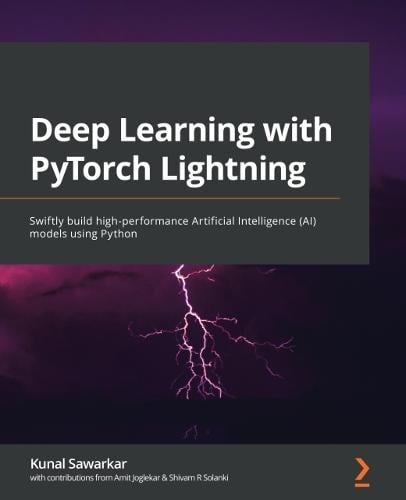
Deep Learning with PyTorch Lightning : Build and train high-performance artificial intelligence and self-supervised models using Python
You’ll learn how to configure PyTorch Lightning on a cloud platform, understand the architectural components, and explore how they are configured to build various industry solutions. You’ll build a neural network architecture, deploy an application from scratch, and see how you can expand it based on your specific needs, beyond what the framework can provide. In the later chapters, you’ll also learn how to implement capabilities to build and train various models like Convolutional Neural Nets (CNN), Natural Language Processing (NLP), Time Series, Self-Supervised Learning, Semi-Supervised Learning, Generative Adversarial Network (GAN) using PyTorch Lightning.

Deep learning architecture and application
As one of the fastest-growing topics in machine learning, deep learning algorithms have achieved unprecedented success in recent years. Novel paradigms (such as contrastive learning and few-shot learning) in deep learning and rising neural network architectures (e.g., transformer and masked autoencoder) are dramatically changing the field of data-driven algorithms. More importantly, deep learning models are redefining the next generation of industrial applications spanning image recognition, speech processing, language translation, healthcare, and other sciences. For example, recent advances in deep representation learning are allowing us to learn about protein 3D structures, which sheds new light on fundamental medicine and biology along with potentially bringing in billions of dollars (e.g., in the pharmaceutical market).

Computational methods in systems biology ; 18th International Conference, CMSB 2020, Konstanz, Germany, September 23–25, 2020, Proceedings
This book constitutes the refereed proceedings of the 18th International Conference on Computational Methods in Systems Biology, CMSB 2020, held in Konstanz, Germany, in September 2020.* The 17 full papers and 5 tool papers were carefully reviewed and selected from 30 submissions. In addition 3 abstracts of invited talks and 2 tutorials have been included in this volume. Topics of interest include formalisms for modeling biological processes; models and their biological applications; frameworks for model verification, validation, analysis, and simulation of biological systems; high-performance computational systems biology and parallel implementations; model inference from experimental data; model integration from biological databases; multi-scale modeling and analysis methods; computational approaches for synthetic biology; and case studies in systems and synthetic biology.
