



الصفحة 1
الصفحة 1

New Frontiers in Polymer Synthesis
It is generally accepted that a new material is often developed by ?nding a new synthesis method of reaction or a new reaction catalyst. Historically, a typical example may be referred to as a Ziegler–Natta catalyst, which has allowed large-scale production of petroleum-based polyole?ns since the middle of the 20th century. New polymer synthesis, therefore, will hopefully lead to creation of new polymer materials in the 21st century. This special issue contributed by three groups focuses on recent advances in polymer synthesis methods, which handle the cutting-edge aspects of the advanced technology.

Microlithography/Molecular Imprinting
The series presents critical reviews of the present and future trends in polymer and biopolymer science including chemistry, physical chemistry, physics and material science. It is addressed to all scientists at universities and in industry who wish to keep abreast of advances in the topics covered.Molecular recognition is central to how biological systems work. The molecular imprinting technique is a valuable polymerisation method for preparing synthetic materials able to mimic the molecular recognition phenomena present in living systems. A molecule that acts as a template is associated with functional monomers to form a complex by means of covalent linkages or noncovalent interactions. A polymerisation-crosslinking reaction is then performed around this complex. Upon removal of the template species, functionalised cavities, that have memorized the special features and bonding preferences of the template, are left inside the polymer network.

Metathesis Polymerization
Clearly illustrated and demonstrated by the entire series of Advances in Polymer Science., the area of polymer science is a rapidly developing and growing field, strongly influencing other areas of chemistry. Among other polymerization techniques, those based on metathesis polymerization have experienced significant progress. With a rapidly developing armory of initiators on hand, one is now capable of polymerizing various types of functional monomers by metathesis-based techniques.The latest developments in all these areas of metathesis-based polymerizations are summarized in this book. It is designed to attract equally students and advanced scientists working in the areas of polymer science, physical, and organometallic chemistry by providing both extensive background information and up-to-date interdisciplinary knowledge. Special consideration has been given to the literature sections in order to facilitate further reading.

Heterogeneous Enantioselective Hydrogenation : Theory and Practice
The book looks at the first relatively ineffective catalysts right through to modern highly effective enantioselective catalytic systems, comparable in their efficiency to chiral metal complexes and enzymatic systems. The book begins with a summary of the first work on heterogeneous metal catalysts, which showed only the principal possibilities of enantioselective reactions. The book then elaborates on metal catalysts which have enantioselectivities close to 100%. Finally, the book describes the practical utilization of chiral catalytic systems in processes of hydrogenation. The a - and b -hydroxy carboxylic acid esters produced are precursors for manufacturing many synthones used for medicines as well as for monomers used for biodegradable polyesters, both of which have important practical applications. The book summarizes more than 800 scientific papers in the field of enantioselective catalytic hydrogenation reactions, mainly those using heterogeneous metal catalysts. It provides detailed explanations of special techniques for the preparation of effective dissymmetric catalysts which provide highly efficient catalytic systems.

Dental Composite Materials for Direct Restorations
Covers both basic scientific and clinically relevant aspects of dental composite materials with a view to meeting the needs of researchers and practitioners. Following an introduction on their development, the composition of contemporary composites is analyzed. A chapter on polymerization explains the setting reactions and light sources available for light-cured composites. The quality of monomer-to-polymer conversion is a key factor for material properties. Polymerization shrinkage along with the associated stress remains among the most challenging issues regarding composite restorations. A new classification of dental composites is proposed to offer more clinically relevant ways of differentiating between commercially available materials.
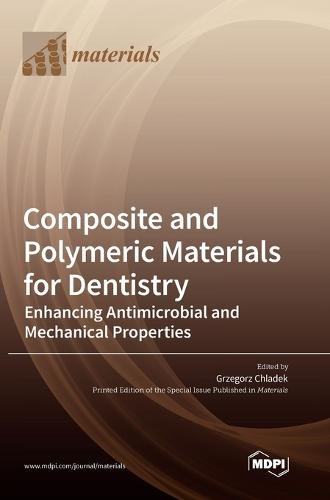
Composite and polymeric materials for dentistry: enhancing antimicrobial and mechanical properties
Focuses on enhancing antimicrobial and mechanical properties of polymeric materials and composites for dentistry. In recent years, special attention has been focused on the possibility of giving materials new or improved properties by the introduction of nano or submicron size additives, fibers or whiskers. Another area of research is the application of antibacterial monomers, which can be copolymerized in resins to kill oral pathogenic microflora. In addition, we are currently looking for new data regarding colonization of dental materials by pathogenic microbes and their influence on the other properties. Further, there are many new commercially available materials which should be investigated to verify their properties, which is important from the point of view of clinical practice. Original new research and reviews related to any of the topics mentioned above indicate the current directions of development of dental materials.

Actin Monomer Binding Proteins
The actin cytoskeleton plays a central role in many cellular processes including cell motility, cytokinesis, endocytosis and phagocytosis. The structure and dynamics of the actin cytoskeleton is regulated by a large number of proteins that interact with monomeric and/or filamentous actin. Actin monomer binding proteins provides a comprehensive view on actin monomer-binding proteins and the mechanisms by which they contribute to actin dynamics and various actin-dependent cellular processes. This new title contains chapters that describe the basic mechanisms of actin dynamics as well as the structural principles by which various actin-binding proteins interact with actin.
