



الصفحة 1
الصفحة 1

New Perspectives in the Study of Mesoamerican Primates : Distribution, Ecology, Behavior, and Conservation
The purpose of this volume is to present a comprehensive overview of recent advances in primate field research, ecology, and conservation biology in Mesoamerica. The overall goal of each contribution is to integrate newly collected field data with theoretical perspectives drawn from evolutionary biology, socioecology, biological anthropology, and conservation to identify how our current knowledge of primate behavior and ecology has moved beyond more traditional approaches. A corollary to this, and an important goal of the volume is to identify geographical regions and species for which we continue to lack sufficient information, to develop action plans for future research, and to identify areas for immediate conservation action. Despite many decades of primate research in Mesoamerica, much is still unknown concerning the basic ecology and behavior of these species, demography, current distribution, and conservation status of local populations, and the effectiveness of conservation policies on primate survivorship. Four major areas of research are the focus of the volume: Evolutionary Biology and Biogeography; Population Demography and Ecology; Behavior; and Conservation and Management Policies.

Distribution and phenotype of proliferating cells in the Forebrain of adult macaque monkeys after transient global cerebral ischemia
The authors' results show that ischemia differentially activates endogenous neural precursors residing in diverse locations of the adult primate central nervous system. A limited endogenous potential for postischemic neuronal repair exists in neocortex and striatum, but not in the hippocampus proper of the adult macaque monkey brain. The presence of putative parenchymal progenitors and of sustained progenitors in germinative centers opens novel possibilities for precursor cell recruitment.
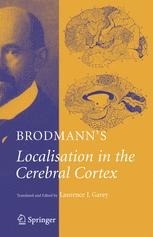
Brodmann's : Localisation in the Cerebral Cortex
It is one of the major "classics" of the neurological world. Even today it forms the basis for so-called "localisation" of function in the cerebral cortex. Brodmann's "areas" are still used to designate functional regions in the cortex, the part of the brain that brings the world that surrounds us into consciousness, and which governs our responses to the world. For example, we use "area 4" for the "motor" cortex, with which we control our muscles, "area 17" for "visual" cortex, with which we see, and so on. This nomenclature is used by neurologists and neurosurgeons in the human context, as well as by experimentalists in various animals. Indeed, Brodmann's famous "maps" of the cerebral cortex of humans, monkeys and other mammals must be among the most commonly reproduced figures in neurobiological publishing. The most famous of all is that of the human brain. There can be few textbooks of neurology, neurophysiology or neuroanatomy in which Brodmann is not cited, and his concepts pervade most research publications on systematic neurobiology.
