



الصفحة 1
الصفحة 1

International Law Today : New Challenges and the Need for Reform?
th Rüdiger Wolfrum celebrated his 65 birthday on 13 December 2006. On this special occasion, current and former members of the large circle of his PhD and post-doctorate students (Doktoranden und Habilit- den) organized a symposium on the subject of “International Law - day: New Challenges and the Need for Reform?” to honour him and his academic work as a teacher and researcher.the subjects covered by the speakers and commentators reflect the wide variety of issues he worked on in his long and impressive academic career. They extend from a cri- cal evaluation of the new responsibility to protect and the role of the UN Security Council in post-conflict management, thoughts on the proliferation of international tribunals with regard to the unity or fragmentation of international law, marine genetic resources in the deep sea and environmental protection in Antarctica to human rights issues relating to intellectual property rights and the protection of minorities.

Health issues confronting minority men who have sex with men
This book presents a fuller picture by focusing on infrequently-studied health/mental health concerns, exploring day-to-day struggles under double-minority conditions, and spotlighting the innovative efforts of professionals and advocates in addressing these issues.

Handbook of the Sociology of the Military
This accessible handbook is the first of its kind to delve into the sociological approach to the study of the military. This book is compiled of documents coming from various researchers at universities around the world as well as military officers devoted to the sector of study. Covered in this volume is a historical excursus of studies prior to contemporary research, interpretive models and theoretical approaches developed specifically for this topic, civic-military relations including issues surrounding democratic control of the armed forces, military culture, professional training, conditions and problems of minorities in the armed forces, an examination of the structural change within the military over the years including new duties and functions following the Cold War.
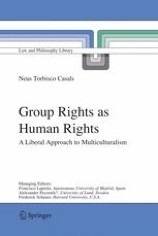
Group rights as human rights : A liberal approach to multiculturalism
Liberal theories have long insisted that cultural diversity in democratic societies can be accommodated through classical liberal tools, in particular through individual rights, and they have often rejected the claims of cultural minorities for group rights as illiberal. Group Rights as Human Rights argues that such a rejection is misguided. Based on a thorough analysis of the concept of group rights, it proposes to overcome the dominant dichotomy between "individual" human rights and "collective" group rights by recognizing that group rights also serve individual interests.

Ethnic Identity, Social Mobility and the Role of Soulmates
Based on a study among higher-educated adult children of lower-class Turkish and Moroccan immigrants in the Netherlands, this open access book explores processes of identification among social climbers with ethnic minority backgrounds. Using both survey data and open interviews with these ‘minority climbers’, the study details the contextual and temporal nature of identification. The results illustrate how ethnicity is contextual but have tangible and inescapable effects at the same time. Also the findings call for a more reflexive use of terms like ethnic ingroup/outgroup and bonding/bridging. Overall, the book helps us understand the emergence of middle-class segments that articulate their minority identities and as such it will be of great interest to academics, policy makers and all those interested in processes of integration and/or diversity.

Encounters and Practices of Petty Trade in Northern Europe, 1820–1960 : Forgotten Livelihoods
Uncovers one important, yet forgotten, form of itinerant livelihoods, namely petty trade, more specifically how it was practiced in Northern Europe during the period 1820–1960. It investigates how traders and customers interacted in different spaces and approaches ambulatory trade as an arena of encounters by looking at everyday social practices. Petty traders often belonged to subjugated social groups, like ethnic minorities and migrants, whereas their customers belonged to the resident population. How were these mobile traders perceived and described? What goods did they peddle? How did these commodities enable and shape trading encounters? What kind of narratives can be found, and whose? These questions pertaining to daily practices on a grass-root level have not been addressed in previous research.

Constructing Roma Migrants : European Narratives and Local Governance
This book presents a cross-disciplinary insight and policy analysis into the effects of European legal and political frameworks on the life of ‘Roma migrants’ in Europe. It outlines the creation and implementation of Roma policies at the European level, provides a systematic understanding of identity-based exclusion and explores concrete case studies that reveal how integration and immigration policies work in practice. The book also shows how the Roma example might be employed in tackling the governance implications of our increasingly complex societies and assesses its potential and limitations for integration policies of vulnerable groups such as refugees and other discriminated minorities.
