



الصفحة 1
الصفحة 1

Numerical methods in computational finance : A partial differential equation (PDE/FDM) approach
This book is a detailed and step-by-step introduction to the mathematical foundations of ordinary and partial differential equations, their approximation by the finite difference method and applications to computational finance.

Modern Mathematical Statistics with Applications
This book tries to strike a balance between mathematical foundations and statistical practice. The book provides a clear and current exposition of statistical concepts and methodology, including many examples and exercises based on real data gleaned from publicly available sources. The main focus of the book is on presenting and illustrating methods of inferential statistics used by investigators in a wide variety of disciplines, from actuarial science all the way to zoology. It begins with a chapter on descriptive statistics that immediately exposes the reader to the analysis of real data. The next six chapters develop the probability material that facilitates the transition from simply describing data to drawing formal conclusions based on inferential methodology. Point estimation, the use of statistical intervals, and hypothesis testing are the topics of the first three inferential chapters. The remainder of the book explores the use of these methods in a variety of more complex settings.
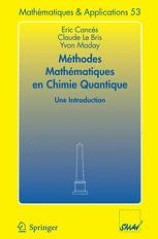
Méthodes mathématiques en chimie quantique : Une introduction = Mathematical methods in quantum chemistry : An introduction
This book presents the mathematical foundations of several models of quantum chemistry. It is intended for graduate students in mathematics (and possibly also for scientists from physics or chemistry interested in understanding the formal underpinnings of their models), and introduces techniques and methods from several mathematical fields, in particular variational techniques, nonlinear analysis, spectral theory and partial differential equations theory.

Mathematics of Large Eddy Simulation of Turbulent Flows
Large eddy simulation (LES) is a method of scientific computation seeking to predict the dynamics of organized structures in turbulent flows by approximating local, spatial averages of the flow. This book focuses on the mathematical foundations of LES and its models and provides a connection between the powerful tools of applied mathematics, partial differential equations and LES. Thus, it is concerned with fundamental aspects not treated so deeply in the other books in the field, aspects such as well-posedness of the models, their energy balance and the connection to the Leray theory of weak solutions of the Navier-Stokes equations.

Mathematics and Culture II : Visual Perfection: Mathematics and Creativity
This book presents the mathematical foundations of systems theory in a self-contained, comprehensive, detailed and mathematically rigorous way. This volume is devoted to the analysis of dynamical systems with emphasis on problems of uncertainty, whereas the second volume will be devoted to control. It combines features of a detailed introductory textbook with that of a reference source. The book contains many examples and figures illustrating the text which help to bring out the intuitive ideas behind the mathematical constructions.

Mathematical Techniques in Finance : An Introduction
In Mathematical Techniques in Finance: An Introduction, distinguished finance professional Amir Sadr delivers an essential and practical guide to the mathematical foundations of various areas of finance, including corporate finance, investments, risk management, and more.

Mathematical Systems Theory I : Modelling, State Space Analysis, Stability and Robustness
This book presents the mathematical foundations of systems theory in a self-contained, comprehensive, detailed and mathematically rigorous way. This volume is devoted to the analysis of dynamical systems with emphasis on problems of uncertainty, whereas the second volume will be devoted to control. It combines features of a detailed introductory textbook with that of a reference source. The book contains many examples and figures illustrating the text which help to bring out the intuitive ideas behind the mathematical constructions.

Introduction to Mathematical Methods in Bioinformatics
This book looks at the mathematical foundations of the models currently in use. This book is unique in the sense that it looks at the mathematical foundations of the models, which are crucial for correct interpretation of the outputs of the models.
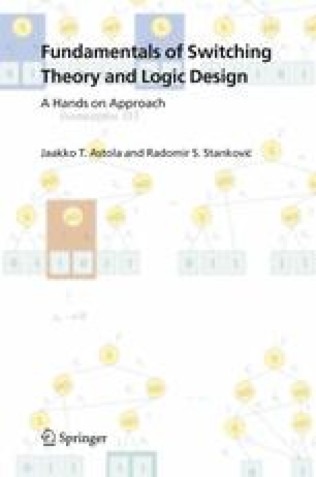
Fundamentals of switching theory and logic design : A hands on approach
Switching theory and logic design provide mathematical foundations and tools for digital system design that is an essential part in the research and development in almost all areas of modern technology. The vast complexity of modern digital systems implies that they can only be handled by computer aided design tools that are built on sophisticated mathematical models. Fundamentals of Switching Theory and Logic Design is aimed at providing an accessible introduction to these mathematical techniques that underlie the design tools and that are necessary for understanding their capabilities and limitations.

Foundations of software science and computational structures ; Vol.3441 : 8th International Conference, FOSSACS 2005, Held as part of the joint European conferences on theory and practice of software, ETAPS 2005
ETAPS 2005 was the eighth instance of the European Joint Conferences on Theory and Practice of Software. ETAPS is an annual federated conference that was est- lished in 1998 by combining a number of existing and new conferences. This year it comprised ?ve conferences (CC, ESOP, FASE, FOSSACS, TACAS), 17 satellite wo- shops (AVIS, BYTECODE, CEES, CLASE, CMSB, COCV, FAC, FESCA, FINCO, GCW-DSE, GLPL, LDTA, QAPL, SC, SLAP, TGC, UITP), seven invited lectures (not including those that were speci?c to the satellite events), and several tutorials. We - ceived over 550 submissions to the ?ve conferences this year, giving acceptance rates below 30% for each one. Congratulations to all the authors who made it to the ?nal program! I hope that most of the other authors still found a way of participating in this exciting event and I hope you will continue submitting. The events that comprise ETAPS address various aspects of the system devel- ment process, including speci?cation, design, implementation, analysis and impro- ment. The languages, methodologies and tools which support these activities are all well within its scope.

Foundations of software science and computational structures ; 10th International Conference, FOSSACS 2007, Held as Part of the Joint European Conferences on Theory and Practice of Software, ETAPS 2007, Braga, Portugal, March 24-April 1, 2007, Proceedings
This book constitutes the refereed proceedings of the 10th International Conference on Foundations of Software Science and Computation Structures, FOSSACS 2007, held in Braga, Portugal in March/April 2007 as part of ETAPS 2007. The papers cover a broad spectrum on theories and methods to support analysis, synthesis, transformation and verification of programs and software systems.
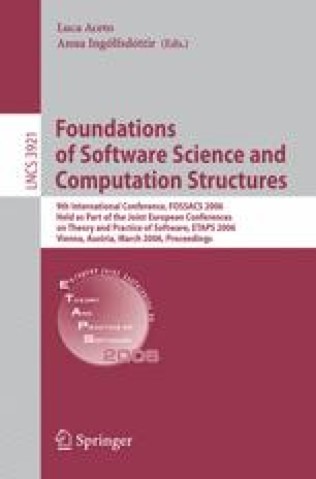
Foundations of software science and computation structures ; Vol. 3921 ; 9th International conference, FOSSACS 2006, Held as part of the joint European conferences on theory and practice of software, ETAPS 2006, Vienna, Austria, March 25-31, 2006, proceedings
This book constitutes the refereed proceedings of the 9th International Conference on Foundations of Software Science and Computation Structures, FOSSACS 2006, held in Vienna, Austria in March 2006 as part of ETAPS. The 28 revised full papers presented together with 1 invited paper were carefully reviewed and selected from 107 submissions. The papers are organized in topical sections on mobile processes, software science, distributed computation, categorical models, real time and hybrid systems, process calculi, automata and logic, domains, lambda calculus, types, and security.
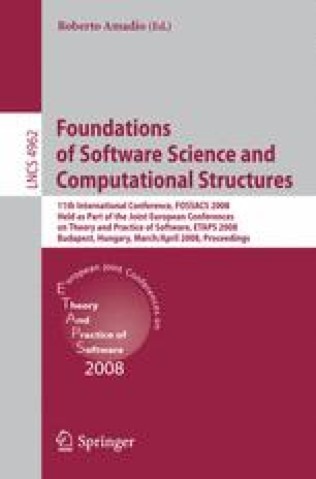
Foundations of software science and computation structures ; 11th International conference, FOSSACS 2008, Held as part of the joint European conferences on theory and practice of software, ETAPS 2008, Budapest, Hungary, March 29 - April 6, 2008. proceedings
The fve main conferences received 571 submissions, 147 of which were accepted, giving an overall acceptance rate of less than 26%, with each conference below 27%.Congratulations there foretoall the authorswhomadeittothe fnalprogramme! I hope that most of the other authors will still have found a way of participating in this exciting event, and that you will all continue submitting to ETAPS and contributing to make of it the best conference in the area. The events that comprise ETAPS address various aspects of the system velopment process, including specifcation, design, implementation, analysis and improvement

Extreme Value Theory : An Introduction
Extreme Value Theory offers a careful, coherent exposition of the subject starting from the probabilistic and mathematical foundations and proceeding to the statistical theory. The book covers both the classical one-dimensional case as well as finite- and infinite-dimensional settings. All the main topics at the heart of the subject are introduced in a systematic fashion so that in the final chapter even the most recent developments in the theory can be understood. The treatment is geared toward applications. The presentation concentrates on the probabilistic and statistical aspects of extreme values such as limiting results, domains of attraction and development of estimators without emphasizing related topics such as point processes, empirical distribution functions and Brownian motion.

Engineering theories of software intensive systems : Theory, algorithms, software, and applications
Software engineering has over the years been applied in many different fields, ranging from telecommunications to embedded systems in car and aircraft industry as well as in production engineering and computer networks. Foundations in software technology lie in models allowing to capture application domains, detailed requirements, but also to understand the structure and working of software systems like software architectures and programs. These models have to be expressed in techniques based on discrete mathematics, algebra and logics. However, according to the very specific needs in applications of software technology, formal methods have to serve the needs and the quality of advanced software engineering methods, especially taking into account security aspects in Information Technology. This book presents mathematical foundations of software engineering and state-of-the-art engineering methods in their theoretical substance in the step towards practical applications to examine software engineering techniques and foundations used for industrial tasks.

Electromagnetic Theory for Microwaves and Optoelectronics
This book is a first year graduate text on electromagnetic fields and waves. At the same time it serves as a useful reference for researchers and engineers in the areas of microwaves and optoelectronics. Following the presentation of the physical and mathematical foundations of electromagnetic theory, the book discusses the field analysis of electromagnetic waves confined in material boundaries, or so-called guided waves, electromagnetic waves in the dispersive media and anisotropic media, Gaussian beams and scalar diffraction theory. The theories and methods presented in the book are foundations of wireless engineering, microwave and millimeter wave techniques, optoelectronics and optical fiber communication.

Computer Aided Engineering Design
This book goes into mathematical foundations and the core subjects of CAED without allowing itself to be overshadowed by computer graphics. It is written in a logical and thorough manner for use mainly by senior and graduate level students as well as users and developers of CAD software. The book covers (a) The fundamental concepts of geometric modeling so that a real understanding of designing synthetic surfaces and solid modeling can be achieved. (b) A wide spectrum of CAED topics such as CAD of linkages and machine elements, finite element analysis, optimization. (c) Application of these methods to real world problems.
Mathematical Linguistics
Mathematical Linguistics introduces the mathematical foundations of linguistics to computer scientists, engineers, and mathematicians interested in natural language processing. The book presents linguistics as a cumulative body of knowledge from the ground up, with no prior knowledge of linguistics being assumed, covering more than the average two-semester introductory course in linguistics.This comprehensive, reader-friendly volume offers readers a high-level orientation, discussing the foundations of the field and presenting both the classical work and the most recent results. It covers an extremely rich array of topics including not only syntax and semantics but also phonology and morphology, probabilistic approaches, complexity, learnability, and the analysis of speech and handwriting.
Mathematical Foundations of Computer Science 2008 ; 33rd International Symposium, MFCS 2008, Toru´n, Poland, August 25-29, 2008. Proceedings
Constitutes the refereed proceedings of the 33rd International Symposium on Mathematical Foundations of Computer Science, MFCS 2008, held in Torun, Poland, in August 2008.The 45 revised full papers presented together with 5 invited lectures were carefully reviewed and selected from 119 submissions. All current aspects in theoretical computer science and its mathematical foundations are addressed, ranging from algorithmic game theory, algorithms and data structures, artificial intelligence, automata and formal languages, bioinformatics, complexity, concurrency and petrinets, cryptography and security, logic and formal specifications, models of computations, parallel and distributed computing, semantics and verification.
Mathematical Foundations of Computer Science 2007 ; 32nd International Symposium, MFCS 2007 Ceský Krumlov, Czech Republic, August 26-31, 2007, Proceedings
This book constitutes the refereed proceedings of the 32nd International Symposium on Mathematical Foundations of Computer Science, MFCS 2007, held in Cesk?? Krumlov, Czech Republic, August 26-31, 2007. All current aspects in theoretical computer science and its mathematical foundations are addressed.
