



الصفحة 1
الصفحة 1

Hardening Linux
“Hardening” is the process of protecting a system and its applications against unknown threats. Hardening Linux identifies many of the risks of running Linux hosts and applications and provides practical examples and methods to minimize those risks. The book is written for Linux/UNIX administrators who do not necessarily have in-depth knowledge of security but need to know how to secure their networks.
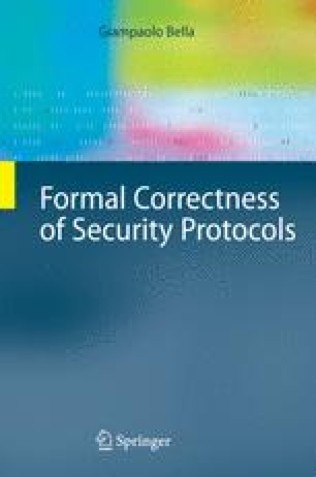
Formal Correctness of Security Protocols
The author investigates proofs of correctness of realistic security protocols in a formal, intuitive setting. The protocols examined include Kerberos versions, smartcard protocols, non-repudiation protocols, and certified email protocols. This research advances significant extensions to the method of analysis, while the findings on the protocols analysed are novel and illuminating.

Distributed Services with OpenAFS : For Enterprise and Education
This book shows in detail how to build enterprise-level secure, redundant, and highly scalable services from scratch on top of the open source Linux operating system, suitable for small companies as well as big universities. The core architecture presented is based on Kerberos, LDAP, AFS, and Samba. It is shown how to integrate web, message related, data base and other services with this backbone. This architecture provides a Single-Sign-On solution for different client platforms and can also be employed for clustering. Although it is implemented with Debian GNU/Linux, the content can be applied to other UNIX flavors.
Computer Security - ESORICS 2008 ; 13th European Symposium on Research in Computer Security, Málaga, Spain, October 6-8, 2008. Proceedings
This book constitutes the refereed proceedings of the 13th European Symposium on Research in Computer Security, ESORICS 2008, held in Torremolinos, Spain, in October 2008.
