



الصفحة 1
الصفحة 1

Mathematics Education in East Africa : Towards Harmonization and Enhancement of Education Quality
In the increasingly global and technological world mathematics is seen as a significant gatekeeper of opportunities for social and economic advancement and mobility. Hence, countries and development agencies in the broader sub-Saharan Africa region are looking towards increasing access to relevant and high-quality secondary education as a lever towards economic development. Policy makers and other key decision makers in education look towards improvement in mathematics teaching and learning as a key focus in education reform. In the East Africa region also a number of initiatives have been taken at the national level in the respective countries to improve the quality of mathematics education. This book provides an in-depth comparative analysis of the developments and issues in mathematics education in Kenya, Tanzania, Rwanda and Uganda, and advances our understanding of the state of secondary mathematics education in East Africa.

Digital Soil Mapping with Limited Data
This book focuses on digital soil mapping methodologies and applications for areas where data are limited, and has the following sections (i) introductory papers, (ii) dealing with limited spatial data infrastructures, (iii) methodology development, and (iv) examples of digital soil mapping in various parts of the globe (including USA, Brazil, UK, France, Czech Republic, Honduras, Kenya, Australia). The final chapter summarises priorities for digital soil mapping.

Digital Kenya : An Entrepreneurial Revolution in the Making
Presenting rigorous and original research, this volume offers key insights into the historical, cultural, social, economic and political forces at play in the creation of world-class ICT innovations in Kenya. Following the arrival of fiber-optic cables in 2009, Digital Kenya examines why the initial entrepreneurial spirit and digital revolution has begun to falter despite support from motivated entrepreneurs, international investors, policy experts and others. Written by engaged scholars and professionals in the field, the book offers 15 eye-opening chapters and 14 one-on-one conversations with entrepreneurs and investors to ask why establishing ICT start-ups on a continental and global scale remains a challenge on the “Silicon Savannah

Design build with the scarcity and creativity studio
Scarcity and Creativity Studio has developed a teaching method which reaffirms a commitment to architecture as a service to society, questions the idea of the individual creator in favour of collaborative design, and challenges the traditional master-student relationship. This book documents the projects and, in so doing, explains the practices and pedagogic methods which the studio has developed in relation to architecture education in general and design build education in particular. Aimed at students, teachers, and professionals who are exploring the possibilities of design build, the 16 built projects are fully documented in text, drawings, and photos and can be used as both inspiration and references. Projects are based in Norway, Finland, Chile, Ecuador (Galápagos), Kenya, South Africa, China, Argentina, and Lebanon.

Deconstructing Olduvai : A taphonomic study of the bed I sites
Plio-Pleistocene sites are a rare occurrence in same sites. This combination of factors is the archaeological record. When they are unique in East African Plio-Pleistocene uncovered, the faunal materials so crucial to archaeology and has stimulated much debate unlocking their behavioral meaning are often over the socioeconomic function of early sites. poorly preserved. For example, at Koobi Fora, Influential models of early hominid behavior Kenya, a prolific region that preserves several in the late 1960s and early 1970s were based classic Plio-Pleistocene sites, many bones are exclusively on information from Olduvai affected by poor cortical surface preservation Gorge (Leakey, 1971).
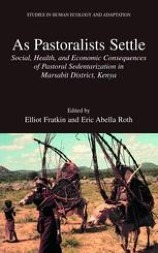
As Pastoralists settle : Social, health, and economic consequences of the pastoral Sedentarization in Marsabit District, Kenya
Formerly nomadic livestock-keeping pastoralists have settled in many regions of the world in the past century. Some groups, including those in the former Soviet Union, Iran, and Israel, have settled in response to state-enforced measures; others including Saami in Norway or Bedouins in Saudi Arabia, in response to changing economic opportunities. East Africa, home to many cattle- and camel-keeping pastoral societies, has been among the most recent to change. The shift to sedentism by East African pastoralists increased d- matically in the late 20th century as a result of sharp economic, political, demographic, and environmental changes.

Architecture and the housing question
Examines how the design and provision of housing around the world have become central both to competing political projects and to the architecture profession. How have architects acting as housing experts helped alleviate or enforce class, race, and gender inequality? What are the disciplinary implications of taking on shelter for the multitude as an architectural assignment and responsibility? The book features essays in the historiography of architecture and the housing question, and a collection of historical case studies from Belgium, China, France, Ghana, the Netherlands, Kenya, the Soviet Union, Turkey, and the United States.
African Languages and Literatures in the 21st Century
Examines the crucial role still played by African languages in pedagogy and literatures in the 21st century, generating insights into how they effectively serve cultural needs across the African continent and beyond. Boldly positioning African languages as key resources in the 21st century, chapters focus on themes such as language revolt by marginalized groups at grassroots level, the experience of American students learning African languages, female empowerment through the use of African languages in music, film and literary works, and immigration issues. The contributions are written by scholars of language, literature, education and linguistics, and will be of interest to students and scholars in these and related areas.
African Land Reform Under Economic Liberalisation: States, Chiefs, and Rural Communities
This book offers unique in-depth, comprehensive, and comparative analyses of the motivations, context, and outcomes of recent land reforms in Africa. Whereas a considerable number of land reforms have been carried out by African governments since the 1990s, no systematic analysis on their meaning has so far been conducted. In the age of land reform, Africa has seen drastic rural changes. Analysing the relationship between those reforms and change, the chapters in this book reveal not only their socio-economic outcomes, such as accelerated marketisation of land, but also their political outcomes, which have often been contrasting.
