



الصفحة 1
الصفحة 1

National Constitutions in European and Global Governance : Democracy, Rights, the Rule of Law: National Reports
It offers important insights into three areas. First, it explores how constitutions reflect the transfer of powers from domestic to European and global institutions. Secondly, it revisits substantive constitutional values, such as the protection of constitutional rights, the rule of law, democratic participation and constitutional review, along with constitutional court judgments that tackle the protection of these rights and values in the transnational context, e.g. with regard to the Data Retention Directive, the European Arrest Warrant, the ESM Treaty, and EU and IMF austerity measures. The responsiveness of the ECJ regarding the above rights and values, along with the standard of protection, is also assessed. Thirdly, challenges in the context of global governance in relation to judicial review, democratic control and accountability are examined. On a broader level, the contributors were also invited to reflect on what has increasingly been described as the erosion or ‘twilight’ of constitutionalism, or a shift to a thin version of the rule of law, democracy and judicial review in the context of Europeanisation and globalisation processes.

International Prosecution of Human Rights Crimes
It is intended for a wide variety of readers: academics, all kinds of jurists, as well as human rights activists, who sometimes know more about the applicable law than the legal experts. It owes its existence to a paradox: On the one hand, new structures for dealing with the most serious international crimes are being put into place.

International humanitarian law and non-state actors : Debates, law and practice
challenges the traditional approach to international law by concentrating on international humanitarian law and placing the focus beyond States: it reflects on current legal, policy and practical issues that concern non-State actors in and around situations of armed conflict.The contributions that comprise this volume are oriented towards a broad readership audience in the academic and professional fields related to international humanitarian law, international criminal law, international human rights law and general public international law.

International criminal law practitioner library: international criminal procedure
Volume 3 completes the review of international criminal law begun in Volumes 1 and 2, which analyse the forms of responsibility and the elements of the core crimes. This volume reviews the procedural law and practices of the international criminal tribunals from investigation to trial, appeal, and punishment, and examines the framework within which the substantive law operates. The authors present a critical study of those procedures that are essential to effective investigations and fair trials.

International criminal law : Using or abusing legality
Analyses the relationship between law and violence, the utility of law over violence and whether legality as an approach has an inherent disability in addressing mass violence as a crime. The study is located within international law and assesses whether prosecuting political violence would necessarily entail an abuse of the legal process. The intention is to encourage definition of criminal aggression via legal processes laid down by the International Criminal Court,

Individual Criminal Responsibility for Core International Crimes : Selected Pertinent Issues
The media has, of course, played a crucial role in increasing awareness of this concept, especially amongst the general populace. Indeed, the concept has, arguably, a much higher profile today, than ever before in its history. However, the concept of individual criminal responsibility for core inter- tional crimes is neither as straightforward nor as single-facetted, as might appear on first glance. While the general principle behind the concept does not generate too many difficulties, it is in its practical application that the more challenging aspects of the concept are brought to the fore. Each of these ‘challenging - pects’ can also be described as a ‘pertinent issue’ of the concept of individual criminal responsibility for core international crimes.

Fault in criminal law : A research companion
Addresses three specific elements within the arena of fault, embracing an overarching synergy between them. This structure facilitates an examination of UK provisions, with specialist contributions on domestic law, and in contrasting these provisions against alternative domestic jurisdictions as well as comparative contributions addressing a particularised research grid for content. The comparative chapters provide a wider background of how other legal systems treat a variety of specialised issues relating to fault elements in the context of the Criminal Law.

Estimates of cost of crime : History, methodologies, and implications
With the emergence and development of quantitative methods in economics and statistics, the exercise of calculating costs of crime became possible, In this book, it's argue that we can estimate costs of different crimes, and that such estimates are relevant for criminal law and crime policy. Notwithstanding the incommensurability of many consequences of crime, society every day makes numerous decisions how to tackle crime, and at least implicitly assesses the relative importance of the problem. Properly done costs of crime estimates make people’s evaluation more visible, and allow for more coherent public policy.

Do Exclusionary Rules Ensure a Fair Trial? : A Comparative Perspective on Evidentiary Rules
This publication discusses exclusionary rules in different criminal justice systems. It is based on the findings of a research project in comparative law with a focus on the question of whether or not a fair trial can be secured through evidence exclusion. Part I explains the legal framework in which exclusionary rules function in six legal systems: Germany, Switzerland, People’s Republic of China, Taiwan, Singapore, and the United States. Part II is dedicated to selected issues identified as crucial for the assessment of exclusionary rules. These chapters highlight the delicate balance of interests required in the exclusion of potentially relevant information from a criminal trial and discusses possible approaches to alleviate the legal hurdles involved.

Collaborating against child abuse : Exploring the Nordic Barnahus model
This edited collection explores the background and implementation of the Nordic Barnahus (or 'Children's House') model – recognised as one of the most important reforms related to children who are the victims of crime in the Nordic region. This book discusses both its potential to affect change and the challenges facing it. The model was introduced as a response to a growing recognition of the need for more integrated and child-centred services for children exposed to violence and sexual abuse. In the Barnahus structure, different professions work together to ensure that victimized children receive help and treatment and that their legal rights are met. This original study is organised into four broad themes: child-friendliness, support and treatment; the forensic child investigative interview; children’s rights perspectives; and interagency collaboration and professional autonomy.

Coercive human rights: positive duties to mobilise the criminal law under the ECHR
Traditionally, human rights have protected those facing the sharp edge of the criminal justice system. But over time human rights law has become increasingly infused with duties to mobilise criminal law towards protection and redress for violation of rights. These developments give rise to a whole host of questions concerning the precise parameters of coercive human rights, the rationale(s) that underpin them, and their effects and implications for victims, perpetrators, domestic legal systems, and for the theory and practice of human rights and criminal justice. This collection addresses these questions with a focus on the rich jurisprudence of the European Court of Human Rights (ECtHR).
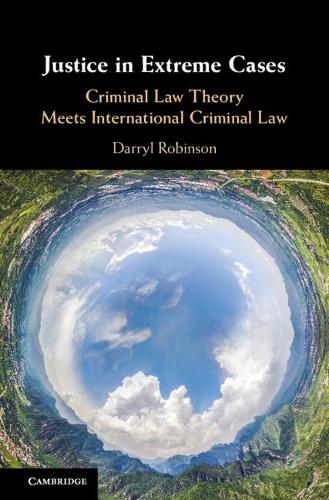
Justice in extreme cases: criminal law theory meets international criminal law
Shows how to use moral theory to challenge and improve ICL, and how extreme cases can challenge and improve criminal law theory. It will appeal to scholars and jurists in ICL, as well as scholars of criminal law theory or legal philosophy.

Child soldiers and the defence of duress under International criminal law
Investigates the use of duress as a defence in international criminal law, specifically in cases of child soldiers. The prosecution of children for international crimes often only focuses on whether children can and should be prosecuted under international law. However, it is rarely considered what would happen to these children at the trial stage. This work offers a nuanced approach towards international prosecution and considers how children could be implicated and defended in international courts.
An Introduction to international criminal law and Procedure
Offers readers comprehensive coverage and a high level of academic rigour while maintaining its signature accessible and engaging style. Introducing the readers to the fundamental concepts of international criminal law, as well as the domestic and international institutions that enforce that law, this book engages with critical questions, political and moral challenges, and alternatives to international justice.
