



الصفحة 1
الصفحة 1

Intensive Care Medicine ; Annual Update 2006
The Update compiles the most recent developments in experimental and clinical research and practice in one comprehensive reference book. The chapters are written by well recognized experts in the field of intensive care and emergency medicine. It is addressed to everyone involved in internal medicine, anesthesia, surgery, pediatrics, intensive care and emergency medicine.

Intensive care medicine : Annual update 2007
The chapters are written by well recognized experts in the field of intensive care and emergency medicine. It is addressed to everyone involved in internal medicine, anesthesia, surgery, pediatrics, intensive care and emergency medicine.

Infection Control in the Intensive Care Unit
Infection Control in the Intensive Care Unit has been entirely rewritten in this second edition. All statements are justified by the best available evidence, avoiding unsubstantiated expert opinion. The book contains a new section dedicated to the microbiology of the critically ill, specifically, how to process and interpret surveillance cultures to distinguish the ‘normal’ from the ‘abnormal’ carrier state. There are five totally new chapters dealing with evidence-based infection control molecular techniques for outbreak analysis; clinical virology in neonatal, paediatric and adult intensive care; the six basic principles of the therapy of an infection; and the role of the pharmacist in infection control. Attention is given to special topics such as nutrition, gut mucosal protection and the control of antimicrobial resistance. The addition of enteral to parenteral antimicrobials contributes to the control of multi-resistant micro-organisms. This completely revised second edition is a ‘must have’ for anyone requiring in depth knowledge in the ever expanding field of infection control.

General ultrasound in the critically ill
General ultrasound in the critically ill describes a bedside tool destined for use by the intensivist and any physician involved in emergencies. It specifically deals with findings of immediate clinical relevance throughout the body. New emergency applications of ultrasound in the abdomen, the vessels, the head and the heart are considered. The major topic, the lung, is extensively discussed. Interventional ultrasound forms part of nearly every chapter. Flow charts simplify daily concerns: acute dyspnea, shock, unexplained fever, etc. The strong points and pitfalls of ultrasound are reviewed. Technical notes are mingled with general considerations. Benefiting from the extensive experience of an intensivist intimately familiar with ultrasound, this book accurately answers most daily problems arising in the critically ill. it offers not only an exhaustive atlas but also a permanent aid to the therapeutic decision. All in all, General ultrasound in the critically ill provides a key for practicing a kind of visual medicine. Since 1990 Daniel Lichtenstein has been an intensivist in a medical ICU which already occupied a pioneering place in echocardiography. He has from the beginning devoted his efforts to the development of general ultrasound. He regularly publishes studies on lung ultrasound, his main topic, in the international literature.
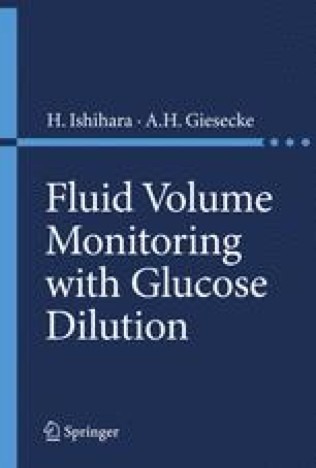
Fluid volume monitoring with glucose dilution
Decision making regarding fluid volume loading, fluid restriction, or administration of vasoactive drugs may vary among physicians, depending solely upon their clinical experience in the absence of evidence-based measurement. The initial distribution volume of glucose (IDVG) is believed to be clinically relevant as a marker of cardiovascular and fluid management in critically ill patients without a significant modification of glucose metabolism. This book covers all aspects of IDVG measurement, including the basic concept, its relationship with other fluid volumes, and the clinical application of this technique in the intensive care unit based on both the authors’ studies and their clinical experience with more than 4000 IDVG determinations. When the concept of IDVG is properly understood and its measurement is then performed routinely, daily fluid and cardiovascular management in critically ill patients can be improved based on evidence-based measurement.

Fluconazole : Pharmacology, clinical uses and health effects
Fluconazole is a triazole antifungal drug used in the treatment and prevention of superficial and systemic fungal infections. In this book, the authors present current research in the study of the pharmacology, clinical uses and health effects of fluconazole. Topics discussed include the utilization of fluconazole in adult intensive care units; the use of fluconazole in veterinary species and a description of variances from the human experience as well as findings in veterinary species which may have applicability in human medicine; common clinical uses and in vitro activity features on fluconazole; and the discovery and development of medically-important antifungal agents, particularly the azole derivatives and the development of fluconazole and its clinical applications.

Coronavirus therapeutics ; Vol. II : Clinical management and public health
Provides the most comprehensive review on contemporary knowledge on the consequences during the outbreak of Coronavirus. This also describes the clinical features, diagnostic evaluation and management of Coronavirus patients. Using an integrative approach to the understanding of paradigm gap in host-pathogen interaction studies to the management of Coronavirus patients in the Intensive Care Unit to the current challenges for the effective management of Coronavirus pandemic risk factors including diabetes, hypertension, obesity and repercussion on the central and peripheral nervous system.
Le syndrome de détresse respiratoire aiguë = Acute respiratory distress syndrome
Gives a large place to mechanical ventilation, in particular to its optimization and the interest of its various forms, such as non-invasive ventilation or high frequency oscillation. It also discusses, in a practical way, what imaging and the study of respiratory mechanics can bring to the practitioner in the field or to the intensive care unit.
Le manuel de réanimation, soins intensifs et médecine durgence = The manual of resuscitation, intensive care and emergency medicine
Offers an update of this book in a field that remains fascinating yet constantly evolving. Each chapter has been completely revised, expanded, and updated by the author. The didactic and practical approach has been maintained to ensure easy access for young doctors working in intensive care units, emergency physicians, and doctors on call in hospitals. These practitioners will find it helpful in understanding pathologies and implementing the most appropriate treatment.
Antibiotic pharmacokinetic : Pharmacodynamic considerations in the critically Ill
Provides unique insights into the issues that drive modified dosing regimens for antibiotics in the critically ill. Leading international authors provide their commentary alongside a summary of existing evidence on how to effectively dose antibiotics. Severe infection frequently necessitates admission to the intensive care unit (ICU). Equally, nosocomial sepsis often complicates the clinical course in ICU. Early, appropriate application of antibiotic therapy remains a cornerstone of effective management. However, this is challenging in the critical care environment, given the significant changes in patient physiology and organ function frequently encountered. Being cognisant of these factors, prescribers need to consider modified dosing regimens, not only to ensure adequate drug exposure, and therefore the greatest chance of clinical cure, but also to avoid encouraging drug resistance.
