



الصفحة 1
الصفحة 1

Westcotts Plant Disease Handbook
In its revised, improved and expanded 7th Edition, Westcott’s Plant Disease Handbook presents newly discovered diseases and newly identified hosts in the classic format that has won favor with readers at every level of expertise and experience. Dictionary-style entries permit easy access to essential information, and numerous illustrations help identify important diseases. New and updated material includes significant taxonomic changes in fungi, bacteria, viruses and nematodes; recently discovered diseases and new hosts for previously known plant-pathogens; changes in chemicals and pesticides and updates on regulations governing their use; integrated pest management and biological control. The Handbook offers additional conveniences: useful cross references, indexes, illustrative plates of 34 key diseases, and 40 black and white illustrations of other diseases. This updated edition of a long-trusted resource will serve a broad audience, from amateur backyard gardeners to landscape architects, arborists, florists, nursery professionals and plant scientists.

Mycorrhizae : Sustainable Agriculture and Forestry
This book discusses and goes into detail on a number of topics: the molecular basis of nutrient exchange between arbuscular mycorrhizal (AM) fungi and host plants; the role of AM fungi in disease protection, alleviation of soil stresses and increasing grain production; interactions of AM fungi and beneficial saprophytic mycoflora in terms of plant growth promotion; the role of AM fungi in the restoration of native ecosystems; indirect contributions of AM fungi and soil aggregation to plant growth and mycorrhizosphere effect of multitrophic interaction; the mechanisms by which mycorrhizas change a disturbed ecosystem into productive land; the importance of reinstallation of mycorrhizal systems in the rhizosphere is emphasized and their impact on landscape regeneration, and in bioremediation of contaminated soils; Ectomycorrhizae (ECM) and their importance in forest ecosystems and associations of ECM in tropical rain forests function to maintain tropical monodominance; in vitro mycorrhization of micro-propagated plants, and visualizing and quantifying endorhizal fungi; the use of mycorrhizae, mainly AM and ECM, for sustainable agriculture and forestry.
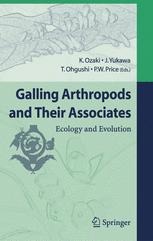
Galling Arthropods and Their Associates ; Ecology and Evolution
The book addresses recent developments in the ecology, evolution, systematics, physiology, and biodiversity of gall-inducing arthropods, with individual contri butions ranging in scope from detailed descriptions to profoundly synthetic stud ies. One underlying theme of the book is the various impacts of gall induction that indirectly affect insect communities on the host plant. The other important contri bution is the highly intricate and dynamic interactions between galling arthropods and their uniquely specialized host plants. Included also are chapters that discuss biodiversity and distribution patterns of gall-inducing arthropods, and biological control of invasive gall-inducing arthropods and of invasive trees. We believe that this book makes an important contribution to the knowledge of galling arthropods and their associates and to the development of robust, general principles of the ecology and evolution of these organisms.
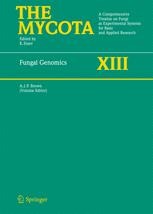
Fungal Genomics
Presents an overview on mutualistic and pathogenic interactions between fungi and plants. This book offers reviews on fungal lifestyles, mechanisms of their interactions with their host plants, signal perception and transduction, and plant defense responses directed against attack by fungal pathogens. It is suitable for students in microbiology.
