



الصفحة 1
الصفحة 1

Handbook of healthcare in the Arab World
Examines health and medical care in the Arab world from a systems biology approach. It features comprehensive coverage that includes details of key social, environmental, and cultural determinants. In addition, the contributors also investigate the developed infrastructure that manages and delivers health care and medical solutions throughout the region. More than 25 sections consider all aspects of health, from cancer to hormone replacement therapy, from the use of medications to vitamin deficiency in emergency medical care. Chapters highlight essential areas in the wellbeing and care of this population. These topics include women’s health care, displaced and refugee women’s health needs, childhood health, social and environmental causes of disease, health systems and health management, and a wide range of diseases of various body systems. This resource also explores issues related to access and barriers to health delivery throughout the region.

Creating Healthy and Sustainable Buildings : An Assessment of Health Risk Factors
The book discusses human health and wellbeing within the context of built environments. It provides a comprehensive overview of relevant sources of literature and user complaints that clearly demonstrate the consequences of lack of attention to health in current building design and planning. Current designing of energy-efficient buildings is mainly focused on looking at energy problems and not on addressing health. Therefore, even green buildings that place environmental aspects above health issues can be uncomfortable and unhealthy, and can lead to public health problems. They point to the need for public health specialists, engineers and planners to come together and review built environments for human wellbeing and environmental sustainability. The authors therefore present a tool for holistic decision-making processes, leading to short- and long-term benefits for people and their environment.
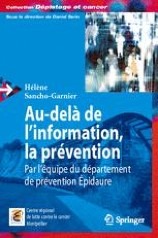
Au-delà de linformation, la prévention : Par l’équipe du département de prévention Épidaure = Prevention goes beyond information : By the Epidaure Prevention department team
The prevention of the most frequent and deadly pathologies (cancers, cardiovascular diseases, accidents) essentially involves modifying risky behavior, a challenge which cannot be resolved by the simple dissemination of information. To be able to modify behavior, it is necessary to take into account, on the one hand, the individuals themselves and what leads them to change their ways of living and, on the other hand, the cultural, social, physical and economic environment. who shapes people and whose modifications are necessary for individual changes. Thus, preventive health actions are effective as long as they strengthen the ability to exercise control over individual and collective health determinants.
