



الصفحة 1
الصفحة 1
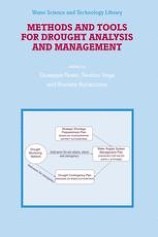
Methods and Tools for Drought Analysis and Management
Implementation of effective drought management policies requires both advanced technologies and appropriate methods. Monitoring and forecasting systems, practical tools for risk assessment, as well as simple and objective criteria to select and implement appropriate drought mitigation measures are key elements for a successful drought management strategy.These key issues have been tackled by universities and public agencies involved in the EU projects Sedemed and Sedemed II (Programme Interreg IIIB MEDOCC), aimed at the definition of an integrated network for real time monitoring of drought, the development of common methodologies for drought analysis and forecasting, as well as the definition of proper mitigation strategies for the Mediterranean countries.The book presents the main outcomes of such projects with a special focus on: drought monitoring and forecasting echniques at different spatial scales; new or modified agrometeorological indices and remote sensing technique for drought identification and characterization; tools to improve surface water resources management under drought conditions; methods and tools for groundwater resources monitoring and management, based on hydrogeological and hydrodynamics characteristics of aquifers; general criteria to select and implement mitigation strategies to prevent or minimize drought impacts.
Integrated Groundwater Management : Concepts, Approaches and Challenges
The aim of this book is to document for the first time the dimensions and requirements of effective integrated groundwater management (IGM). Groundwater management is a formidable challenge, one that remains one of humanity’s foremost priorities. It has become a largely non-renewable resource that is overexploited in many parts of the world. In the 21st century, the issue moves from how to simply obtain the water we need to how we manage it sustainably for future generations, future economies, and future ecosystems. The focus then becomes one of understanding the drivers and current state of the groundwater resource, and restoring equilibrium to at-risk aquifers. Many interrelated dimensions, however, come to bear when trying to manage groundwater effectively. An integrated approach to groundwater necessarily involves many factors beyond the aquifer itself, such as surface water, water use, water quality, and ecohydrology.

Groundwater Recharge from Run-off, Infiltration and Percolation
This book first discusses the recharge fluxes relating both to the quantity and quality of groundwater. In order to face the threats to the water supply and to be able to maintain a sustainable water management policy, detailed knowledge is needed in between others on the surface to subsurface transformation link in the water cycle. Secondly, the presentation and comparison of both the traditional and modern approach to determine groundwater recharge is discussed. The traditional approach to determine groundwater recharge, is based on water balance estimates and hydraulic considerations, which yield instantaneous values at best but do not integrate the totality of recharge pathways in time and space. In contrast, environmental tracers do integrate these factors. Finally, the fate of groundwater recharge in the subsurface by hydraulic and geologic means is discussed in detail, in order to stimulate adapted groundwater management strategies and to better assess consequences of climate changes on groundwater resources as a whole.

Groundwater overexploitation in the North China Plain : A path to sustainability
Over-pumping of aquifers is a worldwide problem, mainly caused by agricultural water use. Among its consequences are the falling dry of streams and wetlands, soil subsidence, die-off of phreatophytic vegetation, saline water intrusion, increased pumping cost and loss of storage needed for drought relief.
Groundwater Management in Asian Cities : Technology and Policy for Sustainability
The number of city dwellers who do not have access to piped water and rely on groundwater is also increasing. In many Asian cities, groundwater is not only the source of domestic water but also an important resource for industrial development, making better management of groundwater resources essential for sustainable development. Because groundwater is easier to access and costs less than water from piped systems, groundwater abstraction cannot be easily regulated. Policies for groundwater management adopted in Japan and other Asian countries are compared, and technologies for efficient use of groundwater are elucidated. Groundwater contamination is also a serious problem that exacerbates water scarcity in Asian cities. Case studies illustrate the cause and consequences of naturally occurring contaminants such as arsenic and fluoride, and groundwater contamination due to anthropogenic contaminants is described. Also discussed are technologies for treating contaminated groundwater to reduce the health risks of drinking contaminated groundwater.
