



الصفحة 1
الصفحة 1

Intelligent Computer Mathematics ; 13th International Conference, CICM 2020, Bertinoro, Italy, July 26–31, 2020, Proceedings
This book constitutes the refereed proceedings of the 13th International Conference on Intelligent Computer Mathematics, CICM 2020, held in Bertinoro, Italy, in July 2020*. The 15 full papers, 1 invited paper and 2 abstracts of invited papers presented were carefully reviewed and selected from a total of 35 submissions. The papers focus on advances in automated theorem provers and formalization, computer algebra systems and their libraries, and applications of machine learning, among other topics.

Geometric Data Analysis : From Correspondence Analysis to Structured Data Analysis
Geometric Data Analysis (GDA) is the name suggested by Stanford University to designate the approach to Multivariate Statistics initiated.as Correspondence Analysis, an approach that has become more and more used and appreciated over the years. This book presents the full formalization of GDA in terms of linear algebra - the most original and far-reaching consequential feature of the approach - and shows also how to integrate the standard statistical tools such as Analysis of Variance, including Bayesian methods. Chapter 9, Research Case Studies, is nearly a book in itself; it presents the methodology in action on three extensive applications, one for medicine, one from political science, and one from education (data borrowed from the Stanford computer-based Educational Program for Gifted Youth ). Thus the readership of the book concerns both mathematicians interested in the applications of mathematics, and researchers willing to master an exceptionally powerful approach of statistical data analysis.

Fuzzy Quantifiers : A Computational Theory
Almost all", "many", "some": fuzzy quantifiers are vital for effective communication in natural language (NL). This monograph pursues an axiomatic method to achieve a reliable interpretation of these quantifiers in technical applications of fuzzy quantification. Unlike existing work in this area, it targets a much broader class of quantificational phenomena which includes all cases usually considered in linguistics. The topics addressed in the monograph run the gamut from the introduction of the theoretical framework for analysing fuzzy quantification, the formalization of semantical requirements on models of fuzzy quantification, the construction and detailed study of prototypical models which conform to the linguistic desiderata, the development of algorithms for implementing the main types of quantifiers in these models, and finally a preview to fuzzy branching quantifications which might be necessary for modelling NL sentences involving more than one quantifier.
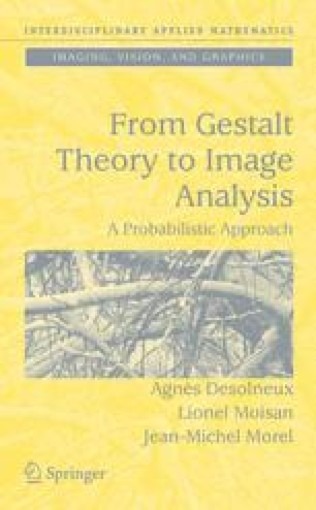
From Gestalt Theory to Image Analysis : A Probabilistic Approach
This book introduces the reader to a recent theory in Computer Vision yielding elementary techniques to analyse digital images. These techniques are inspired from and are a mathematical formalization of the Gestalt theory. Gestalt theory, which had never been formalized is a rigorous realm of vision psychology developped between 1923 and 1975. From the mathematical viewpoint the closest field to it is stochastic geometry, involving basic probability and statistics, in the context of image analysis.

Formalizing the Shadow Economy in Serbia : Policy Measures and Growth Effects
The main objective of this book is to develop a strategy and policy measures to enhance the formalization of the shadow economy in order to improve the competitiveness of the economy and contribute to economic growth; it explores these issues with special reference to Serbia. The size and development of the shadow economy in Serbia and other Central and Eastern European countries are estimated using two different methods (the MIMIC method and household-tax-compliance method). Micro-estimates are based on a special survey of business entities in Serbia, which for the first time allows us to explore the shadow economy from the perspective of enterprises and entrepreneurs.
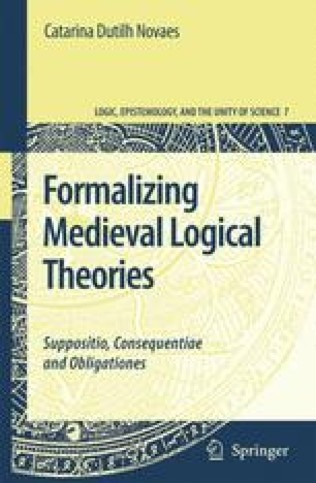
Formalizing Medieval Logical Theories : Suppositio, Consequentiae and Obligationes
This book presents novel formalizations of three of the most important medieval logical theories: supposition, consequence and obligations. In an additional fourth part, an in-depth analysis of the concept of formalization is presented – a crucial concept in the current logical panorama, which as such receives surprisingly little attention.
Formalization of Banking Supervision : 19th–20th Centuries
Elaborate the formalization phase of banking supervision in eight developed countries—USA, Japan, Sweden, Germany, Switzerland, Belgium, France, and UK. This innovative study in the field of banking supervision history identifies why national histories of banking supervision share similarities, but also remain different and are heavily path dependent. This book will be of great interest not only to financial/economic historians but also to general readers interested in banking supervision, i.e., students, bankers, supervisors, and international officials.
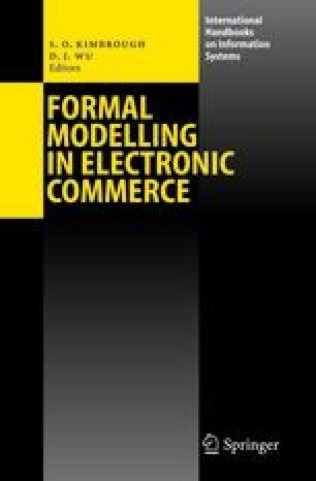
Formal Modelling in Electronic Commerce
Advances in automation for electronic commerce require improved understanding and formalization of the objects, processes, and policies of commerce itself. These include business objects such as bills of lading and contracts; processes such as workflows and trade procedures; and policies covering such problems as contract or procedure validation and strategic behaviour. This book is about theory, formalization, and proof-of-concept implementation of these and related matters. In addition to presenting state-of-the-art results, the book places this work in the context of nearly twenty years of developments in formal modelling for electronic commerce. A comprehensive bibliography and index are provided.

Ensembles ordonnés finis : concepts, résultats et usages = Finite ordered sets : concepts, results and uses
The concepts of order, classification, storage are presented in many activities and human situations. The mathematical formalization of these notions first allowed the great development of the theory of lattices, then that of more general ordered structures, in particular those relating to discrete mathematics.

Ecotoxicology, Ecological Risk Assessment and Multiple Stressors
The science of ecotoxicology and the practice of ecological risk assessment are evolving rapidly. Ecotoxicology as a subject area came into prominence in the 1960s after the publication of Rachel Carson's book on the impact of pesticides on the environment. The rise of public and scientific concern for the effects of chemical pollutants on the environment in the 1960s and 1970s led to the development of the discipline of ecotoxicology, a science that takes into account the effects of chemicals in the context of ecology. Until the early 1980s, in spite of public concern and interest among scientists, the assessment of ecological risks associated with natural or synthetic pollutants was not considered a priority issue by most government. However, as the years passed, a better understanding of the importance of ecotoxicology emerged and with it, in some countries, the progressive formalization of an ecological risk assessment process.

Diagrammatic representation and inference ; 4th International conference, Diagrams 2006, Stanford, CA, USA, June 28-30, 2006, Proceedings
Proceedings of the 4th International Conference on Theory and Application of Diagrams, Stanford, CA, USA in June 2006. 13 revised full papers, 9 revised short papers, and 12 extended abstracts are presented together with 2 keynote papers and 2 tutorial papers. The papers are organized in topical sections on diagram comprehension by humans and machines, notations: history, design and formalization, diagrams and education, reasoning with diagrams by humans and machines, and psychological issues in comprehension, production and communication.

Automated reasoning ; 3rd International Joint Conference, IJCAR 2006, Seattle, WA, USA, August 17-20, 2006, Proceedings
This book constitutes the refereed proceedings of the Third International Joint Conference on Automated Reasoning,The papers address the entire spectrum of research in automated reasoning including formalization of mathematics, proof theory, proof search, description logics, interactive proof checking, higher-order logic, combination methods, satisfiability procedures, and rewriting. The papers are organized in topical sections on proofs, search, higher-order logic, proof theory, search, proof checking, combination, decision procedures, CASC-J3, rewriting, and description logic.

Agent and multi-agent systems : Technologies and applications ; 1st KES International Symposium, KES-AMSTA 2007, Wroclaw, Poland, May 31-June 1, 2007, Proceedings
The aim of the symposium was to provide an international forum for scientific - search in the technologies and applications of agent and multi-agent systems. Agents and multi-agent systems are related to the modern software which has long been r- ognized as a promising technology for constructing autonomous, complex and intel- gent systems. A key development in the field of agent and multi-agent systems has been the specification of agent communication languages and formalization of - tologies. Agent communication languages are intended to provide standard decla- tive mechanisms for agents to communicate knowledge and make requests of each other, whereas ontologies are intended for conceptualization of the knowledge - main.
