



الصفحة 1
الصفحة 1

Nature-Based Flood Risk Management on Private Land : Disciplinary Perspectives on a Multidisciplinary Challenge
This book addresses the various disciplinary aspects of nature-based solutions in flood risk management on private land. In recent decades, water management has been moving towards nature-based solutions. These are assumed to be much more multi-purpose than traditional “grey infrastructures” and seem to be regarded as a panacea for many environmental issues. At the same time, such measures require more – and mostly privately owned – land and more diverse stakeholder involvement than traditional (grey) engineering approaches. They also present challenges related to different disciplines. Nature-based solutions for flood risk management not only require technical expertise, but also call for interdisciplinary insights from land-use planning, economics, property rights, sociology, landscape planning, ecology, hydrology, agriculture and other disciplines to address the challenges of implementing them. Ultimately, nature-based flood risk management is a multi-disciplinary endeavor.
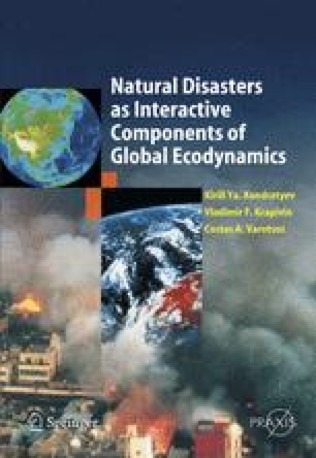
Natural Disasters as Interactive Components of Global-Ecodynamics
This book opens a new approach to the study of global environmental changes having unfavourable character for mankind and other living systems. The main advantage of the book consists in the accumulation of knowledge from different sciences to parametrize the global ecodynamic process. Natural catastrophes are considered as an interactive element of global natural dynamics which are described by means of simulation models of global nature/society. The realization of this approach allows the integration within a complex structure of all international and national means of environmental monitoring and provides a tool for objective evaluation of the environmental quality. The main purpose of this book is to develop a universal information technology to estimate the state of environmental subsystems functioning under various climatic and anthropogenic conditions.

Natural Disasters and Extreme Events in Agriculture : Impacts and Mitigation
Agricultural production is highly dependent on weather, climate and water availability and is adversely affected by the weather and climate-related disasters. Droughts and natural disasters such as floods can result in crop failures, food insecurity, famine, loss of property and life, mass migration and negative national economic growth. It may not be possible to prevent the occurrence of these natural disasters, but the resultant disastrous effects can be reduced considerably through proper planning and effective preparation. Vulnerability associated with the hazards of natural disasters can be controlled to some extent by accurate and timely prediction and by taking counter-measures to reduce their impacts on agriculture. This book based on an expert meeting held in Beijing, China should be of interest to all organizations involved in disasters reduction and mitigation of extreme events.
Metric Handbook : Planning and Design Data
A major handbook of planning and design data for architects and architecture students. Covering basic design data for all the major building types, it is the ideal starting point for any project. For each building type, the book gives the basic design requirements and all the principal dimensional data, and succinct guidance on how to use the information and what regulations the designer needs to be aware of.

Mediterranean Land-surface Processes Assessed from Space
1. 1 Space View and Ground Observations 1 1. 2 Mediterranean Climatic Environment 2 1. 3 Processes at Surfaces 10 1. 3. 1 Deforestation and Land-use Changes 10 1. 3. 2 Water Related Problems 16 1. 3. 3 Fire, Grazing, and Land Degradation 19 1. 3. 4 Drought, Floods, Frost, and Desertification 21 1. 3. 5 Coupling Between Surface and Atmosphere: The Role of the Atmospheric Boundary Layer 25 1. 4 Role and Capabilities of Measurements Made From Space 30 1. 4. 1 Research Programmes 30 1. 4. 2 Expected Information 32 1. 4. 3 Research Strategy 33 1. 4. 4 Observation of Changes in Heterogeneous Landscapes: Spatial and Temporal Scales 35 1. 4. 5 Land-surface Change Indicators Observable from Space 36 Spectral Characteristics of Vegetation and Soils (36); Responses of Remote Sensing Signals to Changes of Land-surface Properties (40) 1. 5 About this Book 48 Chapter 2 Processing and Archiving of Satellite and Ancillary Data 51 2. 1 Introduction 51 2. 2 The Remote Sensing Data Base 55 2. 2. 1 Satellite Instruments 55 The NOAA Observing System (55); Meteosat (57); Nimbus-7 (59); Landsat (59); SPOT (61); DMSP (62); ERS-1 and ERS-2 (62); TRMM (63); Terra (64); Envisat (65); Aqua (66) 2. 2. 2 Aircraft Instruments 66 The Use of Aircraft for Land-surface Process Studies (66); AVIRIS (67); TMS (68); AIRSAR (68); DIAL (69) 2. 3 Reception, Acquisition and Availability of Satellite Data 70 2. 3.

Hydra = هايدرا
Forgery involves the use of advanced algorithms to replicate and distribute deceptive products across various categories, casting shadows of doubt on the authenticity of goods. Although counterfeit detection can be useful in identifying and mitigating fraudulent activities, the widespread presence of counterfeit goods poses significant dangers, undermining consumer confidence and brand reputation. To underscore the severity of this issue, consider instances such as fake luxury items flooding the market, counterfeit electronics compromising safety, or bogus pharmaceuticals endangering health. Addressing this issue is critical in maintaining the integrity of brands, safeguarding consumer well-being, and preserving trust in the marketplace. The ability to distinguish between authentic and counterfeit products is paramount in ensuring accurate decision-making and preventing the harmful consequences of fraudulent goods. This technological context underscores the urgency of developing and deploying cutting-edge solutions to combat the evolving landscape of product forgery. Hydra emerges as a robust solution, utilizing a comprehensive approach that includes extracting posts and images from search engine tools, and is integrated with AI models to detect forgery. The Hydra platform not only provides users with a powerful tool for detecting counterfeit products but also offers tangible benefits such as enhanced brand security, increased awareness about the prevalence of forgeries, and the opportunity to actively participate in a real-time community.

Green infrastructure and climate change adaptation : Function, Implementation and Governance
This book introduces the function, implementation and governance of green infrastructure in Japan and other countries where lands are geologically fragile and climatologically susceptible to climate change. It proposes green infrastructure as an adaptation strategy for climate change and biodiversity conservation.

Governance for drought resilience : Land and water drought management in Europe
This book will aid regional water authorities and other relevant stakeholders interested in governance assessment, whether that context is about water, more specifically about drought or flooding events, or other environmental issues. Further, the GAT can and has also been applied more broadly to a range of governance contexts for water management and beyond.

Geo-information for Disaster Management
Geo-information technology offers an opportunity to support disaster management: industrial accidents, road collisions, complex emergencies, earthquakes, fires, floods and similar catastrophes (for example the recent huge disaster with the Tsunami in South-East Asia on 26 December 2004). Access to needed information, facilitation of the interoperability of emergency services, and provision of high-quality care to the public are a number of the key requirements. The book provides a broad overview of the (geo-information) technology, software, systems needed, used and to be developed for disaster management. The book provokes a wide discussion on systems and requirements for use of geo-information under time and stress constraints and unfamiliar situations, environments and circumstances.
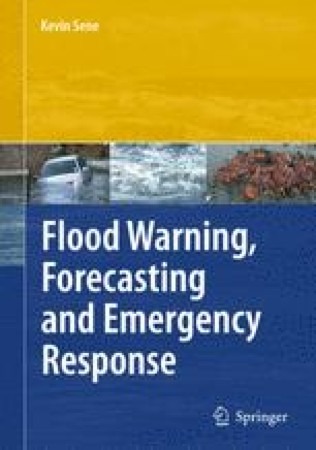
Flood Warning, Forecasting and Emergency Response
This book provides a comprehensive account of flood warning, forecasting and emergency response processes, including techniques for predicting the development of flood events and for issuing appropriate warnings. Topics such as telemetry and information systems, flood warning economics, and river and coastal monitoring are also discussed. This book brings together many aspects of this interesting multidisciplinary topic and will serve as a valuable reference for researchers, policy makers and engineers.

Flood Risk Management in Europe : Innovation in Policy and Practice
This valuable edition brings together 26 peer reviewed articles on technical, socio-economic, environmental and policy aspects of flood risk management. These articles contribute to the five sections with the general themes: i) flood risk management practice, ii) flood events and impacts, iii) flood analysis and modelling iv) flood forecasting and v) flood risk management policy. Some emerging technologies are presented and several future challenges are identified.
Flood Risk Management : Hazards, Vulnerability and Mitigation Measures
Floods are of increasing public concern world-wide due to increasing damages and unacceptably high numbers of injuries. Previous approaches of flood protection led to limited success especially during recent extreme events. Therefore, an integrated flood risk management is required which takes into consideration both the hydrometeorogical and the societal processes. Moreover, real effects of risk mitigation measures have to be critically assessed. The book draws a comprehensive picture of all these aspects and their interrelations. It furthermore provides a lot of detail on earth observation, flood hazard modelling, climate change, flood forecasting, modelling vulnerability, mitigation measures and the various dimensions of management strategies. In addition to local and regional results of science, engineering and social science investigations on modelling and management, transboundary co-operation of large river catchments are of interest.

Finite element design of concrete structures : Practical problems and their solutions
In Finite Element Design of Concrete Structures: practical problems and their solutions the author addresses this 'blind belief' in computer results by offering a useful critique that 'important details are overlooked due to the flood of information' from the output of computer calculations. Indeed, errors in the numerical model may lead in extreme cases to structural failures as the collapse of the so-called Sleipner platform has demonstrated.

Extreme Weather Events and Public Health Responses
In February 2004, the WHO Regional Office for Europe and the European Environment Agency organized an expert meeting to exchange information and develop recommendations on public health and environmental responses to weather and climate extremes, floods, heat-waves and cold spells. The meeting was kindly hosted by the Ministry of Health of Slovakia. The meeting recommendations were adopted at the Fourth Ministerial Conference on Environment and Health, Budapest, Hungary, 2004.

Extreme Events in Nature and Society
Significant, and usually unwelcome, surprises, such as floods, financial crisis, epileptic seizures, or material rupture, are the topics of Extreme Events in Nature and Society. The book, authored by foremost experts in these fields, reveals unifying and distinguishing features of extreme events, including problems of understanding and modelling their origin, spatial and temporal extension, and potential impact. The chapters converge towards the difficult problem of anticipation: forecasting the event and proposing measures to moderate or prevent it. Extreme Events in Nature and Society will interest not only specialists, but also the general reader eager to learn how the multifaceted field of extreme events can be viewed as a coherent whole.

Exploring C for Microcontrollers : A Hands on Approach
The market is flooded with numbers of good books on Embedded Systems designed especially with the most popular MCS51 family. These books are traditional in nature i.e. they start with the routine architectural features of 8051, description of registers, ports, interrupts etc. Most of these things are already covered in the device data sheet and application notes. In this book all such routine things are skipped. The focus is on programming microcontrollers, to be specific MCS-51 family in ‘C’ using Keil IDE. Exploring C for Microcontrollers presents seventeen live case studies apart from the many basic programs organized around every on-chip resource like port, time/counter, interrupt , serial I/O etc. Rather than introducing the underpinning theory or reproducing lengthy data sheets, our approach is "learning-through-doing" and one that appeals to busy electronics designers. The ‘C’ codes given are well supported by easy to understand comments wherever required.

Environmental History of the Rhine-Meuse Delta : An ecological story on evolving human–environmental relations coping with climate change and sea-level rise
This book presents the environmental history of the Delta of the lowland rivers Rhine and Meuse, an ecological story on evolving human–environmental relations coping with climate change and sea-level rise. It offers a combination of in-depth ecology and environmental history, dealing with exploitation of land and water, the use of everything nature provided, the development of fisheries and agriculture, changes in biodiversity of higher plants, fish, birds, mammals and invasive exotics. It is the first comprehensive book written in English on the integrated environmental history of the Delta, from prehistoric times up to the present day. It covers the l- acy of human intervention, the inescapable fate of reclaimed, nevertheless subs- ing and sinking polders, ‘bathtubs’ attacked by numerous floods, reclaimed in the Middle Ages and unwittingly exposed to the rising sea level and the increasing amplitude between high and low water in the rivers. The river channels, constricted and regulated between embankments, lost their flood plains, silted up, degraded and incised. Cultivation of raised bog deposits led to oxidation and compacting of peat and clay, resulting in progressive subsidence and flooding; arable land had to be changed into grassland and wetland. For millennia muscular strength and wind and water powers moulded the country into its basic form. From 1800 onwards, acceleration and scaling up by steam power and electricity, and exponential popu- tion growth, resulted in the erection of human structures ‘fixed forever’, and severe pressure on the environment.

Ecological Effects of Water-Level Fluctuations in Lakes
It presents selected papers on the ecological effects of WLF in lakes, resulting from a workshop at the University of Konstanz in winter 2005. Issues addressed here include the extent of WLF, and analyses of their effects on different groups of biota from microorganisms to vertebrates. Applied issues include recommendations for the hydrological management of regulated lakes to reduce negative impacts, and a conceptual framework is delivered by an extension of the floodpulse concept for lakes. Current impacts on water use, including increasing demands on drinking and irrigation water, hydropower etc., and climate change effects on WLF make this book an essential resource for aquatic ecologists, engineers, and decision-makers dealing with the management of lake ecosystems and their catchments.

Earth observation science and applications for risk reduction and enhanced resilience in Hindu Kush Himalaya Region : A decade of experience from SERVIR
This book is a consolidation of lessons learnt and experiences gathered from our efforts to utilise Earth observation (EO) science and applications to address environmental challenges in the Hindu Kush Himalayan region.

Digital Terrain Modelling : Development and Applications in a Policy Support Environment
This book presents a set of papers on Digital Terrain Modelling for Policy Support which aims to be informative and stimulating for both developers and users of digital terrain models. It should also be useful for professi- als who are interested in the wider aspects of the applications of terrain models in support for policies and decision making. There is an increasing demand for regional and continental scale data for use in environmental modelling and spatial analysis to support envir- mental policy development and implementation. Important environmental processes act at regional and continental scales, for example climatic change inducing floods and soil erosion, and management of these pr- esses for the sustainable development of society requires policies to be - plied at the corresponding scales. One of the most important factors inf- encing these environmental processes which act on the earth’s surface is the surface topography, hence the need for extensive, harmonised digital terrain models.
