



الصفحة 1
الصفحة 1

Internet of Things and Machine Learning in Agriculture
Machine Learning (ML) and the Internet of Things (IoT) can play a very promising role in the agricultural industry. Some examples include: an AI-powered drone to monitor the field, an IoT-designed automated crop watering system, sensors embedded in the field to monitor temperature and humidity, etc. The agriculture industry is the largest in the world, but when it comes to innovation there is a lot more to explore. IoT devices can be used to analyze the status of crops. For instance, with soil sensors, farmers can detect any irregular conditions such as high acidity and efficiently tackle these issues to improve their yield. In this book, we will point out the challenges facing the agro-industry that can be addressed by ML and IoT and explore the impacts of these technologies in the agriculture sector.
Integration of Insect-Resistant Genetically Modified Crops within IPM Programs
The goal of this book is to provide an overview on the role insect-resistant GM plants play in different crop systems worldwide. We hope that the book will contribute to a more rational debate about the role GM crops can play in IPM for food and fiber production.

Indian Agriculture Towards 2030 : Pathways for Enhancing Farmers’ Income, Nutritional Security and Sustainable Food and Farm Systems
The book comprises of ten contributions. Apart from the overview chapter on transformational change and the concluding chapter on pathways for 2030, there are eight thematic chapters on topics such as transforming Indian agriculture, dietary diversity for nutritive and safe food; climate crisis and risk management; water in agriculture; pests, pandemics, preparedness and biosecurity natural farming; agroecology and biodiverse futures; science, technology and innovation in agriculture; and structural reforms and governance.
Human Exploitation and Biodiversity Conservation
The sustainable use of biodiversity is one of the three key objectives of the 1992 "Convention on Biological Diversity". To achieve this, sound conservation practice has to be recognized as beneficial and implemented by all who access, or use it – from subsistence farmers to skiers and pharmaceutical bioprospectors. At the same time, indigenous peoples necessarily utilize enormous numbers of plants, fungi, and fish, particularly for foods and medicines. This book gathers together a wide range of contributions addressing diverse aspects of front-line human involvement in biodiversity exploitation and conservation. Its scope is broad, the organisms explored ranging from birds, invertebrates and mammals – both terrestrial and aquatic – to crops and medicinal plants. Meanwhile, the issues addressed include land use changes, the importance of gardens, hedges and green lanes, housing developments, hunting, invasive species, local community involvement, sacred groves, socioeconomic factors and trade.

Enhancing Smallholder Farmers' Access to Seed of Improved Legume Varieties Through Multi-stakeholder Platforms : Learning from the TLIII project Experiences in sub-Saharan Africa and South Asia
This book shares the experiences of Tropical Legumes III (TLIII) project in facilitating access to seed of improved legume varieties to smallholder farmers through innovation platforms. It highlights practices and guiding principles implemented in eight developing countries of sub-Saharan Africa and South Asia. This book details key processes that respective teams employed to create an innovation space that delivers seed, other inputs, knowledge and financial services to agricultural communities and most importantly, the underserved farmers in remote areas of the drylands
Economic Loss Caused by Genetically Modified Organisms : Liability and Redress for the Adventitious Presence of GMOs in Non-GM Crops
The cultivation of genetically modified (GM) crops in the EU may lead to cases, in which traditional agricultural products contain detectable traces of GMOs. On the one hand, such admixture may result from inadequate application of segregation measures by farmers. On the other hand, as agriculture is an open process that does not allow the complete isolation of individual fields, a certain degree of admixture between neighbouring crops is unavoidable in practice. The presence of GMOs in traditional products may lead to their devaluation, which would entail an economic damage to the producer of

Demographic Transition Theory
This study addresses these issues. Part I addresses the situation among hunters and gatherers, traditional farmers and classical civilizations. Part II examines the modern transition, while an introductory chapter synthesizes the findings. An emphasis is placed upon the transmuting of the industrial revolution and rising incomes into longer lives and smaller families. Finally, explanations are sought for below-replacement fertility in Europe and elsewhere. The book has a strong theoretical focus and is unique in addressing both mortality and fertility over the full span of human history.
Landscape Amenities : Economic Assessment of Agricultural Landscapes
The book mainly tries to formulate an answer to following questions: What is the economic value for society of the farmers' role as stewards of the countryside; and under which conditions are farmers willing to provide these landscape amenities? The challenge of this research is to value the agricultural landscape, as a non-commodity output from agriculture, both from a supply and demand perspective.
Climate-Smart Food
This book asks just how climate-smart our food really is. It follows an average day's worth of food and drink to see where it comes from, how far it travels, and the carbon price we all pay for it. From our breakfast tea and toast, through breaktime chocolate bar, to take-away supper, Dave Reay explores the weather extremes the world’s farmers are already dealing with, and what new threats climate change will bring. Readers will encounter heat waves and hurricanes, wildfires and deadly toxins, as well as some truly climate-smart solutions. In every case there are responses that could cut emissions while boosting resilience and livelihoods. Ultimately we are all in this together, our decisions on what food we buy and how we consume it send life-changing ripples right through the global web that is our food supply.
Building a Resilient and Sustainable Agriculture in Sub-Saharan Africa
What are the challenges and action points for agricultural sustainability in Sub-Saharan Africa? This collection of papers offers technical analyses, policy recommendations and an overview of success stories to date. Each carefully selected paper provides valuable insights for improved policy making and defines relevant strategic priorities on Africa’s sustainable transformation process, which is in line with the international development agenda. Although agriculture remains the main source of income for Africa’s population, the sector is rain-fed subjecting it to the vagaries of weather and climate change. This volume demonstrates the rationale of developing a competitive, inclusive and sustainable agribusiness sector for Africa’s food security and structural transformation.
Biosaline Agriculture and Salinity Tolerance in Plants
This volume focuses on reclamation, management, and utilization of salt-affected soils, their sustainable use, and evaluation of plants inhabiting naturally occurring saline habitats. It is of interest to scientists and students as well as to agricultural institutions and farmers and will undoubtedly raise the scientific community's awareness of, and interest in salinity issues.
Agricultural biodiversity and biotechnology in economic development
The topics addressed in this book are of vital importance to the survival of humankind. Agricultural biodiversity, encompassing genetic diversity as well as human knowledge, is the base upon which agricultural production has been built, and protecting this resource is critical to ensuring the capacity of current and future generations to adapt to unforeseen challenges. Agricultural biodiversity underpins the productivity of all agricultural systems and is particularly important for poor and food-insecure farmers, who maintain highly diverse production systems in response to the marginal and risky production conditions they operate under. Understanding the importance of agricultural biodiversity in the livelihoods of the food insecure and enhancing its performance through the use of a variety of tools, including biotechnology, is a critically important issue in the world today
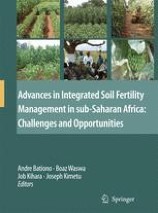
Advances in Integrated Soil Fertility Research in sub-Saharan Africa : Challenges and Opportunities
Food insecurity is a central concern and a fundamental challenge for human welfare and economic growth in Africa. Low agricultural production, results in low incomes, poor nutrition, vulnerability to risks and lack of empowerment. Land degradation and soil fertility depletion are considered the major threats to food security and natural resource conservation in sub-Saharan Africa (SSA). Investments in technology, policy and institutional reforms are needed to increase agricultural productivity to ensure food security and sustained national economies. Past research has generated numerous soil fertility management technologies which if adopted could propel the African continent out of the poverty trap. However, these technologies have had little, if any, impact due to low adoption by the smallholder farmers.
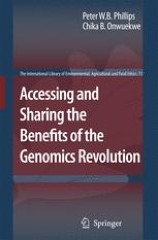
Accessing and Sharing the Benefits of the Genomics Revolution
This edited volume explores the legal, economic and political context for the debate about intellectual property rights for traditional knowledge and genetic resources and critically analyses the theory and practice of access and benefits sharing efforts around the world. The book also investigates the current flashpoints—the David and Goliath battle between Monsanto and Percy Schmeiser over farmers’ rights; the dispute over coexistence of GM and organic production; and the ownership and control of human genetic materials stored in human gene banks around the world.
