



الصفحة 1
الصفحة 1

Nature, Value, Duty : Life on Earth with Holmes Rolston, III
"Nature Value and Duty: Life on Earth with Holmes Rolston, III" is a collection of contemporary writings on the work of Holmes Rolston, III. The authors contributing to this volume are a mixture of senior scholars in environmental ethics and new voices in philosophy and in literature. Together they provide an in depth evaluation of many of the topics discussed by Rolston. They probe the strengths and weaknesses of his work and suggest valuable correctives. Rolston himself, in a detailed reply to each of his critics at the end of the volume, reveals where some of these criticisms sting him the most and in the process provides one of the most detailed and articulate defenses of his position ever offered."
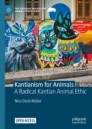
Kantianism for animals : A radical kantian animal ethic
The book gives readers in animal ethics an accessible introduction to Kant’s views on our duties to others, and his view that we have only ‘indirect’ duties regarding animals. It then investigates how one would have to depart from Kant in order to recognise that animals matter morally for their own sake. The result is a deliberately amended version of Kantianism which nevertheless remains faithful to central aspects of Kant’s thought. The book’s final part illustrates the framework’s use in applied contexts, addressing the issues of using animals as mere means, the ethics of veganism and vegetarianism, and environmental protection.
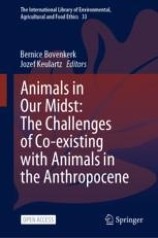
Animals in Our Midst : The Challenges of Co-existing with Animals in the Anthropocene
This book brings together authoritative voices in animal and environmental ethics, who address the many different facets of changing human-animal relationships in the Anthropocene. As we are living in complex times, the issue of how to establish meaningful relationships with other animals under Anthropocene conditions needs to be approached from a multitude of angles. This book offers the reader insight into the different discussions that exist around the topics of how we should understand animal agency, how we could take animal agency seriously in farms, urban areas and the wild, and what technologies are appropriate and morally desirable to use regarding animals. This book is of interest to both animal studies scholars and environmental ethics scholars, as well as to practitioners working with animals, such as wildlife managers, zookeepers, and conservation biologists.
