



الصفحة 1
الصفحة 1
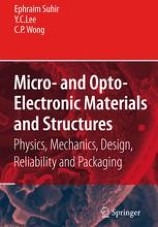
Micro- and opto-electronic materials and Structures : Physics, mechanics, design, reliability, packaging ; Vol. I : Materials physics - materials mechanics ; Vol. II : Physical design - reliability and packaging
Micro- and Opto-Electronic Materials and Structures: Physics, Mechanics, Design, Reliability, Packaging is the first comprehensive reference to collect and present the most, up-to-date, in-depth, practical and easy-to-use information on the physics, mechanics, reliability and packaging of micro- and opto-electronic materials, assemblies, structures and systems. The chapters in these two volumes contain summaries of the state-of-the-art and present new information on recently developed important methods or devices. Furthermore, practical recommendations are offered on how to successfully apply current knowledge and recently developed technology to design, manufacture and operate viable, reliable and cost-effective electronic components or photonic devices. The emphasis is on the science and engineering of electronic and photonic packaging, on physical design problems, challenges and solutions.

Micro- and Macro-Properties of Solids : Thermal, Mechanical and Dielectric Properties
Each of the eight chapters treats an important aspect of solid state physics, comprising a complete review of the particular field. Typically, a chapter starts with basic information about a property of a solid and the related experimental techniques. This is followed by a global overview which brings together all important contributions by different research workers in the field. This overview is comprehensive and covers essential literature over the past 60 years. Each chapter concludes with a detailed discussion of the contributions made by the chapter authors and their associates, in some cases spanning the last 45 years. In addition, Micro- and Macro-Properties of Solids provides data on new materials such as rare-earth metals, semiconductors, ferroelectrics, mixed-valence compounds, superionic conductors, optical and optoelectronic materials and biomaterials.

Group theory : Application to the physics of condensed matter
Every process in physics is governed by selection rules that are the consequence of symmetry requirements. The beauty and strength of group theory resides in the transformation of many complex symmetry operations into a very simple linear algebra. This concise and class-tested book has been pedagogically tailored over 30 years MIT and 2 years at the University Federal of Minas Gerais (UFMG) in Brazil. The approach centers on the conviction that teaching group theory in close connection with applications helps students to learn, understand and use it for their own needs. For this reason, the theoretical background is confined to the first 4 introductory chapters (6-8 classroom hours). From there, each chapter develops new theory while introducing applications so that the students can best retain new concepts, build on concepts learned the previous week, and see interrelations between topics as presented.

Fundamentals of Semiconductors : Physics and Materials Properties
This third updated edition of Fundamentals of Semiconductors attempts to fill the gap between a general solid-state physics textbook and research articles by providing detailed explanations of the electronic, vibrational, transport, and optical properties of semiconductors. The approach is physical and intuitive rather than formal and pedantic. Theories are presented to explain experimental results. This textbook has been written with both students and researchers in mind. Its emphasis is on understanding the physical properties of Si and similar tetrahedrally coordinated semiconductors. The explanations are based on physical insights. Each chapter is enriched by an extensive collection of tables of material parameters, figures, and problems. Many of these problems "lead the student by the hand" to arrive at the results.

Emissive Materials : Nanomaterials
This review book, although uneven, will play a role in guiding scientists who are thinking about working in the fields generally lumped together as ‘emissive nanomaterials’. It is carefully referenced, and each of the four chapters includes a long list of abbreviations used therin, which should make it easier for student use.
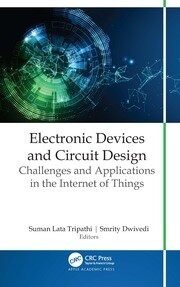
Electronic Devices and Circuit Design : Challenges and Applications in the Internet of Things
Offers a broad view of the challenges of electronic devices and circuits for IoT applications. The book presents the basic concepts and fundamentals behind new low power, high-speed efficient devices, circuits, and systems in addition to CMOS. It provides an understanding of new materials to improve device performance with smaller dimensions and lower costs. It also looks at the new methodologies to enhance system performance and provides key parameters for exploring the devices and circuit performance based on smart applications.

Light, Water, Hydrogen : The Solar Generation of Hydrogen by Water Photoelectrolysis
The development of a direct, inexpensive, and efficient method for converting solar energy into a portable, clean fuel would allow elimination of the growing problems associated with the ever increasing use of fossil fuels and the reality of their rapid depletion. As the title suggests, Light, Water, Hydrogen: The Solar Generation of Hydrogen by Water Photoelectrolysis, considers the combination of water and light with a suitable semiconductor to achieve a safe, renewable and therefore inexhaustable means for hydrogen generation via the splitting of the water molecule, or photoelectrolysis.

Carbon Nanotubes : Advanced Topics in the Synthesis, Structure, Properties and Applications
The carbon nanotubes field has evolved substantially since the publication of the bestseller "Carbon Nanotubes: Synthesis, Structure, Properties and Applications". The present volume builds on the generic aspects of the aforementioned book, which emphasizes the fundamentals, with the new volume emphasizing areas that have grown rapidly since the first volume, guiding future directions where research is needed and highlighting applications. The volume also includes an emphasis on areas like graphene, other carbon-like and other tube-like materials because these fields are likely to affect and influence developments in nanotubes in the next 5 years.

A Dictionary of Electronics and Electrical Engineering
This popular dictionary, formerly published as the Penguin Dictionary of Electronics, has been extensively revised and updated, providing clear, concise, and jargon-free A-Z entries on key terms, theories, and practices in the areas of electronics and electrical science. Topics covered include circuits, power, systems, magnetic devices, control theory, communications, signal processing, and telecommunications, together with coverage of applications areas such as image processing, storage, and electronic materials.
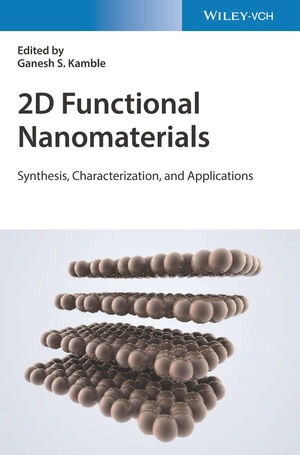
2D Functional Nanomaterials : Synthesis, Characterization, and Applications
In 2D Functional Nanomaterials: Synthesis, Characterization, and Applications, Dr. Ganesh S. Kamble presents an authoritative overview of the most recent progress in the rational design and synthesis of 2D nanomaterials and their applications in semiconducting catalysts, biosensors, electrolysis, batteries, and solar cells. This interdisciplinary volume is a valuable resource for materials scientists, electrical engineers, nanoscientists, and solid-state physicists looking for up-to-date information on 2D heterojunction nanomaterials.
