



الصفحة 1
الصفحة 1

Observing the Volcano World : Volcano Crisis Communication
This book provides a comprehensive overview of volcanic crisis research, the goal being to establish ways of successfully applying volcanology in practice and to identify areas that need to be addressed for future progress. It shows how volcano crises are managed in practice, and helps to establish best practices. Consequently the book brings together authors from all over the globe who work with volcanoes, ranging from observatory volcanologists, disaster practitioners and government officials to NGO-based and government practitioners to address three key aspects of volcanic crises.
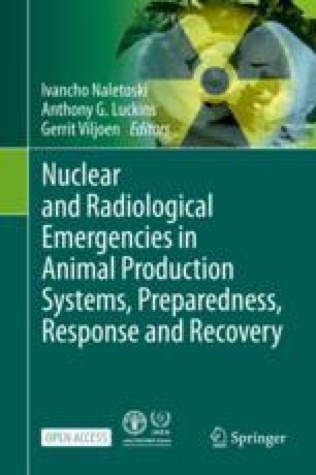
Nuclear and Radiological Emergencies in Animal Production Systems, Preparedness, Response and Recovery
This volume explains how major nuclear and radiological emergencies (NREs) can have implications at local, national and international level. The response to NREs requires a competent decision-making structure, clear communication and effective information exchange. National veterinary services have the responsibility to plan, design and manage animal production system in their countries. These activities cover animal health, animal movement control, production control and improvement, and control of the products of animal origin before their placement on the market.

Mobile Edge Computing
It offers comprehensive, self-contained knowledge on Mobile Edge Computing (MEC), which is a very promising technology for achieving intelligence in the next-generation wireless communications and computing networks. The book starts with the basic concepts, key techniques and network architectures of MEC. Then, we present the wide applications of MEC, including edge caching, 6G networks, Internet of Vehicles, and UAVs. In the last part, we present new opportunities when MEC meets blockchain, Artificial Intelligence, and distributed machine learning (e.g., federated learning). We also identify the emerging applications of MEC in pandemic, industrial Internet of Things and disaster management.

Geomatics Solutions for Disaster Management
Natural and anthropogenic disasters have caused a large number of victims and significant social and economic losses in the last few years. There is no doubt that the risk prevention and disaster management sector needs drastic measures and improvements in order to decrease damage and save lives of inhabitants. Effective utilization of satellite positioning, remote sensing, and GIS in disaster monitoring and management requires research and development in numerous areas: data collection, access and delivery, information extraction and analysis, management and their integration with other data sources (airborne and terrestrial imagery, GIS data, etc.), data standardization, organizational and legal aspects of sharing of remote sensing information. This book provides researchers and practitioners with a good overview of what is being developed in this topical area.

Geo-information for Disaster Management
Geo-information technology offers an opportunity to support disaster management: industrial accidents, road collisions, complex emergencies, earthquakes, fires, floods and similar catastrophes (for example the recent huge disaster with the Tsunami in South-East Asia on 26 December 2004). Access to needed information, facilitation of the interoperability of emergency services, and provision of high-quality care to the public are a number of the key requirements. The book provides a broad overview of the (geo-information) technology, software, systems needed, used and to be developed for disaster management. The book provokes a wide discussion on systems and requirements for use of geo-information under time and stress constraints and unfamiliar situations, environments and circumstances.

Ethnocultural Perspectives on Disaster and Trauma : Foundations, Issues, and Applications
In this pioneering volume, experts on individual and collective trauma experience, posttraumatic stress and related syndromes, and emergency and crisis intervention – share knowledge and insights on the cultural context of working with ethnic and racial minority communities during disasters. In each chapter, emotional, psychological, and social needs as well as communal strengths and coping skills that arise in disasters are documented for major minority groups in the United States including specific chapters on African Americans, Native Americans, Arab Americans, Asian Indians, Chinese Americans, Caribbean Americans, Latin Americans, Native Hawaiians, and Vietnamese Americans

Enterprise Risk Management Models
Offers a comprehensive guide to several aspects of risk, including information systems, disaster management, supply chain and disaster management perspectives. A major portion of the book is devoted to presenting a number of operations research models that have been (or could be) applied to enterprise supply risk management, especially from the supply chain perspective.

Landslides : Risk Analysis and Sustainable Disaster Management
Based on contributions to the first General Assembly of the International Consortium on Landslides, this reference and status report emphasizes the mechanisms of different types of landslides, landslide risk analysis, and sustainable disaster management. It comprises the achievements of the ICL over the past three years, since the Kyoto assembly. It consists of three parts: research results of the International Programme on Landslides (IPL); contributions on landslide risk analysis; and articles on sustainable disaster management. The contributions reflect a wide range of topics and concerns, randing from field studies, identification of objects of cultural heritage at landslide risk, as well as landslide countermeasures.
Assessing and Managing Earthquake Risk : Geo-scientific and Engineering Knowledge for Earthquake Risk Mitigation: developments, tools, techniques
This book points out the need of a multidisciplinary approach in the field of risk assessment and management. It provides an overview of the problems, approaches and common practices directly related to earthquake risk mitigation and, in particular, to the preparation of earthquake emergency plans. Written by a team of specialists from different disciplines, the authors worked together extensively in order to create unity and continuity in the text as a whole. Each topic is illustrated with examples of actual applications taken from the bibliography – including websites with available relevant information. Case studies and information on some relevant international projects are given.

A Dictionary of Construction, Surveying and Civil Engineering
Covers the key areas of civil and construction engineering, construction technology and practice, construction management techniques and processes, as well as legal aspects such as contracts and procurement. It has been updated with more than 600 new entries spanning subjects such as sustainability, new technologies, disaster management, and building software. New additions include terms such as Air source heat pump, hydraulic failure, mechanical ventilation with heat recovery, off-site construction, predictive performance, sustainable development, and value engineering.
