



الصفحة 1
الصفحة 1

Information and knowledge systems : Digital technologies, artificial intelligence and decision making ; 5th International Conference, ICIKS 2021, Virtual Event, June 22–23, 2021, Proceedings
This book constitutes the thoroughly refereed proceedings of the 5th International Conference on Information and Knowledge Systems, ICIKS 2021, which was held online during June 22-23, 2021. The International Conference on Information and Knowledge Systems (ICIKS 2021) gathered both researchers and practitioners in the fields of Information Systems, Artificial Intelligence, Knowledge Management and Decision Support. ICIKS seeks to promote discussions on various organizational, technological, and socio-cultural aspects of research in the design and use of information and knowledge systems in organizations.

Future Shaper : How Leaders Can Take Charge in an Uncertain World
What should leaders do? The answer is not to shy away from inevitable changes and more uncertainty, but to have the courage to face it. Leaders need to take charge by embracing new technologies, new ideas and converting these into opportunities for leadership innovation. The best ways for leaders to predict the future is to help create the future. Future Shaper is about giving back a sense of control. It's about empowering leaders to take charge and shape the future. Niamh O'Keeffe asks leaders to re-calibrate their leadership skills to include imagination and courage, to embrace innovation and drive growth and create a better future. Future Shaper helps readers to: · Embrace new digital technologies, understand AI and equip themselves for those not-yet-invented challenges ·

Funology : From usability to enjoyment
This book reflects the move in Human Computer Interaction studies from standard usability concerns towards a wider set of problems to do with fun, enjoyment, aesthetics and the experience of use. Traditionally HCI has been concerned with work and task based applications but as digital technologies proliferate in the home fun becomes an important issue. There is an established body of knowledge and a range of techniques and methods for making products and interfaces usable, but far less is known about how to make them enjoyable.

Financial management for technology start-ups : How to power growth, track performance and drive innovation
Develops the financial intelligence you need to communicate effectively with investors, implement business strategies and pinpoint emerging pathways for profit / Outlines how to analyze your performance and undertake risk-return assessments to tactically grow your start-up / Offers proven methods for tracking your start-up's progress to ensure that growth is maintained and continuous / Analysis of financial statements directly from start-ups, new case studies on companies that have scaled up, focus on new digital technologies and market opportunities for start-ups, information on new players and potential future tech start-ups

Driving digital transformation through data and AI : A practical guide to delivering data science and machine learning products
Explains how to build the organizational capability to deliver Data and AI products and drive immediate business results as new digital technologies significantly disrupt business Provides best practices, tools and templates for managing the organizational and technological change process to become an AI-driven enterprise Includes a variety of international case studies across several industries such as insurance, fashion, consumer goods, finance, technology and automotive Outlines how to develop a product strategy, build teams and design the platform and architecture Provides key principles for sharing knowledge, educating staff on data and AI, and effectively engaging top executives
Drawn to Design : Analyzing Architecture Through Freehand Drawing
A guide for students and teachers to understand the need for, the role of and the methods and techniques of freehand analytical sketching in architecture. The presentation focuses on drawing as an approach to and phase of architectural design. The conceptual goal of this approach is to use drawing not as illustration or depiction, but as exploration. The first part of the book discusses underlying concepts of freehand sketching in design education and practice as a complement to digital technologies. The main component is a series of chapters that constitute a typology of fundamental issues in architecture and urban design; for instance, issues of "façade" are illustrated with sketch diagrams that show how façades can be explored and sketched through a series of specific questions and step-by-step procedures.
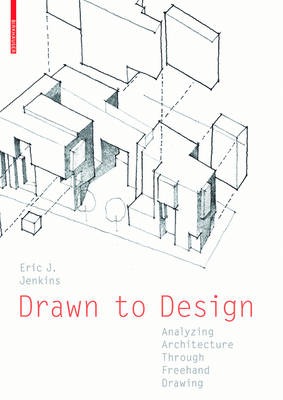
Drawn to Design : Analyzing Architecture Through Freehand Drawing
A guide for students and teachers to understand the need for, the role of and the methods and techniques of freehand analytical sketching in architecture. The presentation focuses on drawing as an approach to and phase of architectural design. The conceptual goal of this approach is to use drawing not as illustration or depiction, but exploration. The first part of the book discusses underlying concepts of freehand sketching in design education and practice as a compliment to digital technologies. The main component is a series of chapters that constitute a typology of fundamental issues in architecture and urban design; for instance, issues of "facade" are illustrated with sketch diagrams that show how facades can be explored and sketched through a series of specific questions and step-by-step procedures.

Digital workflows in architecture : Design - assembly - industry
The logics of digital processes in architecture have begun to structure the way that architects design, the way that builders build, and the way that industry is reorganizing. This book is a reference work on digital technologies as key factors in architectural design, fabrication and workflow organization. It presents essays and case studies from some of the leading voices on the topic.

Digital Transformation of Learning Organizations
This Book provides insight into how organizations change through the adoption of digital technologies. Opportunities and challenges for individuals as well as the organization are addressed.

Digital Transformation in Norwegian Enterprises
Presents a number of case studies on digital transformation in Norway, one of the fore-runners in the digital progress index established by the European Commission in 2020. They explore the process of adoption, diffusion and value generation from digital technologies, and how the use of different digital solutions has enabled Norwegian enterprises to digitally transform their operations and business models.

Digital Towns : Accelerating and Measuring the Digital Transformation of Rural Societies and Economies
This book explores the digital transformation of small and rural towns, in particular, how to measure the evolution and development of digital towns. In addition to access to resources, competition from urban and global markets, and population trends, rural communities present lesser access and use of digital technologies and have lower digital competencies and skills than their urban counterparts. Consequently, they experience less beneficial outcomes from increased digitalisation than urban areas. This book defines what a digital town is and explores digitalisation from the perspective of the four basic economic sectors in towns - individuals and households, businesses, the public sector, and civil society - and three types of enabling infrastructure - digital connectivity, education, and governance.

Digital Technologies in Construction Engineering : Selected Papers
Includes the latest advances, innovations, and applications in the field of construction engineering, as presented by researchers and engineers at the Digital Technologies in Construction Engineering conference, held in Belgorod, Russia, on June 8-9, 2021. It covers highly diverse topics, including industrial and civil construction, building materials; environmental engineering and protection; sustainability; structure safety and special construction structures. The contributions, which were selected by means of a rigorous international peer-review process, highlight numerous exciting ideas that will spur novel research directions and foster multidisciplinary collaborations.

Digital Restorative Dentistry : A Guide to Materials, Equipment, and Clinical Procedures
Offers up-to-date, readily understandable guidance on the materials and equipment employed in digital restorative dentistry and on the specific clinical procedures that may be performed using the new technologies. The key components of digital restorative dentistry – image acquisition, prosthetic/restorative design, and fabrication – are fully addressed. Readers will find helpful information on scanners, the software for prosthetic design, and the materials and technologies for prosthesis fabrication, including laser sintering, 3D printing, CAD/CAM, and laser ablation. The section on clinical procedures explains all aspects of the use of digital technologies in the treatment of patients requiring removable partial dentures, complete dentures, fixed partial prostheses, crowns, endodontics, and implant surgery and prosthodontics. The field of restorative and prosthetic dentistry is undergoing rapid transition as these new technologies come to play an increasingly central role in everyday dental practice. In bridging the knowledge gap that this technological revolution has created in the field of dentistry, the book will satisfy the needs of both dentists and dental students.

Dental trauma and adverse oral conditions : practice and management techniques
Endeavors to provide readers with information on dental emergencies and dental trauma, with their associated management and other issues. Other relevant conditions that are highlighted include avulsion, orbital trauma, salivary duct cysts and periodontal disease. Information is also included on mental health and quality of life impacts arising for individuals from dental trauma. Teledentistry, which is relevant for all clinicians in the current climate of digital technologies, is also covered.

Debating Transformations of National Citizenship
Deconomic, social and political change. It focuses on the emergence of global markets where citizenship is for sale and on how new reproduction technologies impact citizenship by descent. It also discusses the return of banishment through denationalisation of terrorist suspects, and the impact of digital technologies, such as blockchain, on the future of democratic citizenship. The book provides a wide range of views on these issues from legal scholars, political scientists, and political practitioners. It is structured as a series of four conversations in which authors respond to each other. This exchange of arguments provides unique depth to current debates about the future of citizenship.
Data science, AI, and machine learning in drug development
The confluence of big data, AI, and machine learning has led to a paradigm shift in how innovative medicines are developed and healthcare delivered. To fully capitalize on these technological advances, it is essential to systematically harness data from diverse sources and leverage digital technologies and advanced analytics to enable data-driven decisions. Data science stands at a unique moment of opportunity to lead such a transformative change. Intended to be a single source of information, Data Science, AI, and Machine Learning in Drug Research and Development covers a wide range of topics on the changing landscape of drug R&D, emerging applications of big data, AI and machine learning in drug development, and the build of robust data science organizations to drive biopharmaceutical digital transformations
CyberParks – The Interface Between People, Places and Technology: New Approaches and Perspectives
This book is about public open spaces, about people, and about the relationship between them and the role of technology in this relationship. It is about different approaches, methods, empirical studies, and concerns about a phenomenon that is increasingly being in the centre of sciences and strategies – the penetration of digital technologies in the urban space. As the main outcome of the CyberParks Project, this book aims at fostering the understanding about the current and future interactions of the nexus people, public spaces and technology. It addresses a wide range of challenges and multidisciplinary perspectives on emerging phenomena related to the penetration of technology in people’s lifestyles - affecting therefore the whole society, and with this, the production and use of public spaces. Cyberparks coined the term cyberpark to describe the mediated public space, that emerging type of urban spaces where nature and cybertechnologies blend together to generate hybrid experiences and enhance quality of life.

Current trends and future directions in prosthetic and implant dentistry in the digital era
Covers the latest advances in the development and application of digital technologies in prosthetic and implant dentistry. We wish to provide both clinicians and researchers with a comprehensive and up-to-date source of information on current trends, limitations, and potential future applications of digital technologies in daily clinical practice.

Cultural heritage in a changing world
The central purpose of this collection of essays is to make a creative addition to the debates surrounding the cultural heritage domain. In the 21st century the world faces epochal changes which affect every part of society, including the arenas in which cultural heritage is made, held, collected, curated, exhibited, or simply exists. The book is about these changes; about the decentring of culture and cultural heritage away from institutional structures towards the individual; about the questions which the advent of digital technologies is demanding that we ask and answer in relation to how we understand, collect and make available Europe’s cultural heritage.

Managing Development and Application of Digital Technologies : Research Insights in the Munich Center for Digital Technology & Management (CDTM)
Digital technology determines today’s world and will be one of the key technologies of the future. Successful technology development, introduction and management are not only a question of technical issues; due to their complexity a close cooperation between different scientific disciplines is required to discuss various consequences, chances and risks from manifold points of view as a starting point for the design of adequate solutions. The ability to integrate business and technology decisions will become a crucial core competence.
