



الصفحة 1
الصفحة 1
One Hundred Years of Chemical Warfare : Research, Deployment, Consequences
On April 22, 1915, the German military released 150 tons of chlorine gas at Ypres, Belgium. Carried by a long-awaited wind, the chlorine cloud passed within a few minutes through the British and French trenches, leaving behind at least 1,000 dead and 4,000 injured. This chemical attack, which amounted to the first use of a weapon of mass destruction, marks a turning point in world history. The preparation as well as the execution of the gas attack was orchestrated by Fritz Haber, the director of the Kaiser Wilhelm Institute for Physical Chemistry and Electrochemistry in Berlin-Dahlem. During World War I, Haber transformed his research institute into a center for the development of chemical weapons (and of the means of protection against them).

Nanoscale Devices - Fundamentals and Applications
This book contains a collection of papers giving insight into the fundamentals and applications of nanoscale devices. The main focus is on the synthesis and characterization of nanoscale magnetic materials, the fundamental physics and materials aspects of solid-state nanostructures, the development of novel device concepts and design principles for nanoscale devices, as well as on applications in electronics with special emphasis on defence against the threat of terrorism.

International Perspectives in Values-Based Mental Health Practice: Case Studies and Commentaries
This book offers essential information on values-based practice (VBP): the clinical skills involved, teamwork and person-centered care, links between values and evidence, and the importance of partnerships in shared decision-making. Different cultures have different values; for example, partnership in decision-making looks very different, from the highly individualized perspective of European and North American cultures to the collective and family-oriented perspectives common in South East Asia. In turn, African cultures offer yet another perspective, one that falls between these two extremes (called batho pele).

Frontiers in Anti-Infective Drug Discovery ; Vol.9
Covers a range of topics including rational drug design and drug discovery, medicinal chemistry, in-silico drug design, combinatorial chemistry, high-throughput screening, drug targets, recent important patents, and structure-activity relationships. Frontiers in Anti-Infective Drug Discovery is a valuable resource for pharmaceutical scientists and post-graduate students seeking updated and critically important information for developing clinical trials and devising research plans in this field. The ninth volume of this series features 5 reviews that cover some aspects of clinical and pre-clinical antimicrobial drug development, with 2 chapters focusing on drugs to treat leishmaniasis and dengue fever, respectively. - Use of preclinical and early clinical data for accelerating antimicrobial drug development - Post-translational modifications: host defence mechanism, pathogenic weapon, and emerged target of anti-infective drugs - Scope and limitations on the potent antimicrobial activities of hydrazone derivatives - Current scenario of anti-leishmanial drugs and treatment - Dengue hemorrhagic fever: the potential repurposing drugs

Foundations of Trusted Autonomy
This book establishes the foundations needed to realize the ultimate goals for artificial intelligence, such as autonomy and trustworthiness. Aimed at scientists, researchers, technologists, practitioners, and students, it brings together contributions offering the basics, the challenges and the state-of-the-art on trusted autonomous systems in a single volume. The book is structured in three parts, with chapters written by eminent researchers and outstanding practitioners and users in the field. The first part covers foundational artificial intelligence technologies, while the second part covers philosophical, practical and technological perspectives on trust. Lastly, the third part presents advanced topics necessary to create future trusted autonomous systems. The book augments theory with real-world applications including cyber security, defence and space.
Field and Service Robotics ; Vol. 25 : Results of the 5th International Conference
Field robots are robots which operate in outdoor, complex, and dynamic environments. Service robots are those that work closely with humans, with particular applications involving indoor and structured environments. There are a wide range of topics presented in this issue on field and service robots including: Agricultural and Forestry Robotics, Mining and Exploration Robots, Robots for Construction, Security & Defence Robots, Cleaning Robots, Autonomous Underwater Vehicles and Autonomous Flying Robots.

EC2ND 2005 ; Proceedings of the First European Conference on Computer Network Defence
This book contains the proceedings of the First European Conference on Computer Network Defence which took place in December 2005 at the University of Glamorgan in the UK. The theme of the conference is the protection of computer networks; and it provides an opportunity for workers in this area to become better informed about recent research developments as well as to exchange valuable insights and opinions.
Defence Industry Applications of Autonomous Agents and Multi-Agent Systems
In this book defense and security related applications are increasingly being tackled by researchers and practioners using technologies developed in the field of Intelligent Agent research.

Defence Applications of Multi-Agent Systems; International Workshop, DAMAS 2005, Utrecht, The Netherlands, July 25, 2005, Revised and Invited Papers
This book constitutes the thoroughly refereed post-proceedings of the International Workshop on Defence Applications of Multi-Agent Systems, DAMAS 2005, held in Utrecht, The Netherlands in July 2005 as an associated event of AAMAS 2005, the main international conference on autonomous agents and multi-agent systems. The 10 revised full papers presented together with 1 invited article are organized in topical sections on decision support and simulation, unmanned aerial vehicles, as well as on systems and security.

Criminal law: The basics
Considers key questions such as: How should we decide what is criminal and what isn't? What is the difference between murder and manslaughter? Could you ever be guilty of stealing your own property? What defences are available to those accused of crime? Featuring a range of case studies, from the infamous to the bizarre, the new edition has been thoroughly updated to include new material on loss of control, accessorial liability, dishonesty, causation, liability, manslaughter and sexual offences.

Criminal law
Updated to include new developments such as the interaction of the legal rights in the Charter with the reasonable limits provision in section 1 of the Charter in R v KR, disagreements between the Ontario Court of Appeal and the Manitoba Court of Appeal about whether the exclusion of murder from the offence of duress can be justified, new developments in the offence of infanticide, and the relation of the due diligence defence to statutory standards.

Cold War Civil Defence in Western Europe : Sociotechnical Imaginaries of Survival and Preparedness
This edited collection brings together established and new perspectives on Cold War civil defence in Western Europe within a common analytical framework that also facilitates comparative and transnational dimensions. The current interest in creating disaster-resilient societies demands new histories of civil defence. Historical contextualization is essential in order to understand what is at stake in preparing, devising, and implementing forms of preparedness, protection, and security that are specifically targeted at societies and citizens. Applying the concept of sociotechnical imaginaries to civil defence history, the chapters of this volume cover a range of new themes, from technology and materiality to media, memory, and everyday experience.
Machine Learning for Cyber Agents : Attack and Defence
The cyber world has been both enhanced and endangered by AI. On the one hand, the performance of many existing security services has been improved, and new tools created. On the other, it entails new cyber threats both through evolved attacking capacities and through its own imperfections and vulnerabilities. Moreover, quantum computers are further pushing the boundaries of what is possible, by making machine learning cyber agents faster and smarter.
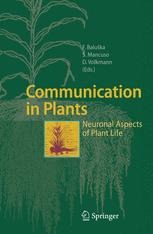
Communication in Plants : Neuronal Aspects of Plant Life
Plant neurobiology is a newly emerging field of plant sciences. It covers signalling and communication at all levels of biological organization – from molecules up to ecological communities. In this book, plants are presented as intelligent and social organisms with complex forms of communication and information processing. Authors from diverse backgrounds such as molecular and cellular biology, electrophysiology, as well as ecology treat the most important aspects of plant communication, including the plant immune system, abilities of plants to recognize self, signal transduction, receptors, plant neurotransmitters and plant neurophysiology. Further, plants are able to recognize the identity of herbivores and organize the defence responses accordingly. The similarities in animal and plant neuronal/immune systems are discussed too. All these hidden aspects of plant life and behaviour will stimulate further intense investigations in order to understand the communicative plants in their whole complexity.

Child soldiers and the defence of duress under International criminal law
Investigates the use of duress as a defence in international criminal law, specifically in cases of child soldiers. The prosecution of children for international crimes often only focuses on whether children can and should be prosecuted under international law. However, it is rarely considered what would happen to these children at the trial stage. This work offers a nuanced approach towards international prosecution and considers how children could be implicated and defended in international courts.
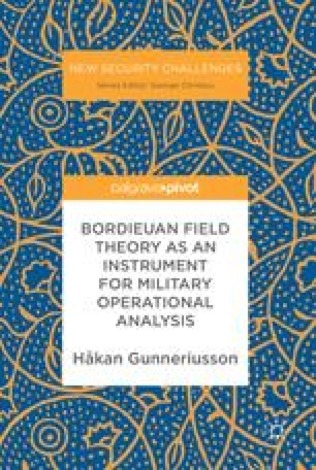
Bordieuan Field Theory as an Instrument for Military Operational Analysis
This book uses Pierre Bourdieu’s field theory as a lens through which to examine military operations. Novel in its approach, this innovative text provides a better, more nuanced understanding of the modern ‘battlespace’, particularly in instances of prolonged low-intensity conflict. Formed in two parts, this book primarily explores the scope of Bourdien theory before secondly providing a detailed case study of the Yugoslavian succession war of 1990-1992. Gunneriusson suggests that although theories do not necessarily provide answers, they do help us ask better questions. This volume suggests news lines of interdisciplinary investigation that will be of interest to members of armed forces, practitioners from NGOs, and policymakers.
AI-Enabled Threat Detection and Security Analysis for Industrial IoT
Provides the state-of-the-art development on security and privacy for cyber-physical systems (CPS) and industrial Internet of Things (IIoT). More specifically, this book discusses the security challenges in CPS and IIoT systems as well as how Artificial Intelligence (AI) and Machine Learning (ML) can be used to address these challenges. Furthermore, this book proposes various defence strategies, including intelligent cyber-attack and anomaly detection algorithms for different IIoT applications.
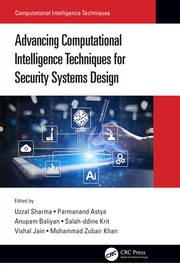
Advancing Computational Intelligence Techniques for Security Systems Design
Security systems have become an integral part of the building and large complex setups, and intervention of the computational intelligence (CI) paradigm plays an important role in security system architecture. This book covers both theoretical contributions and practical applications in security system design by applying the Internet of Things (IoT) and CI. It further explains the application of IoT in the design of modern security systems and how IoT blended with computational intel- ligence can make any security system improved and realizable. Focuses on the computational intelligence techniques of security system design / Covers applications and algorithms of discussed computational intelligence techniques / Includes convergence-based and enterprise integrated security systems with their applications / Explains emerging laws, policies, and tools affecting the landscape of cyber security / Discusses application of sensors toward the design of security systems

Advances in proof-theoretic semantics
This volume is the first ever collection devoted to the field of proof-theoretic semantics. Contributions address topics including the systematics of introduction and elimination rules and proofs of normalization, the categorial characterization of deductions, the relation between Heyting's and Gentzen's approaches to meaning, knowability paradoxes, proof-theoretic foundations of set theory, Dummett's justification of logical laws, Kreisel's theory of constructions, paradoxical reasoning, and the defence of model theory.
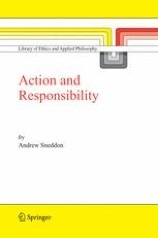
Action and Responsibility
What makes an event count as an action? Typical answers appeal to the way in which the event was produced: e.g., perhaps an arm movement is an action when caused by mental states (in particular ways), but not when caused in other ways. Andrew Sneddon argues that this type of answer, which he calls "productionism", is methodologically and substantially mistaken. In particular, productionist answers to this question tend to be either individualistic or foundationalist, or both, without explicit defence.
