



الصفحة 1
الصفحة 1

Zaha Hadid : Basic Art
Zaha Hadid was a revolutionary architect, who for many years built almost nothing, despite winning critical acclaim. Some even said her audacious, futuristic designs were unbuildable. During the latter years of her life, Hadid’s daring visions became a reality, bringing a unique new architectural language to cities and structures as varied as the Rosenthal Center for Contemporary Art in Cincinnati, hailed by The New York Times as “the most important new building in America since the Cold War”; the MAXXI Museum in Rome; the Guangzhou Opera House in China; and the London 2012 Olympics Aquatics Centre.

Intersecting colors : Josef Albers and his contemporaries
Offers a timely reappraisal of the immense impact of Albers's thinking, writing, teaching, and art on generations of students. It shows the formative influence on his work of non-scientific approaches to color (notably the work of Johann Wolfgang von Goethe) and the emergence of Gestalt psychology in the first decades of the twentieth century. The work also shows how much of Albers's approach to color-dismissed in its day by a scientific approach to the study and taxonomy of color driven chiefly by industrial and commercial interests-ultimately anticipated what neuroscience now reveals about how we perceive this most fundamental element of our visual experience.

Logos of Phenomenology and Phenomenology of the Logos. Book One : Phenomenology as the Critique of Reason in Contemporary Criticism and Interpretation
During its century-long unfolding, spreading in numerous directions, Husserlian phenomenology while loosening inner articulations, has nevertheless maintained a somewhat consistent profile. As we see in this collection, the numerous conceptions and theories advanced in the various phases of reinterpretations have remained identifiable with phenomenology.
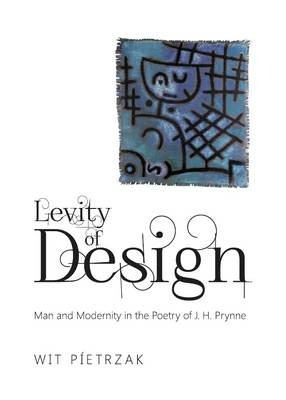
Levity of Design : Cambridge Scholars Publishing
How can poetry embrace morality through focusing on metaphrasts? What is the relation between an allummette and the alpha rhythm? Why is it that money has turned into a metonym of goodness and success? And above all, is it still possible to think of the human subject as a viable category in late modernity? These are some of the questions that J.

Claude-Nicolas Ledoux : Architecture and uopia in the era of the French revolution
Claude-Nicolas Ledoux (1736-1806) is today regarded as chief representative of French revolutionary architecture. With his extraordinary inventiveness he projected the architectural ideals of his era. Ledoux's influential buildings and projects are presented and interpreted both aesthetically and historically in this book. His best-known projects - the Royal Saltwords of Arc-et-Senans, the tollgates of Paris, the ideal city of Chaux - reveal the architect's allegiance to the principles of antiquity and Renaissance but also illustrate the evolution of his own utopian language. With the French Revolution, Ledoux ceased building as his contemporaries perceived him as a royal architect. He focused on the development of his architectural theory and redefined the vision of the modern architect

Alvar Aalto and the future of architecture
Exposes dialogue between history, theory, design, construction, technology, and sensory experience by means of digital simulations that enhance the assessment and values of our material choices. It offers a critical look to the past to inspire the future. This new edition looks to Alvar Aalto as the primary protagonist for channeling discussions related to these topics. Architects like ALA, Shigeru Ban, 3XN, Peter Zumthor, and others also play the role of contemporary guides in this review. The work of Aalto and selected contemporary architects, along with computer modeling software, showcase the importance of comprehensive design.
