



الصفحة 1
الصفحة 1

National Constitutions in European and Global Governance : Democracy, Rights, the Rule of Law: National Reports
It offers important insights into three areas. First, it explores how constitutions reflect the transfer of powers from domestic to European and global institutions. Secondly, it revisits substantive constitutional values, such as the protection of constitutional rights, the rule of law, democratic participation and constitutional review, along with constitutional court judgments that tackle the protection of these rights and values in the transnational context, e.g. with regard to the Data Retention Directive, the European Arrest Warrant, the ESM Treaty, and EU and IMF austerity measures. The responsiveness of the ECJ regarding the above rights and values, along with the standard of protection, is also assessed. Thirdly, challenges in the context of global governance in relation to judicial review, democratic control and accountability are examined. On a broader level, the contributors were also invited to reflect on what has increasingly been described as the erosion or ‘twilight’ of constitutionalism, or a shift to a thin version of the rule of law, democracy and judicial review in the context of Europeanisation and globalisation processes.

Illiberal Trends and Anti-EU Politics in East Central Europe
This book provides an in-depth look into the background of rule of law problems and the open defiance of EU law in East Central European countries. Current illiberal trends and anti-EU politics have the potential to undermine mutual trust between member states and fundamentally change the EU. It is therefore crucial to understand their domestic causes, context conditions, specific processes and consequences.

Governing Europe under a Constitution : The Hard Road from the European Treaties to a European Constitutional Treaty
At the summit in Laeken in December 2001 the European Council opened the debate on the reform of the supranational structures through its "Declaration on the Future of the European Union" and proposed a wide-ranging agenda. The European Convention, with the mandate of the European Council, has been forming proposals for a more democratic, transparent and efficient European Union and presented a draft of a Treaty establishing a Constitution for Europe on 20th of June 2003. On these fundaments the Intergovernmental Conference finally came to a compromise in summer 2004 after wrestling especially with the problem of qualified majority voting within the Council. On 29th of October 2004 the Heads of State and Governments of the 25 Member States signed the Treaty.

European Ombudsman-Institutions : A comparative legal analysis regarding the multifaceted realisatin of an idea
This book aims to comprehensively demonstrate the legal basis of parliamentary ombudsman institutions throughout Europe, analysing them in a comparative way and thereby revealing their organisational and functional diversity. It comprises the results of a research project carried out at the University of Vienna under the direction of the editor which was also intended to provide an incentive for the discussion of the legal political enhancement of such institutions.

Courts, politics and constitutional law : judicialization of politics and politicization of the judiciary
Examines how the judicialization of politics, and the politicization of courts, affect representative democracy, rule of law and separation of powers. This volume critically assesses the phenomena of judicialization of politics and politicization of the judiciary. It explores the rising impact of courts on key constitutional principles, such as democracy and separation of powers, which is paralleled by increasing criticism of this influence from both liberal and illiberal perspectives. The book also addresses the challenges to rule of law as a principle, preconditioned on independent and powerful courts, which are triggered by both democratic backsliding and the mushrooming of populist constitutionalism and illiberal constitutional regimes.

Contemporary Issues in Human Rights Law : Europe and Asia
This book analyzes issues in human rights law from a variety of perspectives by eminent European and Asian professors of constitutional law, international public law, and European Union law.The various chapters cover general fundamental rights and human rights issues in Europe and Asia as well as specific topics regarding the principles of nondiscrimination, women’s rights, the right to freedom of speech in Japan, and China’s Development Banks in Asia.

Constitutional law : principles and policies
Relied on by students, professors, and practitioners, Erwin Chemerinsky's popular treatise clearly states the law and identifies the underlying policy issues in each area of constitutional law. Thorough coverage of the topic makes it appropriate for both beginning and advanced courses.

Constitutional law : Model problems and outstanding answers
Constitutional law is one of the most engaging and yet challenging first year law classes. At the confluence of history, politics, legal theory, and judicial review, it requires students to learn a new framework for legal interpretation and thought unique from other areas of law. For the first time, Oxford University Press equips students with an accessible guide to acing these challenging constitutional law exams.
Judges and Adjudication in Constitutional Democracies : A View from Legal Realism
Offers contributions to a philosophical and realistic approach to the place of adjudication in contemporary constitutional democracies. Bringing together scholars from different legal and philosophical backgrounds, purports to cast light on the role(s) of judges and the function of judicial interpretation inside of constitutional states, from the standpoint of legal realism as a revisited and sophisticated jurisprudential outlook. In so doing, also copes with a few major jurisprudential issues, like, e.g., determining the ideas that make up the core of legal realism, exploring the relation between legal realism and legal positivism, identifying the boundaries of judicial interpretation as they appear from a realist standpoint, as well as considering some skeptical outlooks on the very claims of contemporary legal realism.

Common law constitutional rights
Explores both the content and role of individual common law constitutional rights alongside the constitutional significance and broader implications of these developments. It therefore contributes not only to ourunderstanding of what the common law might be capable of offering in terms of the protection of rights, but also to our understanding of the nature of the constitutional order of which such rights are an integral part.
Characterisation in Federations : Six Countries Compared
In this work Dr. Taylor surveys the federal countries of the world and asks how they divide power among the constituent units of the federation. In so doing, he considers not only the formal constitutional text, but, far more importantly, the case law that has grown up around it as the Courts develop approaches to interpreting provisions for the distribution of powers. This enables conclusions to be drawn about the effectiveness of various structural and interpretative approaches to the distribution of powers within federations.
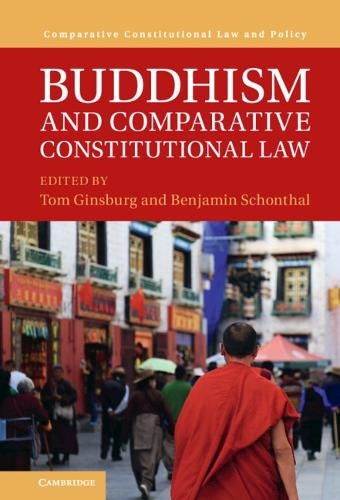
Buddhism and comparative constitutional law
The first comprehensive account of the entanglements of Buddhism and constitutional law,The authors also highlight the important ways in which Buddhist actors have (re)conceived Western liberal ideals such as constitutionalism, rule of law, and secularism.
Arguing Fundamental Rights
The book is unique in combining a challenging interpretation of one the foremost European conceptions of fundamental rights with the discussion of the pragmatics of constitutional adjudication.
Anti-bribery laws in common law jurisdictions
The legal regimes adopted and being implemented by parties to the OECD Convention flow from a common framework. Yet even when the anti-bribery legal regimes are virtually identical, the differences can still be significant in the context of a range of factors that are unique to each legal system.
