



الصفحة 1
الصفحة 1
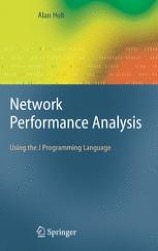
Network Performance Analysis : Using the J Programming Language
This useful volume introduces concepts and principles of network performance analysis by example, using the J programming language. J is rich in mathematical functionality, which makes it an ideal tool for analytical methods. The book favours a practical approach and develops functions in J to demonstrate mathematical concepts, thereby enabling readers to explore the underlying principles behind network performance analysis. In addition, this allows the subject to become more accessible to those who, although have a mathematical background, are not pure mathematicians.

Graph theory, combinatorics and algorithms: interdisciplinary applications
focuses on discrete mathematics and combinatorial algorithms interacting with real world problems in computer science, operations research, applied mathematics and engineering. The book contains eleven chapters written by experts in their respective fields, and covers a wide spectrum of high-interest problems across these discipline domains.The chapters focus on "real world" applications, all of which will be of considerable interest across the areas of Operations Research, Computer Science, Applied Mathematics, and Engineering. These problems include Internet congestion control, high-speed communication networks, multi-object auctions, resource allocation, software testing, data structures, etc. In sum, this is a book focused on major, contemporary problems, written by the top research scholars in the field, using cutting-edge mathematical and computational techniques.

Contributions to Ubiquitous Computing
This book puts the larger vision of ubiquitous computing in the context of today’s mobile and distributed computing systems and presents innovative solutions at all system layers ranging from hardware over vertical and horizontal infrastructure services and novel middleware techniques to various types of application software. Some chapters address core properties of ubiquitous applications including mobility, self-healing and self-organisation of both technical and social-technical systems. Other contributions deal with common facilities like secure e-payment or semantic web techniques and business solutions like wireless asset management or e- maintenance. Distributed systems management with self-monitoring capabilities, Internet congestion control, and novel security solutions coping with denial of service attacks against mobile agent systems and software- and hardware-based data encryption methods are further topics addressed.
