



الصفحة 1
الصفحة 1

Nitrogen-fixing Actinorhizal Symbioses
This book is the self-contained sixth volume of a comprehensive series on nitrogen fixation. It presents the state-of-the-art in regards to actinorhizal symbioses. Like legumes, actinorhizal plants form root nodules that host nitrogen-fixing soil bacteria. However, because the macrosymbionts are, with one exception, woody plants rather than crop plants, actinorhizal symbioses are less well-known than legume symbioses to which they are phylogenetically related. Actinorhizal plants come from eight different families. This volume includes chapters that deal with all these aspects of the symbiosis and both symbionts plus their ecological role and use. Other chapters tackle the global distribution of different actinorhizal plants and their microsymbionts and how this impacts the question of co-evolution of the micro- and macrosymbionts as well as comparing the actinorhizal and leguminous symbioses.

Molecular Basis of Symbiosis
Symbiotic associations involving prokaryotes occur ubiquitously and are ecologically highly significant. In symbiotic associations, co-evolution of the partner organisms has led to specific mechanisms of signal exchange and reciprocal regulation, and resulted in novel physiological capabilities of the association as compared to those of the individual partners. Symbiosis research has recently entered an exciting era because molecular biology techniques are available for studying partner organisms in association and in a culture-independent manner. It is the goal of this book to contribute towards a broader perspective and an understanding of the function of symbiotic systems. 14 different model systems have been chosen, comprising well known symbioses as well as novel experimental systems which have only recently become amenable to experimental manipulation.

Evolvable systems : From biology to hardware ; 6th International Conference, ICES 2005, Sitges, Spain, September 12-14, 2005, Proceedings
The flying machines proposed by Leonardo da Vinci in the fifteenth century, the se- reproducing automata theory proposed by John von Neumann in the middle of the twentieth century and the current possibility of designing electronic and mechanical systems using evolutionary principles are all examples of the efforts made by humans to explore the mechanisms present in biological systems that permit them to tackle complex tasks. These initiatives have recently given rise to the emergent field of b- inspired systems and evolvable hardware. The inaugural workshop, Towards Evolvable Hardware, took place in Lausanne in October 1995, followed by the successive events of the International Conference on Evolvable Systems: From Biology to Hardware, held in Tsukuba (Japan) in October 1996, in Lausanne (Switzerland) in September 1998, in Edinburgh (UK) in April 2000, in Tokyo (Japan) in October 2001, and in Trondheim (Norway) in March 2003. Following the success of these past events the sixth international conference was aimed at presenting the latest developments in the field, bringing together researchers who use biologically inspired concepts to implement real systems in artificial intelligence, artificial life, robotics, VLSI design, and related domains. The sixth conference consolidated this biennial event as a reference meeting for the community involved in bio-inspired systems research. All the papers received were reviewed by at least three independent reviewers, thus guaranteeing a high-quality bundle for ICES 2005.

Managing Innovation and Standards : A Case in the European Heating Industry
This book provides an in-depth study of the management of standards and regulation in sustainable and radical innovation development. It considers the case of micro Combined Heat and Power (mCHP) technology. The developers of this radical innovation in the European heating sector encountered major conflicts when attempting to create or adapt standards when bringing the technology to market. Utilising rich research data and interviews with key actors, the author uses this case to derive a grounded theory on the management of standards and regulation during an innovation process. The results also have important implications for innovators, which are reflected in clear advice for practice.

Cellular automata ; 7th International conference on cellular automata for research and industry, ACRI 2006, Perpignan, France, September 20-23, 2006, Proceedings
This book constitutes the refereed proceedings of the 7th International Conference on Cellular Automata for Research and Industry, ACRI 2006. The book presents 53 revised full papers and 19 revised poster papers together with 6 invited lectures. Topical sections include CA theory and implementation, computational theory, population dynamics, physical modeling, urban, environmental and social modeling, traffic and boolean networks, multi-agents and robotics, as well as crowds and cellular automata, and more.
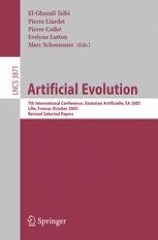
Artificial evolution ; 7th International Conference, Evolution artificielle, EA 2005, revised selected papers
This book constitutes the thoroughly refereed post-proceedings of the 7th International Conference on Artificial Evolution, EA 2005, held in Lille, France, in October 2005. They cover all aspects of artificial evolution: genetic programming, machinelearning, combinatorial optimization, co-evolution, self-assembling, artificial lifeand bioinformatics.In addition, the program included an invited talk by David Corne on “Evolu-tionary Computation in Bioinformatics: How to Save Lives and Make ScientificBreakthrough.
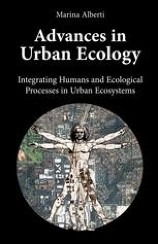
Advances in Urban Ecology : Integrating Humans and Ecological Processes in Urban Ecosystems
The future of Earth’s ecosystems is increasingly influenced by the pace and patterns of urbanization. One of the greatest challenges for natural and social scientists is to understand how urbanizing regions evolve through the complex interactions between humans and ecological processes. Questions and methods of inquiry specific to our traditional disciplinary domains yield partial views that reflect different epistemologies and understandings of the world. In order to achieve the level of synthesis required to see the urban ecosystem as a whole we must change the way we pose questions and search for answers. Cities are the result of human and ecological processes occurring simultaneously in time and in space and the legacy of the simultaneous processes of the past. Urban ecology is the study of the co-evolution of human-ecological systems. Scholars of both urban systems and ecology must challenge the assumptions and world views within their disciplines and work towards a hybrid theory that builds on multiple world views.
