



الصفحة 1
الصفحة 1
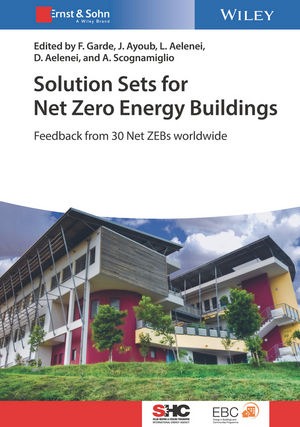
olution Sets for Net Zero Energy Buildings : Feedback from 30 Buildings Worldwide
Presents a unique study of 30 NZEBs that have been constructed and have had their performance measured for at least 12 months. The study is based upon an international collaborative research initiated by the International Energy Agency. It is the first book to evaluate building strategies in houses, educational buildings and offices that have been demonstrated to work in practice. It examines how the design challenges of climate and building type have been addressed, and to what extent the various design approaches have been successful. This book presents convincing evidence that a careful re-thinking of conventional design norms can achieve a far greater performance benefit than is normally feasible. It identifies 'solution sets' that work at the whole building level and at the individual building design challenge level for each climate and building type. In doing so, the book provides guidance as to how to improve the design by learning from these cases. Unusually for a book of this type it has examples of buildings in what are conventionally labeled 'hot' and 'cold' climates.

Microalgae Building Enclosures : Design and Engineering Principles
Aims to provide design, engineering, and biotechnical guidelines for microalgae building enclosures that need to be considered for symbiotic relations among the built environment, humans, and ecosystems. Introduces the theoretical background of microalgae as a bioremediator and future energy system and their potential roles toward sustainable and healthy built environments. Part II exemplifies interventions and multiple benefits of microalgae systems in product, architecture, urban, and infrastructure applications across the globe including Africa, Asia, Australia, Europe, South America, and North America. Part III explains the design and engineering criteria, biotechnical design requirements, and various performance metrics for microalgae architecture. Finally, Part IV investigates potential building applications in low-rise buildings, high-rise buildings, and energy-efficient retrofitting. The book also includes international case studies of microalgae building systems within various building types and climates.

Invasive forest insects, introduced forest trees, and altered ecosystems : Ecological pest management in global forests of a changing world
Demand for timber and fibre continues to grow and is being met by increased reliance on plantation forestry. Many of the plantations that are being grown around the globe are non-native species that have characteristics of rapid growth and good commercial qualities. In some cases, the high rates of production are a result of the absence of native herbivore and diseases. This limited pest status is threatened as pest species move around the globe. At the same time there is concern about threats of these non-native plantation species on native communities and the impact of changing climates on forest productivity. This volume explores many of these issues for the first time.

Flavours and Fragrances : Chemistry, Bioprocessing and Sustainability
This book is an introduction to the fascinating world of aroma chemicals, essential oils, fragrances and flavour compositions for the food, cosmetics and pharmaceutical industry. The present state-of-the-art technology, the future use of resources and biotechnological approaches for the production of the respective chemical compounds are described. A large section is devoted to the description of the renewable resources of flavours: spice plants, fruits from moderate to tropical climates, vegetables, fermented and heated plants. Analytical methods, such as gas chromatography coupled to human or electronic noses or to a mass spectrometer, are outlined and consumer trends, legal and safety aspects are described. Novel renewable resources come from biotechnology.

Design and performance of tall buildings for wind
Design and Performance of Tall Buildings for Wind, MOP 143 provides a framework for the design of tall buildings for wind, based on the current state-of-practice in tall building structural design and wind tunnel testing

Demystifying Climate Models : A Users Guide to Earth System Models
This book demystifies the models we use to simulate present and future climates, allowing readers to better understand how to use climate model results. In order to predict the future trajectory of the Earth’s climate, climate-system simulation models are necessary. When and how do we trust climate model predictions? The book offers a framework for answering this question. It provides readers with a basic primer on climate and climate change, and offers non-technical explanations for how climate models are constructed, why they are uncertain, and what level of confidence we should place in them. It presents current results and the key uncertainties concerning them. Uncertainty is not a weakness but understanding uncertainty is a strength and a key part of using any model, including climate models.

Daylighting Design Planning Strategies and Best Practice Solutions
The primary objective of daylight systems is to make maximum use of daylight for certain building types and climates. The book documents the various dimensions of the optimum use of daylight with particular reference to window orientation, light distribution, and prism technology, and discusses the health and economic related aspects.
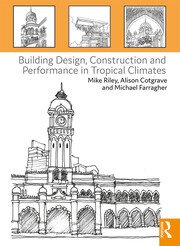
Building design, construction and performance in tropical climates
Outlines: the functional requirements of buildings in tropical climates; the challenges associated with the sustainability of the built environment, building form and whole life performance in the context of a tropical setting; the impact of potentially hostile tropical conditions upon building pathology and the durability of components, structure and fabric; the tasks which face those responsible for appraising the design, condition, maintenance and conservation of built heritage in tropical regions; the facilities management issues faced in tropical climates; and the refurbishment, upgrade and renewal of the tropical built environment.
Biodiversity and Ecophysiology of Yeasts
In the last few decades more and more yeast habitats that were not investigated earlier, spanning cold climates to tropical regions and dry deserts to rainforests, have been explored. As a result, a large body of ecological data has been accumulated and the number of known yeast species has increased rapidly. This book provides an overview of the biodiversity of yeasts in different habitats. The recent advances achieved by the application of molecular biological methods in the field of yeast taxonomy and ecology are also incorporated in the book. Wherever possible, the interaction between yeasts and the surrounding environment is discussed.

Bioclimatic housing : Innovative designs for warm climates
In the search for sustainable architecture, there is growing interest in the relationship between nature and design. In this context, Bioclimatic Housing covers creative, vernacular architecture to present both the theory and practice of innovative, low-energy architecture.The book interweaves the themes of social progress, technological fixes and industry transformation within a discussion of global and country trends, climate types, solutions and technologies. this is a truly international and authoritative work, providing an essential primer for building designers, builders, developers and advanced students in architecture and engineering.
Artificial intelligence techniques in hydrology and water resources management
The sustainable management of water cycles is crucial in the context of climate change and global warming. It involves managing global, regional, and local water cycles, as well as urban, agricultural, and industrial water cycles, to conserve water resources and their relationships with energy, food, microclimates, biodiversity, ecosystem functioning, and anthropogenic activities. Hydrological modeling is indispensable for achieving this goal, as it is essential for water resources management and the mitigation of natural disasters. In recent decades, the application of artificial intelligence (AI) techniques in hydrology and water resources management has led to notable advances. In the face of hydro-geo-meteorological uncertainty, AI approaches have proven to be powerful tools for accurately modeling complex, nonlinear hydrological processes and effectively utilizing various digital and imaging data sources, such as ground gauges, remote sensing tools, and in situ Internet of Things (IoT) devices.
