



الصفحة 1
الصفحة 1

N-Heterocyclic Carbenes in Transition Metal Catalysis
It was only in the early 1990s that carbenes with the carbene carbon being incorporated in a nitrogen containing heterocycle (N-heterocyclic carbenes or NHCs) were found to be stable enough to be isolated. Since the first report on the application of NHCs as ligands in transition metal catalysis in 1995, NHC have found numerous applications and have been established as a versatile and indispensable class of ligands. For many reactions like metathesis or cross-coupling reactions NHCs have often become the ligands of choice, allowing otherwise difficult transformations. In this book leading experts have surveyed major areas of application of NHC metal complexes in catalysis. The authors have placed a special focus on nickel- and palladium-catalyzed reactions, on applications in metathesis reactions, on oxidation reactions and on the use of chiral NHC-based catalysts. This compilation is rounded out by an introductory chapter and a chapter dealing with synthetic routes to NHC metal complexes.

New Aspects of Zirconium Containing Organic Compounds
Metal carbene complexes have made their way from organometallic curiosities to valuable reagents and catalysts. They offer novel synthetic opportunities in carbon-carbon bond formation based on either carbene-centered reactions or on metal-templated processes which makes them indispensable in modern synthetic methodology. The most prominent metal carbenes are now either commercially available or easy to synthesize and handle with modern laboratory techniques. This volume organized in eight chapters written by the leading scientists in the field illustrates the theoretical background, non-classical nucleophilic and cycloaddition patterns, chromium-templated benzannulation and photo-induced reactions, rhodium-catalyzed carbene transfer as well as the principles and applications of olefin metathesis which has coined the progress in synthetic methodology over the past decade. Designed for researchers in academia and industry as well as graduate students it presents the state-of-the-art potential of carbene complexes in modern organic synthesis.

Neodymium Based Ziegler Catalysts - Fundamental Chemistry
In this volume we try to review the available literature by two independentapproaches to Nd and Ln-catalyzed diene polymerizations. In the first part ofthe volume, which is entitled “Neodymium-Based Ziegler/Natta Catalysts andtheir Application in Diene Polymerization”, a polymer chemist’s view is givenwith strong emphasis on Nd-based catalyst systems. Also technological andindustrial aspects of Nd-catalyzed diene polymerizations are addressed. In thesecond part of the volume, which is entitled “Rare-Earth Metals and AluminumGetting Close in Ziegler-type Organometallics”, a more organometallic per-spective is given and Ln-based catalyst systems are addressed. By the synopsisof these different perspectives, the reader will comprehend the complexity ofLn-based Ziegler catalyst systems and their application to the polymerizationof dienes.

Nanotechnology in Catalysis 3
This book is the third volume of Nanotechnology in Catalysis. Although has been only 2 years since the Volumes 1 and 2 were published, many new contributions and breakthroughs have been made by researchers all over the world, showing the dynamic of nanotechnology in catalysis area. The topics in the book are the most up-to-date information on the forefront of nanotechnology development in catalysis field. They include the new concept and applications of nanotechnology for catalysis, the preparation and characterization of nanoparticle and nanostructure catalysts, and the examples of the superior activity and selectivity achieved by using such nanocatalysts. This book provides an in-depth understanding of how nanotechnology can affect the future generation of catalyst development.

Nanocatalysis
Nanocatalysis is one of the most exciting subfields to have emerged from nanoscience. Its central aim is the control of chemical reactions by changing the size, dimensionality, chemical composition and morphology of the reaction center and by changing the kinetics using nanopatterning of the reaction centers. This approach opens up new avenues for atom-by-atom design of nanocatalysts with distinct and tunable chemical activity, specificity, and selectivity. This book is intended to give a pedagogical and methodological overview of this exciting and growing field and to highlight specific examples of current research. In this way, it serves both as an instructive introduction for graduate students who plan to enter the field and as a reference work for scientists already active in this and related areas.

Molecular Materials with Specific Interactions - Modeling and Design
One of the first requirements to initiate the molecular modeling of molecular materials is an accurate and realistic description of the electronic structure, intermolecular interactions and chemical reactions at microscopic and macroscopic scale. Therefore the first four chapters contain an extensive introduction into the latest theories of intermolecular interactions, functional density techniques, microscopic and mezoscopic modeling techniques as well as first-principle molecular dynamics.In the following chapters, techniques bridging microscopic and mezoscopic modeling scales are presented. The authors then illustrate various successful applications of molecular design of new materials, drugs, biocatalysts, etc. before presenting challenging topics in molecular materials design.

Heterogeneous Enantioselective Hydrogenation : Theory and Practice
The book looks at the first relatively ineffective catalysts right through to modern highly effective enantioselective catalytic systems, comparable in their efficiency to chiral metal complexes and enzymatic systems. The book begins with a summary of the first work on heterogeneous metal catalysts, which showed only the principal possibilities of enantioselective reactions. The book then elaborates on metal catalysts which have enantioselectivities close to 100%. Finally, the book describes the practical utilization of chiral catalytic systems in processes of hydrogenation. The a - and b -hydroxy carboxylic acid esters produced are precursors for manufacturing many synthones used for medicines as well as for monomers used for biodegradable polyesters, both of which have important practical applications. The book summarizes more than 800 scientific papers in the field of enantioselective catalytic hydrogenation reactions, mainly those using heterogeneous metal catalysts. It provides detailed explanations of special techniques for the preparation of effective dissymmetric catalysts which provide highly efficient catalytic systems.

Green techniques for organic synthesis and medicinal chemistry
Presents comprehensive coverage of green chemistry techniques for organic and medicinal chemistry applications, summarizing the available new technologies, analyzing each technique’s features and green chemistry characteristics, and providing examples to demonstrate applications for green organic synthesis and medicinal chemistry.

Flavin-Based Catalysis : Principles and Applications
The book gives a unique overview of this rapidly developing research field, presenting structures and properties of flavin derivatives as well as their proven application as bioinspired catalysts in various organocatalytic, biocatalytic, and photocatalytic reactions.

Disrupting Finance : FinTech and Strategy in the 21st Century
This Pivot demonstrates how a variety of technologies act as innovation catalysts within the banking and financial services sector. Traditional banks and financial services are under increasing competition from global IT companies such as Google, Apple, Amazon and PayPal whilst facing pressure from investors to reduce costs, increase agility and improve customer retention. Technologies such as blockchain, cloud computing, mobile technologies, big data analytics and social media therefore have perhaps more potential in this industry and area of business than any other. This book defines a fintech ecosystem for the 21st century, providing a state-of-the art review of current literature, suggesting avenues for new research and offering perspectives from business, technology and industry.

Dendrimer Catalysis
catalytically active dendrimers have emerged as a class of molecular catalysts that has substantially enriched the field of homogeneous (and in part heterogeneous) catalysis. A general survey of transition metal dendrimer catalysts and the way they have developed is followed by in-depth discussions of dendritic transition metal catalysis based on non-covalent catalyst-support interaction and an overview of the rapidly growing field of stereoselective dendrimer catalysis. The development of dendrimer-encapsulated bimetallic nanoparticles has provided the interface with heterogeneous colloid catalysis. As cheaper and readily accessible alternatives to regular dendrimers, hyperbranched polymers are increasingly being used as catalyst platforms. These topics are complemented by a review of metallodendritic exoreptors for the redox recognition of oxo-anions and halides.

Kinetics of Catalytic Reactions--Solutions Manual
This textbook contains all the information needed for graduate students or industrial researchers to design kinetic experiments involving heterogeneous catalysts, to characterize these catalysts, to acquire valid rate data, to verify the absence of mass (and heat) transfer limitations, to propose reaction models, to derive rate expressions based on these models and, finally, to assess the consistency of these rate equations.The most recent technique to calculate heats of adsorption and activation barriers on metal surfaces, the BOC-MP approach, is discussed in detail. Methods to measure metal surface areas and crystallite sizes using x-ray diffraction, transmission electron microscopy and various chemisorption techniques are discussed. Different experimental techniques to determine the influence of mass transfer limitations, especially within the pores of a catalyst, are reviewed in detail, with a particular emphasis on liquid-phase reactions.

Kinetics of Catalytic Reactions
This textbook contains all the information needed for graduate students or industrial researchers to design kinetic experiments involving heterogeneous catalysts, to characterize these catalysts, to acquire valid rate data, to verify the absence of mass (and heat) transfer limitations, to propose reaction models, to derive rate expressions based on these models and, finally, to assess the consistency of these rate equations.Many illustrations of these and other topics are provided along with numerous problems and a Solutions Manual for instructors. This book will be applicable to any graduate course in chemical engineering, chemistry or materials science that involves kinetics of catalytic reactions, including those catalyzed by enzymes.

Chiral Diazaligands for Asymmetric Synthesis
The use of phosphine derivatives has historically induced the tremendous development of catalysis (both non-asymmetric and asymmetric). Although the chemistry of amines is more documented, the use of nitrogen-containing ligands only appeared recently. Nevertheless, during the last ten years, the results describing chiral diamine preparations and their uses in asymmetric catalysis and synthesis are increasing faster than their phosphorus counterparts. The reader will find in this volume the most recent methods for the synthesis of chiral diamines as well as their applications in asymmetric catalysis of CC bond formation. Particular attention will be given to spartein and derivatives of such diamines. Recently, the particular properties and the chemistry of amines allowed to obtain catalysts easy to separate and recycle and new types of ligands such as diaminocarbenes, ureas and thioureas. Finally, the complexing properties of some diamines allowed the formation of complexes with chirality "at the metal " which is of major theoretical interest and presents numerous potential applications.

Chemical Kinetics and Reaction Dynamics
Chemical Kinetics and Reaction Dynamics brings together the major facts and theories relating to the rates with which chemical reactions occur from both the macroscopic and microscopic point of view. This book helps the reader achieve a thorough understanding of the principles of chemical kinetics and includes: *Detailed stereochemical discussions of reaction steps / *Classical theory based calculations of state-to-state rate constants / *A collection of matters on kinetics of various special reactions such as micellar catalysis, phase transfer catalysis, inhibition processes, oscillatory reactions, solid-state reactions, and polymerization reactions at a single source. / The growth of the chemical industry greatly depends on the application of chemical kinetics, catalysts and catalytic processes.
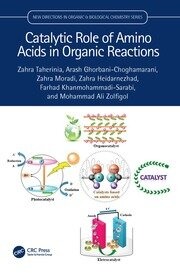
Catalytic role of amino acids in organic reactions
Asymmetric organometallic and organocatalytic processes have attracted great interest. Asymmetric synthesis using both natural and unnatural amino acids has been tremendously important from synthetic as well as industrial viewpoints, and numerous new methodologies have been developed in the last decades. Herein we provide an overview of old and very recent (since 1900 till now) advances and applications in the area of heterogeneous catalysis, homogeneous catalysis, electrocatalysis, photocatalysis, organocatalysis, thermal catalysis using amino acids [proline, glycine, alanine, valine, serine, threonine, cysteine, methionine, asparagine, glutamine, lysine, arginine, histidine, aspartate, glutamate, phenylalanine, and tryptophan], (supported or unsupported), an amino acid containing materials or amino acids derivatives as an essential component of catalysts, this book highlights the most important and recent developments to immobilize or support amino acids on various support materials. This book is suitable as supplementary reading for courses targeting the design, synthesis, and application of chiral catalysts, asymmetric catalysis, and sustainable production.

Catalyst separation, recovery and recycling : Chemistry and process design
This book looks at new ways of tackling the problem of separating reaction products from homogeneous catalytic solutions. The new processes involve low leaching supported catalysts, soluble supports such as polymers and dendrimers and unusual solvents such as water, fluorinated organics, ionic liquids and supercritical fluids. The advantages of the different possibilities are discussed alongside suggestions for further research that will be required for commercialisation.

Business Education and Emerging Market Economies : Perspectives and Best Practices
Business Education in Emerging Market Economies discusses the impact of business education on emerging markets and explores curricular innovation, pedagogical approaches, and strategic alliances in the context of industrializing economies. Emerging markets consist of eighty percent of the world's population and some 75% of its trade growth in the foreseeable future according to the U.S. Department of Commerce. The potential economic growth of emerging markets has prompted a need to understand the dynamics of these markets, their business institutions, and their educational systems. The pressures of globalization and the recent economic reforms that swept across emerging, developing, and transitioning, economies have had a positive impact on the demand for business education and business knowledge from the developed and industrialized countries. As a result, many methods were developed to transfer know-how from the developed markets including learning through imitation, using western style pedagogical approaches, attending universities in industrialized countries, learning through experience and practice, and using information technology. The conclusion we reach is that business and management education in emerging markets is fast changing the way in which these markets operate and are perceived – business educators are catalysts for greater economic integration.
Bioremediation of Soils Contaminated with Aromatic Compounds
Environmental biotechnology, which was in its infancy in the early 80's, has evolved thanks to the revolution brought about by molecular biology. Multiple successes in the biological cleanup of civil and industrial wastewater and of hydrocarbon soil pollution, demonstrate the vast power of clean technologies. In addition, the buildup of information on the activities of microorganisms as catalysts in all sorts of natural, industrial and animal environments has flourished. There is a continuing realization of the critical role of microbial processes in biological, industrial and geological systems. Since environmental biotechnology has matured, it is ready to tackle bigger challenges: the scaling up of many bioremediation systems still in progress, the search for novel biocatalysts for industrial applications, the continuing effort against common human life-threatening processes such as antibiotic resistance, the accumulation of hormone-mimicking substances (endocrine disrupters), the deposition of air-borne pesticides in the environment and, the degradation of recalcitrant contaminants. These endeavors will help prevent the contamination of food chains, protect human life and allow for human activity and economic development that do not compromise environmental sustainabijity.

Biological nitrogen fixation, sustainable agriculture and the environment ; Proceedings of the 14th International nitrogen fixation congress
Covers aspects of fundamental and applied nitrogen-fixation research, from biochemistry and chemistry through genetics, regulation and physiology to agricultural practice and environmental impact. This work describes progress on studies of potential catalysts for nitrogen fixation; how the N2-fixing process is regulated in living cells; and more.
