



الصفحة 1
الصفحة 1

Ultimate aiu community = مجتمع الجامعة العربية الدولية المطلق
The inspiration for this project was the need to unify the university's disparate systems into a single, cohesive platform. By developing this system, we aimed to solve the fragmentation issue while leveraging the advancements in artificial intelligence to enhance the overall educational experience. The Ultimate AIU Community aims to streamline educational processes, foster community engagement, and provide a unified, intelligent solution for the modern era of education.This system consists of two main components: a mobile social media community application and an e-learning website. The mobile app allows students to share content, facilitated by an AI-driven toxicity detection model to ensure a respectful and safe environment. Additionally, the app serves as an information hub, displaying advertisements and updates from various campus entities such as instructors, student affairs, cafes, and bookshops.

The human hippocampus : Functional anatomy, vascularization and serial sections with MRI
This book offers a precise description of the anatomy of human hippocampus in view of neurosurgical progress and the wealth of medical imaging methods available. A survey of the current concepts explains the functions of the hippocampus and describes its external and internal vascularisation. Head sections and magnetic resonance images complete this comprehensive view of human hippocampal anatomy. It will be of interest to neuroscientists and, in particular, to neurosurgeons, neuroradiologists and neurologists.

The Distributed University for Sustainable Higher Education
Discusses the re-imagining of the higher education sector. It exposes problems that relate to the way that universities have become over-managed business enterprises which may not reflect societal, national, or global educational needs. From there, it proposes some solutions, including three innovative programs, that make universities more responsive to needs, as well as reduce their impact on the environment. The central idea of this book is developing the ‘Distributed University,’ which distributes education to where it is needed, reducing local and global inequalities in access, and emphasizing local relevance in place of large centralized campuses, with a low impact on the environment. It emphasizes the distribution of trust in place of managerialism and collaboration in place of competition.

Term Rewriting and Applications ; 18th International Conference, RTA 2007, Paris, France, June 26-28, 2007, Proceedings
This volume contains the papers presented at the 18th International Conference on Rewriting Techniques and Applications (RTA 2007), which was held during June 26–28, 2007, on the campus of the Conservatoire National des Arts et M´etiers (CNAM) in Paris, France.

Syrian Aviation Acadmey = الأكاديمية السورية للطيران
يهدف هذا المشروع إلى تصميم حرم تعليمي متكامل يواكب التطور السريع في صناعة الطيران في سوريا، وذلك من خلال إنشاء "أكاديمية طيران" متطورة في منطقة الديماس بريف دمشق. يجمع المشروع بين الوظيفة التعليمية والثقافية والسكنية لخلق بيئة محفزة ومتكاملة لطلاب الطيران والمهتمين بهذا المجال.

Stanford University
During the almost thousand-year history of universities, campuses have always been physical spaces. As we end the twentieth century, some univ- sity interactions have moved to cyberspace and the level of activity there grows at a breathtaking speed. At this stage of development, however, the university is still localized in time and space.The university as a place has found its most striking expression in the Anglo-Saxon world. Oxford, Cambridge, Harvard,William and Mary,Yale, Princeton,Virginia, and Stanford are all physical places, campuses to which students remove th- selves for a number of years.They are also places students feel connected with for the rest of their lives. For alumni, memories of their colleges or universities clearly include the physical setting and the architecture or architectures that make up the campuses.

Robot navigation from nature : Simultaneous localisation, mapping, and path planning based on Hippocampal models
This book describes the development of a robot mapping and navigation system inspired by models of the neural mechanisms underlying spatial navigation in the rodent hippocampus. Computational models of animal navigation systems have traditionally had limited performance when implemented on robots. The aim of the work was to determine the extent to which hippocampal models can be used to provide a robot with functional mapping and navigation capabilities in real world environments. The focus of the research was on achieving practical robot performance, rather than maintaining biological plausibility.

Refining nature : the landscape architecture of Peter Walker
Peter Walker is one of the most seminal and prolific figures in contemporary landscape design worldwide--both as a teacher and as practitioner. Among his best-known works are Nasher Garden in Dallas, Novartis Campus in Basel, Switzerland and the World Trade Center Memorial in New York. This academic review of Walker's unique oeuvre look closely at his design work and provides a comparative analysis

Progress in Cryptology – Mycrypt 2005 ; 1st International Conference on Cryptology in Malaysia, Kuala Lumpur, Malaysia, September 28-30, 2005, Proceedings
The conference was co-organized by the Information Security Research Lab at Swinburne University of Technology (Sarawak Campus), NISER (National ICT Security and Emergency Response Centre) and INSPEM (Ins- tute for Mathematical Research)at UPM (University Putra Malaysia).Mycrypt 2005 was held in Kuala Lumpur, Malaysia during September 28-30 2005, in conjunction with the e-Secure Malaysia 2005 convention. Therewere90paper submissionsfrom23 countriescoveringall areasof cr- tologic research, from which 19 were accepted. We would like to extend our thanks to all authors who submitted papers to Mycrypt 2005. Each paper was sent an onymously to at least 3 members of the International Program Committee for reviews and comments. The review comments were then followed by disc- sions among the Program Committee. A recipient of the Best Paper Award was also selected after voting among Program Committee members. . These proceedings contain revised versions of all the accepted papers.

Peer-to-Peer Video : The Economics, Policy, and Culture of Today's New Mass Medium
Peer-to-Peer (P2P) is a communication structure in which individuals interact directly, without going through a centralized system. The implications of this architecture go far beyond the technological realm; the ability of individuals to share digital content files, including audio and video material, in real time, facilitates communication and, at a deeper cultural level, promotes community without hierarchy or strict control. As Eli Noam, Lorenzo Pupillo, and their colleagues demonstrate in this timely and incisive volume, P2P has permeated all facets of society, from YouTube and music downloading experiments on college campuses to international policy debates over intellectual property rights. Peer-to-Peer Video is the first book to apply economic principles to analyze and understand the P2P phenomenon, considering such topics as "consumer demand and the commons" and "file sharing and the copyright crisis."

Next Generation Design and Verification Methodologies for Distributed Embedded Control Systems ; Proceedings of the GM R&D Workshop, Bangalore, India, January 2007
This volume is the proceedings of the workshop “Next Generation Design and Verification Methodologies for Distributed Embedded Control Systems” organised by General Motors R&D, India Science Lab. The workshop was held on January 5-6 2007 at the NIAS auditorium, IISc campus, Bangalore, India. This workshop is the first of its kind to be organised by an automotive major to bring together the leaders in the field of embedded systems development to present state-of-the-art work, and to discuss future strategies for addressing the increasing complexity of embedded control systems. The workshop consisted of invited talks given by leading experts and researchers from academic and industrial organizations.

New Challenges in Superconductivity : Experimental Advances and Emerging Theories ; Proceedings of the NATO Advanced Research Workshop, held in Miami, Florida, 11-14 January 2004
This volume contains the proceedings of the 2004 University of Miami Workshop on Unconventional Superconductivity. The workshop was the fourth in a series of successful meetings on High-T Superconductivity and C related topics, which took place at the James L. Knight Physics Building on the University of Miami campus in Coral Gables, Florida, in January 1991, 1995, 1999, and 2004. The workshop consisted of two consecutive events: 1. NATO Advanced Research Workshop (ARW) on New Challenges in Superconductivity: Experimental Advances and Emerging Theories, held on January 11-14, 2004; 2. Symposium on Emerging Mechanisms for High Temperature Superconductivity (SEMHTS), held on January 15-16, 2004.
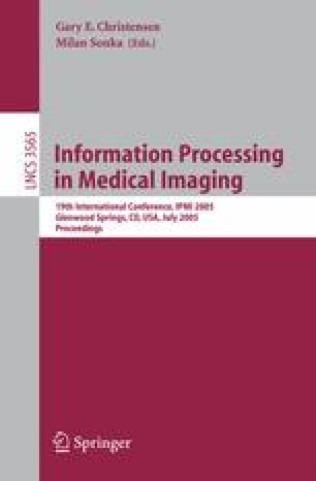
Information processing in medical imaging ; 19th International conference, IPMI 2005, Glenwood Springs, CO, USA, July 10-15, 2005, Proceedings
The nineteenth biennial International Conference on Information Processing in Medical Imaging (IPMI) was held July 11–15, 2005 in Glenwood Springs, CO, USA on the Spring Valley campus of the Colorado Mountain College. Following the successful meeting in beautiful Ambleside in England, this year’s conference addressed important recent developments in a broad range of topics related to the acquisition, analysis and application of biomedical images. Interest in IPMI has been steadily growing over the last decade. This is p- tially due to the increased number of researchers entering the ?eld of medical imagingasaresultoftheWhitakerFoundationandtherecentlyformedNational Institute of Biomedical Imaging and Bioengineering. This year, there were 245 full manuscripts submitted to the conference which was twice the number s- mitted in 2003 and almost four times the number of submissions in 2001. Of these papers, 27 were accepted as oral presentations, and 36 excellent subm- sions that could not be accommodated as oral presentations were presented as posters. Selection of the papers for presentation was a di?cult task as we were unable to accommodate many of the excellent papers submitted this year. All accepted manuscripts were allocated 12 pages in these proceedings.

Illinois Institute of Technology : The campus guide : An architectural tour
Illinois Institute of Technology an architectural tour by Franz Schulze with photographs by Richard Barnes foreword by Lew Collens Princeton Architectural

Future campus : Design quality in university buildings
Argues that investment in the higher education sector is a driver for intellectual, social and economic development, offering opportunities for positive impacts for the physical environment on the character and performance of higher education. The editor believes that good outcomes result from good design, which should address elements such as learning from best current practice, the importance of clear briefing, good environmental performance, the positive social impacts and, also, the importance of ensuring a beautiful outcome. It has chapters contributed from leading-edge practices, including case studies with highly illustrated project examples.

Fracture Mechanics of Ceramics ; Active Materials, Nanoscale Materials, Composites, Glass, and Fundamentals
The 8th International Symposium on fracture mechanics of ceramics was held in on the campus of the University of Houston, Houston, TX, USA, on February 25-28, 2003. With the natural maturing of the fields of structural ceramics, this symposium focused on nano-scale materials, composites, thin films and coatings as well as glass. The symposium also addressed new issues on fundamentals of fracture mechanics and contact mechanics, and a session on reliability and standardization.

Foundations of landscape architecture : Integrating form and space using the language of site design
Illustrates the importance of spatial language. It introduces concepts, typologies, and rudimentary principles of form and space. Including designs for projects such as parks, campuses, and memorials, this text provides the core concepts necessary for designers to shape functional landscapes. Additionally, chapters discuss organizational and spatial design structures based on orthogonal forms, angular forms, and circular forms.

Formal techniques for networked and distributed systems - FORTE 2005 ; 25th IFIP WG 6.1 International Conference, Taipei, Taiwan, October 2-5, 2005, Proceedings
FORTE (Formal Techniques for Networked and Distributed Systems) 2005 was sp- sored by Working Group 6.1, Technical Committee 6 (TC6) of the International Fed- ation for InformationProcessing (IFIP).The conferenceseries started in 1981underthe name PSTV (ProtocolSpeci?cation, Testing, and Veri?cation).In 1988,a second series under the name FORTE was started. Both series merged to FORTE/PSTV in 1996. The conference name was changed to FORTE in 2001. During its 24-year history, many important contributions have been reported in the conference series. The last ?ve me- ings of FORTE were held in Pisa (Italy), Cheju Island (Korea), Houston (USA), Berlin (Germany), and Madrid (Spain). The 25th FORTE was held from Sunday to Wednesday, October 2–5, 2005 on the beautiful campus of the National Taiwan University (NTU), Taipei, Taiwan, ROC.

Diversity and Inclusion in Global Higher Education : Lessons from Across Asia
This book offers pioneering insights and practical methods for promoting diversity and inclusion in higher education classrooms and curricula. It highlights the growing importance of international education programs in Asia and the value of understanding student diversity in a changing, evermore interconnected world

Distribution and phenotype of proliferating cells in the Forebrain of adult macaque monkeys after transient global cerebral ischemia
The authors' results show that ischemia differentially activates endogenous neural precursors residing in diverse locations of the adult primate central nervous system. A limited endogenous potential for postischemic neuronal repair exists in neocortex and striatum, but not in the hippocampus proper of the adult macaque monkey brain. The presence of putative parenchymal progenitors and of sustained progenitors in germinative centers opens novel possibilities for precursor cell recruitment.
