



الصفحة 1
الصفحة 1

New Perspectives in Political Ethnography
Ethnography is uniquely equipped to look microscopically at the foundations of political institutions and their attendant set of practices, just as it is ideally suited to explain why political actors behave the way they do and to identify the causes, processes and outcomes that are part and parcel of political life. The volume, based on a special issue of Qualitative Sociology has a two-fold purpose: to bring politics into the ethnographic literature and of ethnography in studies of politics. The case studies included are based on the research of ethnographers studying the various level of politics in Brazil, Japan, El Salvador, Bosnia, the Philippines, India and the United States. It will be of interest to those in the sociology of politics, political science and those looking for ethnographic research on a global level.

How generations remember : Conflicting histories and shared memories in post-war Bosnia and Herzegovina
Provides a profound insight into post-war Mostar, and the memories of three generations of this Bosnian-Herzegovinian city. Drawing on several years of ethnographic fieldwork, it offers a vivid account of how personal and collective memories are utterly intertwined, and how memories across the generations are reimagined and ‘rewritten’ following great socio-political change. Focusing on both Bosniak-dominated East Mostar and Croat-dominated West Mostar, it demonstrates that, even in this ethno-nationally divided city with its two divergent national historiographies, generation-specific experiences are crucial in how people ascribe meaning to past events.

From War to Peace in the Balkans, the Middle East and Ukraine
This book focuses on the origins, consequences and aftermath of Western military interventions that led to the end of the most recent Balkan wars. . This study highlights lessons that can be applied to the Middle East and Ukraine, where similar conflicts are likewise challenging sovereignty and territorial integrity. It is an accessible treatment of what makes war and how to make peace ideal for all readers interested in how violent international conflicts can be managed, informed by the experience of a practitioner.

Dinaric Perspectives on TIMSS 2019 : Teaching and Learning Mathematics and Science in South-Eastern Europe
This book brings together national experts from across the Dinaric region to rigorously review IEA’s Trends in International Mathematics and Science Study (TIMSS) 2019 grade four data to develop a multidimensional and culturally sensitive perspective on their TIMSS 2019 primary-level results. The Dinaric region, named after the Dinaric Alps, is located in South-eastern Europe, and stretches through Croatia, Bosnia and Herzegovina, Serbia, Montenegro, Kosovo[1], Albania, and North Macedonia. IEA’s TIMSS has been an invaluable resource for monitoring international trends in mathematics and science achievement at grades four and eight since 1995. The TIMSS 2019 administration of the test to grade four students, provided a unique opportunity for analysis within shared regional settings and enabled the construction of this first report based on international study results from the region, prepared by the National Research Coordinators in collaboration with IEA.
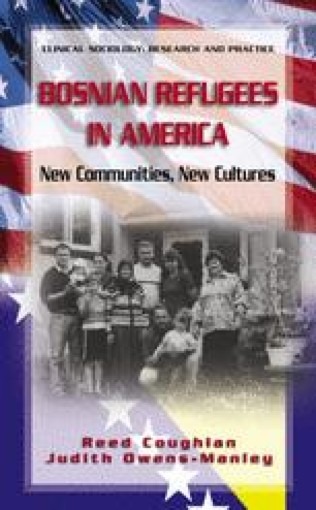
Bosnian Refugees in America : New Communities, New Cultures
The book considers the diverse experiences of urban and rural families before the war and the effects of the timing of their departure from Bosnia upon their experience of resettlement.
Bordieuan Field Theory as an Instrument for Military Operational Analysis
This book uses Pierre Bourdieu’s field theory as a lens through which to examine military operations. Novel in its approach, this innovative text provides a better, more nuanced understanding of the modern ‘battlespace’, particularly in instances of prolonged low-intensity conflict. Formed in two parts, this book primarily explores the scope of Bourdien theory before secondly providing a detailed case study of the Yugoslavian succession war of 1990-1992. Gunneriusson suggests that although theories do not necessarily provide answers, they do help us ask better questions. This volume suggests news lines of interdisciplinary investigation that will be of interest to members of armed forces, practitioners from NGOs, and policymakers.

Accounting and Financial System Reform in Eastern Europe and Asia
Accounting and Financial System Reform in Eastern Europe and Asia is the second in a series to examine accounting and financial system reform in transition economies. The first book used Russia as a case study. The present volume in the series examines some additional aspects of the reform in Russia and also looks at the accounting and financial system reform efforts that are being made in Ukraine, Bosnia & Herzegovina, Armenia and five Central Asian republics.
