



الصفحة 1
الصفحة 1

Memory B-cells : Methods and protocols
Details in methods to assess memory B cell formation and function in mice and humans. Chapters guide readers through tetramer-based methods to assess antigen-specific memory B cell dynamics in humans and mice in different vaccine, next-generation deep-sequencing, single-cell techniques to assess epigenomic, VDJ landscapes, lymph node aspirates from humans, advanced imaging, murine models to determine memory B cells formation, and bioinformatic techniques and in silico modelling of memory b cell formation. Written in the highly successful Methods in Molecular Biology series format, chapters include introductions to their respective topics, lists of the necessary materials and reagents, step-by-step, readily reproducible laboratory protocols, and key tips on troubleshooting and avoiding known pitfalls.

Inflammation and cancer : Methods and protocols
Discusses the latest findings on the development and characterization of representative research models for chronic immune-based diseases and inflammation-associated cancers.And covers biochemical, molecular, and cellular biological techniques that are commonly used to dissect the molecular mechanisms and cellular processes that drive the pathogenesis of certain disease states.

Hugo and Russell's pharmaceutical microbiology
Microbiology is one of the essential pharmaceutical sciences upon which the study and practice of pharmacy is built. It has a bearing on all aspects of the manufacture of medicines and sterile products, from their design and development to their delivery as quality products. Few interventions are more central to modern medicine than the treatment of infection, where antibiosis, vaccination and hygienic practices have essential roles to play. The COVID-19 pandemic, the appearance of new pathogens and the rise of antibiotic resistance have demonstrated most completely the need for pharmaceutical practitioners, researchers and industrial scientists to be fully conversant with this field. The 9th edition of Hugo and Russell’s Pharmaceutical Microbiology has been updated to meet this need. Having long served as the sole comprehensive textbook covering this subject, it has now been adapted to a critical new period in the advancement of medical and pharmaceutical research and development. Its experienced editors have incorporated contributions from subject experts and created a text which will serve the next generation of pharmacy students, pharmaceutical industry scientists and researchers.

Functional Biomaterials : Drug Delivery and Biomedical Applications
Explores in depth a wide range of functional biomaterials-based systems for drug, gene delivery, and biomedical aspects. The chapters cover newer technologies such as polymeric micelle, pH-responsive biomaterials, stimuli-responsive hydrogels, silk fibroin, inorganic biomaterials, synthetic biomaterials, 3D printed biomaterials, metallic biomaterials, ceramic and hybrid biomaterials. It also describes the theranostic approaches for cancer therapy, the biomaterials-based nanofibers scaffolds in tissue engineering, as well as the strategies applications of metallic biomaterials for the medical and dental prosthetic field.

Dictyostelium discoideum : Methods and protocols
Discusses the latest advancements and techniques used to study Dictyostelium discoideum. The chapters in this book cover topics such as cytokinesis, membrane function and damage, and nutrient/bacterial processing; autophagy activation and function; protein localization, interaction, and activation; cell migration and contact guidance for quantification of cytoskeletal dynamics; and global mutational screening, transcriptome analyses, and proteomics that apply to all stages of the Dictyostelium life cycle and that may generalize to human disease models. Written in the highly successful Methods in Molecular Biology series format, chapters include introductions to their respective topics, lists of the necessary materials and reagents, step-by-step, readily reproducible laboratory protocols, and tips on troubleshooting and avoiding known pitfalls.

Development of the Inner Ear
This book describes the embryonic development of the vertebrate inner ear in six chapters that span all aspects of inner ear development, In each chapter, a particular aspect of development of the inner ear is examined in terms of both classic embryologic experiments and more recent advances using molecular biological techniques.

Ctenophores : Methods and protocols
Explores emerging approaches and methods inspired by recent research using ctenophores or placozoans, facilitating the study of these enigmatic species and ancient animal lineages. Practical protocols are integrated with introductory chapters about general biology, summarizing the diversity, evolution, genomics, development, and neurobiology of these organisms. Special chapters outline strategies and applications for culturing, microscopy, physiology, electrical synapses, and bioluminescence, molecular and single-cell biology, transcription factors, as well as gene and protein expression analyses. The book also contains bioinformatics and computational chapters covering peptidomics and epigenomics. Written for the highly successful Methods in Molecular Biology series, chapters include detailed implementation advice that leads to dependable results in the laboratory.

Critical Points for the Organisation of Test Performance Studies in Microbiology : Plant Pathogens as a Case Study
This book in the field of plant pest detection shows a constant demand in development and improvement of fast and reliable detection tools, especially for high-priority pests. This open access book describes and summarizes the whole process of the organization of test performance study (TPS) for these tools. The outcome of TPS, obtained through the evaluation of the performance of one or more diagnostic tests by several laboratories on defined samples, is the finding of the best performing test/s for particular pest and for specific uses.

Congenital torch infections : torch panel
TORCH is a group of infections that can be passed from the pregnant mother to her fetus through the placenta. TORCH, includes Toxoplasmosis, Other (syphilis, varicella-zoster, parvovirus B19, Hepatitis B), Rubella, Cytomegalovirus (CMV), and Herpes infections are some of the most common infections associated with congenital anomalies. Most of the TORCH infections have serious fetal consequences and there has no impact on fetal outcome. In the present article, we wanted to discuss about the causative agents/organism, mode of infection, symptoms, treatment, vaccination, available molecular biological techniques and public awareness regarding this infection, Our objective in this project is to assess the awareness of and knowledge about mother-to-child infections and prevention

Low-cost methods for molecular characterization of mutant plants : Tissue desiccation, DNA extraction and mutation discovery : Protocols
Offers low-cost and rapid molecular assays for the characterization of mutant plant germplasm. Detailed protocols are provided for the desiccation of plant tissues; the extraction of high-quality DNA for downstream applications; the extraction of single-strand-specific nucleases for single nucleotide polymorphism; and small insertion/deletion discovery using standard agarose gel electrophoresis. The methods described can be applied in any laboratory equipped for basic molecular biology and do away with the need for expensive freezers and toxic organic compounds.
Chemical Biology and Drug Discovery
Gives the reader, through the specific selection of chemical-biological techniques and concepts, the necessary tools to be able to develop new ways of thinking and thus new therapeutic options in the complex field of chemical biology and drug development. The stated aim of this book is to provide concrete solutions and inspiration to students, (post)graduate students, and experienced scientists at universities as well as in industry in their problems.
Bioimage Data Analysis Workflows
This book provides students and researchers in the life sciences with essential practical information on how to quantitatively analyze data images. It refrains from focusing on theory, and instead uses practical examples and step-by step protocols to familiarize readers with the most commonly used image processing and analysis platforms such as ImageJ, MatLab and Python.

Autoimmunity : Methods and protocols
Brings together a comprehensive and up-to-date collection of protocols that reflect the diverse experimental strategies. Chapters detail T-cell, macrophage characterization, neutrophil functional assays, organoid culture methods, spatial transcriptomics, RNA FISH, microRNA profiling, and ribosome profiling. Written in the highly successful Methods in Molecular Biology series format, chapters include introductions to their respective topics, lists of the necessary materials and reagents, step-by-step, readily reproducible laboratory protocols, and key tips on troubleshooting and avoiding known pitfalls.
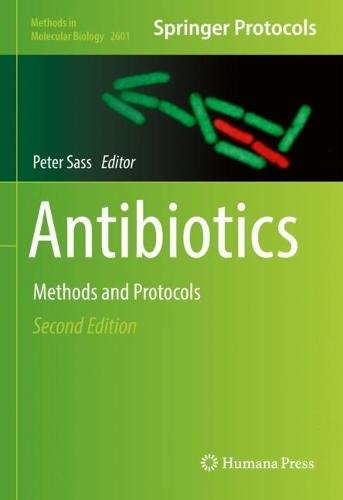
Antibiotics : Methods and protocols
Provides state-of-the-art and novel methods on antibiotic isolation and purification, identification of antimicrobial killing mechanisms, as well as methods for the analysis and detection of microbial responses and adaptation strategies. Antibiotics: Methods and Protocols, Second Edition, guides readers through updated and entirely new chapters on production and design, mode of action, and response and resistance. Written in the highly successful Methods in Molecular Biology series format, chapters include introductions to their respective topics, lists of the necessary materials and reagents, step-by-step, readily reproducible laboratory protocols, and tips on troubleshooting and avoiding known pitfalls.
3D cell culture : Methods and protocols
Expands on the previous edition with discussions about the latest organoid models developed for many more organs; new hydrogels and devices for 3D culture; and the organoid systems that have been improved by incorporating more components of tissue microenvironments in the in vitro culture. The chapters in this book are organized into five parts and cover topics such as biofabrication, organoids, microfluidic systems, bioprinting, and image analysis. Written in the highly successful Methods in Molecular Biology series format, chapters include introductions to their respective topics, lists of the necessary materials and reagents, step-by-step, readily reproducible laboratory protocols, and tips on troubleshooting and avoiding known pitfalls.
