



الصفحة 1
الصفحة 1
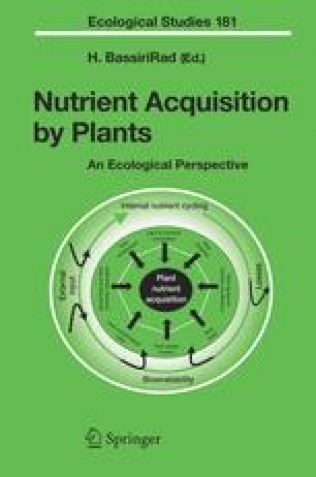
Nutrient Acquisition by Plants : An Ecological Perspective
Adaptation and evolution of terrestrial plants depend, to a large extent, on their ability to acquire nutrients. This is a modern and integrative treatment of the mechanisms controlling plant nutrient uptake and how plants respond to changes in the environment. The following key topics are covered: soil nutrient bioavailability; root responses to variations in nutrient supply; nitrogen fixation; regulation of nutrient uptake by internal plant demand; root characteristics; kinetics of nutrient uptake; root architecture; life span; mycorrhizae; responses to climate change. This integrated view helps us to understand the mechanisms that govern present-day plant communities and is indispensable in models designed to predict the response of plants to a changing climate.

Nutraceuticals in obesity management and control
Provides detailed information on nutraceuticals that can be helpful in the control and management of obesity. It clarifies key aspects of nutraceuticals that include sources, extraction, chemistry, mechanisms of action, pharmacology, bioavailability, safety, and various applications. Beginning with a concise overview of the prevalence of obesity, complications related to obesity, and current treatment regimens, the volume delves into the roles of functional foods and nutraceuticals for the management of body weight and for alleviating obesity comorbidities. It goes on to discuss the effect of some of the most commonly and frequently used naturally occurring nutraceutical substances, along with their mechanisms of action in controlling obesity. The volume looks at the role of nutraceutical fruits as well as the beneficial aspects of carotenoids in fruits and vegetables and explores antioxidant-rich nutraceuticals, the role of vitamins and supplements, the use of green tea, and the potential of pseudocereals and spices in the management of metabolic syndrome.

Nutraceuticals and health care ; 1st ed.
Explores the role of plant-based nutraceuticals as food ingredients and as therapeutic agents for preventing various diseases. The book assesses the role of nutraceuticals in addressing cardiovascular disease, cancer, diabetes, and obesity by highlighting the derivatives, extraction, chemistry, mechanism of action, pharmacology, bioavailability, and safety of specific nutraceuticals. It analyzes twenty one nutraceuticals in a systematic way, providing a welcomed reference for nutrition researchers, nutritionists and dieticians, as well as other scientists studying related areas in food science, technology or agriculture. Students studying related topics will also benefit from this material.

Novel Carrier Systems for Targeted and Controlled Drug Delivery
Presents novel carrier systems for the targeted and controlled drug delivery for the treatment of various diseases which are difficult to be treated with conventional drug delivery systems like cancer, autoimmune disorders, and emerging infectious diseases. It also reviews the origins and applications of stimuli-responsive polymer systems and polymer therapeutics such as polymer-protein and polymer-drug conjugates. The book also explores the potential applications of the parenteral route of administration for the delivery of active pharmaceutical substances with a narrow therapeutic index and poor bioavailability. Further, the book presents common routes of administration for the systemic delivery of peptides and proteins. It also examines the applications of various implantable systems in drug delivery. The book also covers the important colloidal drug delivery systems, including liposomes and niosomes and solid lipid nanoparticles, and nanostructured lipid carriers.

New Concepts of Antiviral Therapy
Antiviral drugs are important tools for treatment or prevention of viral infections. These drugs were first used for monotherapy, but nowadays combinations of antiviral agents are often part of a standard treatment as evidenced by e.g. HAART (highly active antiretroviral therapy). However, in almost every case of antiviral therapy, drug resistant viruses appear. In addition, the low oral bioavailability, toxicity and the number of severe side effects still pose significant problems. All of the latter issues limit the clinical usefulness and drive the need for improved antiviral strategies. These strategies include new drugs and targets, novel modes of action, vector-based treatments and even the block of defined genes by inhibiting mRNA formation (siRNA).

Nanocarrier Technologies : Frontiers of Nanotherapy
Nanobiotechnology is one of the key technologies of the 21st century. It is a combination of nanoscience and biotechnology and covers areas ranging from gene transfer and nanoencapsulation to food technology. Nanocarriers are a leading nanobiotechnology tool with the ability to provide protection, site-specific delivery, enhanced bioavailability and controlled release of pharmaceuticals, genetic material, imaging agents, nutraceuticals and cosmetics to name a few. For this reason, the study of nanocarriers, their properties and applications has attracted a great deal of interest over recent years. Designed as an advanced survey of the field, this book describes the key research parameters of nanocarrier technologies including their preparation methods, evaluation of their safety and efficiency, their interaction with biologicals and their application in biotechnology, drug delivery, gene therapy and food technology areas.
Metals in Society and in the Environment : A Critical Review of Current Knowledge on Fluxes, Speciation, Bioavailability and Risk for Adverse Effects of Copper, Chromium, Nickel and Zinc
In 2002, the Swedish Metal Information Task Force (MITF) engaged the Environmental Research Group (MFG) to update previous monographs on copper, zinc and major alloying metals (such as chromium, nickel and molybdenum) in society and in the environment. This book presents new results on metal fluxes from society to the environment, on metal speciation in water, soil and sediment, and its interpretation in terms of mobility, biological uptake and toxicity. The scientific fundamentals of new approaches, like the Acid Volatile Sulphide (AVS) concept to predict metal bioavailability in sediments, and the Biotic Ligand Model (BLM) to calculate the toxicity of metals to aquatic organisms, are critically evaluated, with a focus on copper, nickel, zinc, and, in part, chromium.

Mechanochemistry in Nanoscience and Minerals Engineering
Mechanochemistry as a branch of solid state chemistry enquires into processes which proceed in solids due to the application of mechanical energy. This provides a thorough, up to date overview of mechanochemistry of solids and minerals. Applications of mechanochemistry in nanoscience with special impact on nanogeoscience are described. Selected advanced identification methods, most frequently applied in nanoscience, are described as well as the advantage of mechanochemical approach in minerals engineering. Examples of industrial applications are given. Mechanochemical technology is being applied in many industrial fields: powder metallurgy (synthesis of nanometals, alloys and nanocompounds), building industry (activation of cements), chemical industry (solid waste treatment, catalyst synthesis, coal ashes utilization), minerals engineering (ore enrichment, enhancement of processes of extractive metallurgy), agriculture industry (solubility increase of fertilizers), and pharmaceutical industry (improvement of solubility and bioavailability of drugs).

Imaging in Drug Discovery and Early Clinical Trials
Efficient tools for the selection and validation of drug targets both at the preclinical and clinical level are required. Non-invasive imaging and in particular molecular imaging methods are becoming essential technologies to support drug discovery and dvelopment. Imaging provides structural, functional, metabolic and molecular readouts that are being applied to characterize a disease phenotype (diagnosis), to elucidate molecular mechanisms involved, to evaluate drug efficacy and safety, and to identify potential biomarkers of the drug's mechanism-of-action, efficacy and safety. Non-invasive imaging techniques constitute a bridge between preclinical and clinical drug evaluation. In this monograph the contribution of imaging modalities to the various stages of drug discovery and development, from early target validation to their use in clinical development programs, is described. Chapters are devoted to the description of the drug discovery process as such, to the various imaging modalities being used both preclinically and clinically, to applications of imaging during the optimization of a lead compound (addressing issues such as bioavailability and efficacy) and during the drug safety evaluation.

Herbal pharmacopeia : Nanotechnology and advancing drug
Explores the intersection between traditional herbal medicine and cutting-edge nanotechnology. The chapters introduce modern techniques used in herbal extraction and analysis. The principles of drug discovery from plants are discussed, with a focus on the identification and development of bioactive compounds that have therapeutic potential. It discusses the pharmacological properties, biotechnological approaches in drug development, and challenges in the formulation and standardization of herbal medicines. Emerging trends and applications of nanotechnology in herbal pharmacotherapy, such as nanoparticle synthesis, enhanced bioavailability using nanocarriers, safety assessments, novel and targeted delivery systems, and regulatory considerations, are thoroughly discussed. Additionally, it includes a comparative analysis of traditional and nano-formulated approaches and their implementation in clinical settings. Towards the end, the book reviews the regulatory considerations for herbal products and future perspectives in herbal pharmacopeia. This book is intended for researchers, clinicians, and professionals in herbal medicine, pharmacology, and nanotechnology.

Handbook of nanoencapsulation : Preparation, characterization, delivery, and safety of nutraceutical nanocomposites
Nutraceutical encapsulation envelopes protection of products from oxidative damage, controlled delivery of nanoencapsulated nutraceuticals and improved nutraceutical bioavailability as well as biological action. It is a promising technique to ensure the stabilization of such labile compounds and to protect the core ingredients from premature reactions and interactions In a comprehensive manner, the Handbook of Nanoencapsulation: Preparation, Characterization, Delivery and Safety of Nutraceutical Nanocomposites presents various nanosystems/nanocarriers, physical and chemical techniques used in encapsulation of various nutraceuticals, and the targeted delivery of various significant nutraceuticals.
Formulating poorly water soluble drugs
A pharmaceutical scientist’s approach toward solubility enhancement of a poorly water-soluble molecule typically includes detailed characterization of the compound’s physiochemical properties, solid-state modifications, advanced formulation design, non-conventional process technologies, advanced analytical characterization, and specialized product performance analysis techniques. The scientist must also be aware of the unique regulatory considerations pertaining to the non-conventional approaches often utilized for poorly water-soluble drugs. One faced with the challenge of developing a drug product from a poorly soluble compound must possess at a minimum a working knowledge of each of the above mentioned facets and detailed knowledge of most. In light of the magnitude of the growing solubility problem to drug development, this is a significant burden especially when considering that knowledge in most of these areas is relatively new and continues to develop.

Enhancing the Dissolution Rate of Atorvastatin by Solid Dispersion Technique
In the last few decades, solid dispersion (SD) technology had been studied as an approach to produce an amorphous carrier to enhance the solubility, dissolution rate, and bioavailability of poorly water-soluble drugs. The use of suitable carrier and methodology in the preparation of SDs play a significant role in the biological behavior of the SDs. Atorvastatin is a statin group HMG-CoA reductase inhibitor drug that is commonly used to adverse cardiovascular events and to lower blood total cholesterol and LDL-cholesterol. the solubility of atorvastatin in water is very low (0.1 mg mL− 1), which results in reduced bioavailability. In order to enhance its solubility, we have prepared solid dispersions (SDs) of atorvastatin at different drug: polymer ratios (1:2, 1:10, 1:20,1:25 and 1:40), using polyethylene glycol 6000 as polymer and different preparation methods (co-precipitate and melting methods) The characterization of the SDs was performed using differential scanning calorimetry (DSC), Fourier transform infrared spectroscopy (FTIR) The solubility of AT was improved by the incorporation PEG6000.

Drug delivery technology : Herbal bioenhancers in pharmaceuticals
Bioenhancers have been used in Ayurveda historically and are now being investigated for their pharmacological effi cacy. Herbal bioenhancers work on the gastrointestinal tract to improve absorption and drug bioavailability by acting on the drug metabolic process. Many herbal drugs show low activity due to their poor lipid solubility or improper molecular size. Piperine, gingerol, naringin, quercetin, niaziridin, glycyrrhizin, allicin, curcumin, genistein and others are able to enhance the bioavailability of active pharmaceuticals. This book details various facets of herbal bio-enhancers in a single comprehensive text.

Curcumin : clinical uses, health effects and potential complications
Curcumin is a natural product with polyphenolic structure. It is used in therapeutic remedies alone or in combination with other natural substances. Many researchers are investigating it because of its biological activities such as: anti-inflammatory, anti-cancer, anti-protozoal, anti-viral, anti-bacterial and has been found to be effective for treatment of Alzheimer, depression, headaches, fibromyalgia, leprosy, fever, menstrual problems, water retention, worms and kidney problems etc. It is an active ingredient in dietary spice, turmeric. It has reactive functional groups: a diketone moiety and two phenolic groups. Despite its unique biological activities, it suffers from some shortcomings which include: gastrointestinal problems, poor bioavailability due to its poor absorption, short half-life, poor solubility in aqueous solutions, rapid systemic elimination and antithrombotic activity which can interfere with blood clotting. The first chapter of this book reviews the different delivery systems used for incorporation of curcumin and its derivatives, release kinetics and up to date in vivo results. Chapter two discusses curcumin nano and microencapsulation and its implications on clinical uses.
Biogeochemistry of Trace Elements in Arid Environments
Global warming has worsened the water resource crisis in many arid zones worldwide, from Africa to Asia, affecting millions of people and putting them at risk of hunger. Effective management of arid zone resources, including understanding the risks of toxic trace and heavy elements to humans, coupled with the need to produce more food to feed the world’s growing population, has thus become increasingly important. This very timely book, the only one of its kind on the market, fills the gap of our knowledge of trace elements in these regions. This book begins by introducing the nature and properties of arid zone soil, followed by an updated overview and comprehensive coverage of the major aspects of the trace elements and heavy metals of most concern in the world’s arid and semi-arid soils. These aspects include: - content and distribution - solution chemistry - solid-phase chemistry - selective sequential dissolution techniques - transfer fluxes - bioavailability - pollution and remediation In order to illustrate the themes, a comprehensive and focused case study on transfer fluxes of trace elements in Israeli arid soils is presented. Finally it closes with the global perspectives on anthropogenic interferences in the natural trace elements’ distribution.
Aulton's pharmaceutics : The design and manufacture of medicines
Offers a complete course in one book for students in all years of undergraduate pharmacy and pharmaceutical sciences degrees. Thoroughly revised, updated and extended by experts in their fields and edited by Professors Kevin Taylor and Michael Aulton, this new edition includes the science of formulation, pharmaceutical manufacturing and drug delivery. All aspects of pharmaceutics are covered in a clear and readily accessible way and extensively illustrated throughout, providing an essential companion to the entire pharmaceutics curriculum from day one until the end of the course. Fully updated throughout, with the addition of new chapters, to reflect advances in formulation and drug delivery science, pharmaceutical manufacturing and medicines regulation Designed and written for newcomers to the design and manufacture of dosage forms Relevant pharmaceutical science covered throughout Includes the science of formulation and drug delivery Reflects current practices and future applications of formulation and drug delivery science to small drug molecules, biotechnology products and nanomedicines Key points boxes throughout Over 400 online multiple choice questions
Antioxidants effects in health : The bright and the dark side ; 1st ed.
Examines the role that antioxidants play in a variety of health and disease situations. The book discusses antioxidants’ historical evolution, their oxidative stress, and contains a detailed approach of 1) endogenous antioxidants, including endogenous sources, mechanisms of action, beneficial and detrimental effects on health, in vitro evidence, animal studies and clinical studies; 2) synthetic antioxidants, including sources, chemistry, bioavailability, legal status, mechanisms of action, beneficial and detrimental effects on health, in vitro evidence, animal studies and clinical studies; and 3) natural antioxidants, including sources, chemistry, bioavailability, mechanisms of action, possible prooxidant activity; beneficial and detrimental effects on health, in vitro evidence, animal studies and clinical studies. Throughout the boo, the relationship of antioxidants with different beneficial and detrimental effects are examined, and the current controversies and future perspectives are addressed and explored. Antioxidants Effects in Health: The Bright and the Dark Side evaluates the current scientific evidence on antioxidant topics, focusing on endogenous antioxidants, naturally occurring antioxidants and synthetic antioxidants. It will be a helpful resource for pharmaceutical scientists, health professionals, those studying natural chemistry, phytochemistry, pharmacognosy, natural product synthesis, and experts in formulation of herbal and natural pharmaceuticals.
