



الصفحة 1
الصفحة 1

The Fish Oocyte : from basic studies to biotechnological applications
Addresses the growing needs in deciphering the biological processes associated with fish reproduction, in view of the growth of aquaculture and the dwindling natural stocks of commercially important fish. It presents a comprehensive overview on egg production in fish, from the standpoint of the oocyte. With this view in mind, the book includes chapters on oocyte development (oogenesis), hormonal regulation and hormone receptors, formation of the egg envelopes, growth, accumulation of nutrients and maternal transcripts, maturation, hydration, ovulation and fertilization. A special emphasis is placed on using state-of-the-art tools including electron microscopy for discerning the ultra-structure of the follicle and genomic/proteomic tools to fully understand biological basis of fish reproduction.

The comparative roles of suspension-feeders in ecosystems ; Proceedings of the NATO Advanced Research Workshop on The Comparative Roles of Suspension-Feeders in Ecosystems, Nida, Lithuania, 4-9 October 2003
Animals are a major link between the water column (pelagic) and the bottom (benthic) habitats in most shallow systems. This coupling is dominated by active processes such as suspension-feeding. The NATO Advanced Research Workshop focused on suspension-feeders as controllers of plankton abundance, biomass and diversity, and system metabolism.

Sturgeons and Paddlefish of North America
Modern North American sturgeons and paddlefish are the result of 100 million years of evolution. Once an integral part of aboriginal culture, their numbers were decimated by overfishing and habitat destruction during the past two centuries. This book details the extensive science aimed at helping these remarkable species recover from the brink of extinction, and describes the historical, biological, and ecological importance of North American sturgeon and paddlefish. The text is enhanced by photographs and detailed line drawings.

Strategic Management of Marine Ecosystems ; Proceedings of the NATO Advanced Study Institute on Strategic Management of Marine Ecosystems, Nice, France, 1-11 October, 2003
The NATO Advanced Study Institute (ASI) held in 2003 was designed to: provide a discussion forum for the developments in the field of environmentally-conscious strategic management of marine environments, and integrate expertise of ecologists, biologists, economists, and managers. This book contains papers submitted by the ASI participants.

Selection and Breeding Programs in Aquaculture
Although aquaculture as a biological production system has a long history, systematic and efficient breeding programs to improve economically important traits in the farmed species have rarely been utilized until recently, except for salmonid species. This means that the majority of aquaculture production (more than 90 %) is based on genetically unimproved stocks. In farm animals the situation is vastly different: practically no terrestrial farm production is based on genetically unimproved and undomesticated populations. This difference between aquaculture and livestock production is in spite of the fact that the basic elements of breeding theory are the same for fish and shellfish as for farm animals. One possible reason for the difference is the complexity of reproductive biology in aquatic species, and special consideration needs to be taken in the design of breeding plans for these species. Since 1971 AKVAFORSK, has continuously carried out large scale breeding research projects with salmonid species, and during the latest 15 years also with a number of fresh water and marine species. Results from this work and the results from other institutions around the world have brought forward considerable knowledge, which make the development of efficient breeding programs feasible. The genetic improvement obtained in selection programs for fish and shellfish is remarkable and much higher than what has been achieved in terrestrial farm animals.

Rotifera X: Rotifer Research : Trends, new tools and recent advances
This volume reflects the latest developments in the research of a global community of rotifer researchers, who came together at Illmitz, Austria in 2003. Contributions are manifold and span fields from phylogeny and evolution of the phylum Rotifera to practical aspects of aquaculture and ecotoxicology. Major issues include phylogeny and evolution, genetics and molecular ecology, new aspects of rotifer anatomy through the application of confocal laser-scanning microscopy, anhydrobiosis, long-term studies in lakes and rivers, population dynamics and community ecology, trophic relationships between copepods and rotifers, alongside biodiversity studies based on classical taxonomic concepts and molecular approaches. Although primarily focussed on one taxonomic group, the scientific outcome of this meeting is of relevance to the study of other aquatic microinvertebrates as well.

Participation in Fisheries Governance
The chapters focus on three main themes: first, what value does stakeholder participation bring to fisheries governance? Its advocates claim that participation improves the quality of decision-making; resolves conflicts; and increases compliance with regulations. On the other hand, critics argue that participation is often unnecessary, ineffective, costly, time-consuming, and cosmetic. The second theme is the relationship between the participatory mode and the current switch from single species-based fisheries management to the ecosystem-based approach (EBA). In what way does widening the extent of public participation contribute to the EBA? Third is the vexed question of the relationship between fishers’ experiential knowledge and fisheries science: how far does fishers’ knowledge improve our understanding of the marine environment?

Oceans and Health: Pathogens in the Marine Environment
The importance of combating infectious diseases has received international attention, p- viding the opportunity for a multidisciplinary approach that combines medicine with other scientist candtechnological capabilities,notably information technology,nanotechnology,and biotechnology. In fact, it has been predicted that the future will bring a merging of these te- nologies with the cognitive and behavioral sciences.. The connection between infectious diseases and the oceans provides a paradigm for this perspective. A stark global context indisputably frames all human health issues in the twenty century: the world wide movement of people and goods. Throughout the past half century, international travel has skyrocketed; there are more than 500 million international arrivals per year. The greatest increase has taken place since the mid-1990s. The world has become integrated and global; consequently, the notion that it is possible to successfully eradicate a disease from the face of the planet has become simplistic. Infectious disease is a moving target and climate shifts will affect any disease that has an environmentally sensitive stage or vector.

Handbook of Pathogens and Diseases in Cephalopods
The aim of this book is to facilitate the identification and description of the different organs as well as pathogens and diseases affecting the most representative species of cephalopods focussed on Sepia officinalis, Loligo vulgaris and Octopus vulgaris. These species are valuable ‘morphotype’ models and belong to the taxonomic groups Sepioidea, Myopsida and Octopoda, which include most of the species with a high market value and aquaculture potential. The study is based on photographs at macroscopic and histological level in order to illustrate the role of the most important pathogens and related diseases from the view of a pathological diagnosis. The reader is able to familiarize with functional anatomy, necropsy and general histology of adults and paralarvae, as well as with the identification of different pathogens and pathologies. This work is thus an invaluable guide for the diagnosis of cephalopod diseases. Besides including pathogens for non-European cephalopod species, it also provides a useful contribution encouraging marine pathologists, parasitologists, veterinarians and those involved in fishery sanitary assessments, aquarium maintenance and aquaculture practices aiming to increase their knowledge about the pathology of cephalopods.
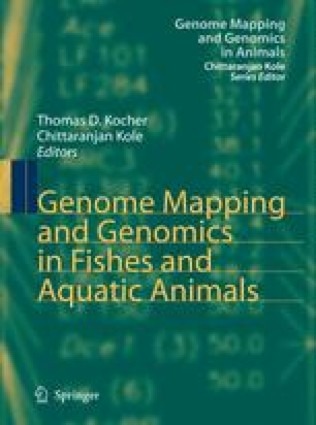
Genome Mapping and Genomics in Fishes and Aquatic Animals
The series Genome Mapping and Genomics in Animals provides comprehensive and up-to-date reviews on genomic research on a large variety of selected animal systems, contributed by leading scientists from around the world.This volume summarizes the first era of genomic studies of aquaculture species, in which the tools and resources necessary to support whole-genome sequencing were developed. These tools will enhance efforts toward selective breeding of aquaculture species. Included in this volume are summaries of work on salmonids, cyprinids, catfish, tilapias, European sea bass, Japanese flounder, shrimps and oysters.

Environmental Effects of Marine Finfish Aquaculture
Environmental risks associated with large-scale marine finfish cage aquaculture have led to claims that the long-term sustainability of the industry is in doubt. Methods and models currently used to measure near and far-field environmental effects of finfish mariculture and to assess their implications for management are presented in 20 chapters arranged in four sections (Eutrophication, Sedimentation and Benthic Impacts, Changes in Trophic Structure and Function, and Managing Environmental Risks). Case studies show how models may be used to predict environmental changes and provide management tools to minimize potentially adverse environmental risks. The volume is of interest to those working towards sustainable development of mariculture, including environmental managers and decision-makers with regulatory responsibilities.

Eighteenth International Seaweed Symposium ; Proceedings of the Eighteenth International Seaweed Symposium held in Bergen, Norway, 20 - 25 June 2004
The Proceedings of the 18th International Seaweed Symposium provides an invaluable reference to a wide range of fields in applied phycology. Papers cover topics as diverse as systematics, ecology, commercial applications, carbohydrate chemistry and applications, harvesting biology, cultivation and more. Contributions from all parts of the world give the volume exceptional relevance in an increasingly global scientific and commercial climate. Like its predecessors, this volume provides a benchmark of progress in all fields of applied seaweed science and management, and will be referred to for many years to come.

Ecological and Genetic Implications of Aquaculture Activities
Aquaculture is a rapidly growing industry and aquaculture practices can directly interact with and depend upon the surrounding environment. Therefore, the effects of all types of aquaculture on living natural resources and ecosystems are of significant and increasing national and international interest. In Ecological and Genetic Implications of Aquaculture Activities, numerous nationally and internationally prominent aquaculture researchers contribute 27 chapters that comprise overviews of aquaculture effects on the environment, discussions of genetic considerations, thorough documentation of aquaculture effects and their solutions specific to countries, and approaches toward environmentally sustainable aquaculture. Together, these chapters comprise a comprehensive synthesis of many ecological and genetic problems implicated in the practice of aquaculture and of many proven, attempted, or postulated solutions to those problems. Many chapters can serve as benchmark documentations of specific aquaculture effects on biodiversity at different levels.

Echinodermata
Members of the phylum Echinodermata are among the most familiar marine invertebrates. Forms such as the sea star have become virtually a symbol of sea life. Used in ancient oriental medicine as a source of bioactive compounds, sea cucumbers, sea stars and sea urchins are now used for the extraction and purification of cytotoxic, haemolytic, antiviral, antifungal, antifouling, antimicrobial and even anti-tumoural activities.

Diapause in Aquatic Invertebrates : Theory and Human Use
Contributors to this new book are leaders in the field of diapause studies, and many authors were participants at a recent workshop on diapause in aquatic invertebrates (Pallanza, Italy 2003). The book consists of two major parts, as indicated in its title: Phenomenology of diapause and significance of this adaptation in scientific and practical uses. Application to newly developing areas such as cultivation of live food, like rotifers or Artemia, in modern aquaculture is covered, as are aspects of diapause that promote the colonization of new environments by facilitating the passive transport of resting stages of invasive species. Creation of artificial ecosystems outside of the Earth’s biosphere using dormant propagules becomes an actual possibility as humankind develops plans to colonize our nearest planets.
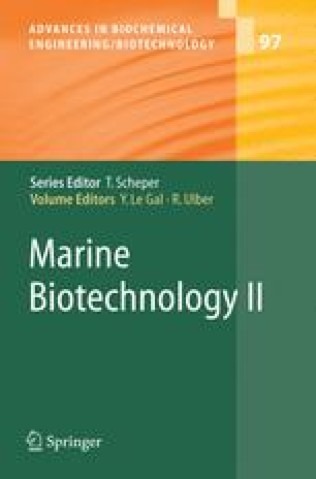
Marine Biotechnology II
This volume of Advances in Biochemical Engineering/Biotechnology illustrates several topics in line with the following broad objectives: thinking of marine biotechnology as the controlled production and use of marine organisms and molecules for useful purposes, firstly by exploring aspects of marine biodiversity and exploitation of biomass, then considering the identification, production and processing of marine products.

Challenges to Marine Ecosystems ; Proceedings of the 41st European Marine Biology Symposium
This volume presents a representative sample of contributions to the 41st European Marine Biology Symposium held in September 2005 in Cork, Ireland. The theme of the symposium was ‘Challenges to Marine Ecosystems’ and this was divided into four sub themes; Genetics, Marine Protected Areas, Global Climate Change and Marine Ecosystems, Sustainable Fisheries and Agriculture.
Aquaponics Food Production Systems : Combined Aquaculture and Hydroponic Production Technologies for the Future
This book, written by world experts in aquaponics and related technologies, provides the authoritative and comprehensive overview of the key aquaculture and hydroponic and other integrated systems, socio-economic and environmental aspects. Aquaponic systems, which combine aquaculture and vegetable food production offer alternative technology solutions for a world that is increasingly under stress through population growth, urbanisation, water shortages, land and soil degradation, environmental pollution, world hunger and climate change.
Aquaculture Perspective of Multi-Use Sites in the Open Ocean : The Untapped Potential for Marine Resources in the Anthropocene
This volume addresses the potential for combining large-scale marine aquaculture of macroalgae, molluscs, crustaceans, and finfish, with offshore structures, primarily those associated with energy production, such as wind turbines and oil-drilling platforms. The volume offers a comprehensive overview and includes chapters on policy, science, engineering, and economic aspects to make this concept a reality. The compilation of chapters authored by internationally recognized researchers across the globe addresses the theoretical and practical aspects of multi-use, and presents case studies of research, development, and demonstration-scale installations in the US and EU
Aquaculture microbiology
Details techniques involved to study aquatic pathogens that cause infections, especially in fish. Chapters guide readers through a wide range of basic and advanced methods, viral and fungal pathogens, probiotic bacteria, treatment of pathogens using seaweed extract, medicinal plant extracts, and actinomycetes.
